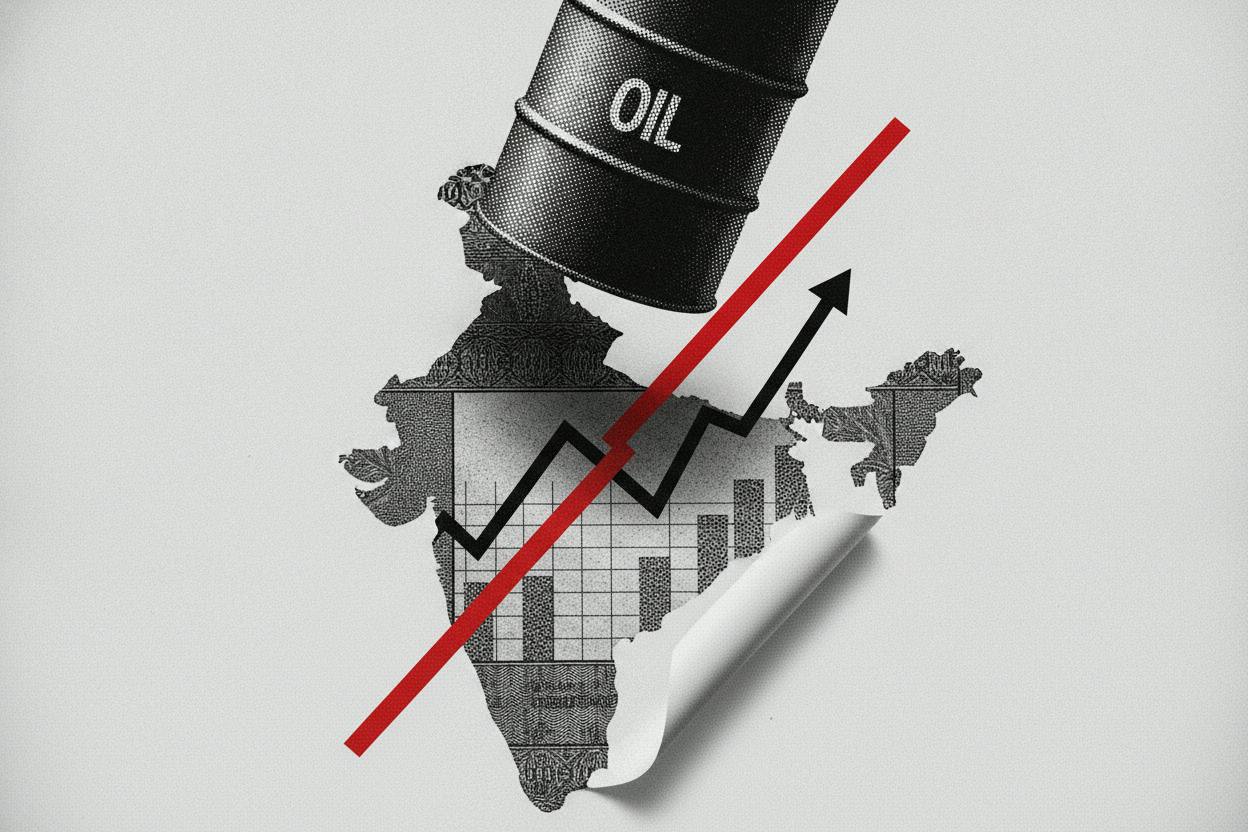
India's government bond market is losing momentum. Brent crude rose 2.3% to $117.7 a barrel, and that move is rippling straight into the country's debt market, nudging the 10-year government bond yield back toward 7.50% — a level traders treat as a psychological line in the sand. The timing is awkward: New Delhi is preparing to auction 330 billion rupees of government bonds, and a jump in oil is exactly the kind of backdrop that makes buyers demand more compensation to absorb all that new supply.
Why oil matters so much in India
India is the world's third-largest importer and consumer of crude oil, which makes it unusually sensitive to energy prices. When Brent climbs, the country's import bill swells, putting pressure on the rupee and feeding directly into transport, fuel and manufacturing costs. Economists and bond traders respond by penciling in higher near-term inflation, because costlier crude tends to work its way through the economy within months.
That inflation expectation is the key link to bonds. When investors think prices will rise faster, they demand a higher yield to hold fixed-income securities — otherwise inflation would erode their real return. Higher yields mean lower bond prices, which is why a rally in oil can quietly undo a rally in government debt. The 10-year yield is the benchmark that anchors borrowing costs across the economy, from corporate loans to mortgages, so its direction matters well beyond the bond market itself.
The move also interrupts what had been a more supportive stretch for Indian bonds. A softer global backdrop, including a pullback in US Treasury yields, had given local debt some breathing room. That kind of relief tends to help emerging-market assets broadly, as investors hunt for yield outside the United States. But a fresh oil spike can flip that dynamic quickly, especially for a country that imports the bulk of its energy needs.
The auction adds another layer of pressure
Governments sell bonds regularly to fund spending, and the size of each auction matters to the market. A 330 billion-rupee sale is a meaningful chunk of supply, and when dealers know a large auction is coming, they often sell existing bonds first to make room — a practice that pushes yields higher in the days before the sale. Add rising oil to that mix, and the market has two reasons to be cautious rather than one.
What happens at the auction itself will be telling. If demand is strong and the cutoff yield comes in below expectations, it would suggest investors are looking past the oil move. If the auction is weak, with yields climbing to attract buyers, it would confirm that the market is repricing inflation risk in real time. Either way, the result will shape how the 10-year yield trades in the sessions that follow.
It's worth remembering that India's bond market has seen sharp swings before. Yields have fallen quickly when global conditions improved, and they have risen just as fast when energy prices or currency pressure flared up. That pattern reflects how exposed the country is to forces outside its borders — a reality that long-term investors in Indian assets have learned to live with.
What it means for investors
For everyday investors, the oil-and-bond connection is worth understanding because it shows up in portfolios in several ways. Higher government yields can pressure the prices of existing bond funds, since older bonds with lower coupons become less attractive. They can also raise borrowing costs for companies, which weighs on earnings for rate-sensitive sectors like real estate, infrastructure and consumer finance.
At the same time, higher oil is not uniformly bad for Indian equities. Energy producers and refiners can benefit from stronger crude prices, even as importers and transport companies feel the squeeze. That split is one reason Indian stocks often trade mixed on days when oil jumps, rather than falling in unison. Investors watching the market open may see that tension play out, with oil's spike capping early gains in some sectors while others hold up.
The rupee is another piece of the puzzle. A wider oil import bill tends to weaken the currency, and a weaker rupee can make imported inflation worse — a feedback loop that bond investors dislike. If the currency comes under sustained pressure, the central bank may face a tougher trade-off between supporting growth and keeping inflation in check.
Looking ahead, the key signals to watch are the auction result, the path of Brent crude, and whether the 10-year yield settles above or below 7.50%. A decisive break higher would suggest the market is pricing in a more persistent inflation problem. A quick retreat would imply the oil move is being treated as temporary. For now, the bond rally that had been building is on hold, and the next few sessions will show whether that pause turns into a reversal.
Investors with exposure to Indian debt or equities should also keep an eye on global cues, particularly US Treasury yields, since they influence how much foreign capital flows into emerging markets. When US yields fall, Indian bonds often become relatively more attractive — a dynamic that had been helping the market before oil stepped in. If that support fades while crude stays elevated, the pressure on Indian bonds could build further.