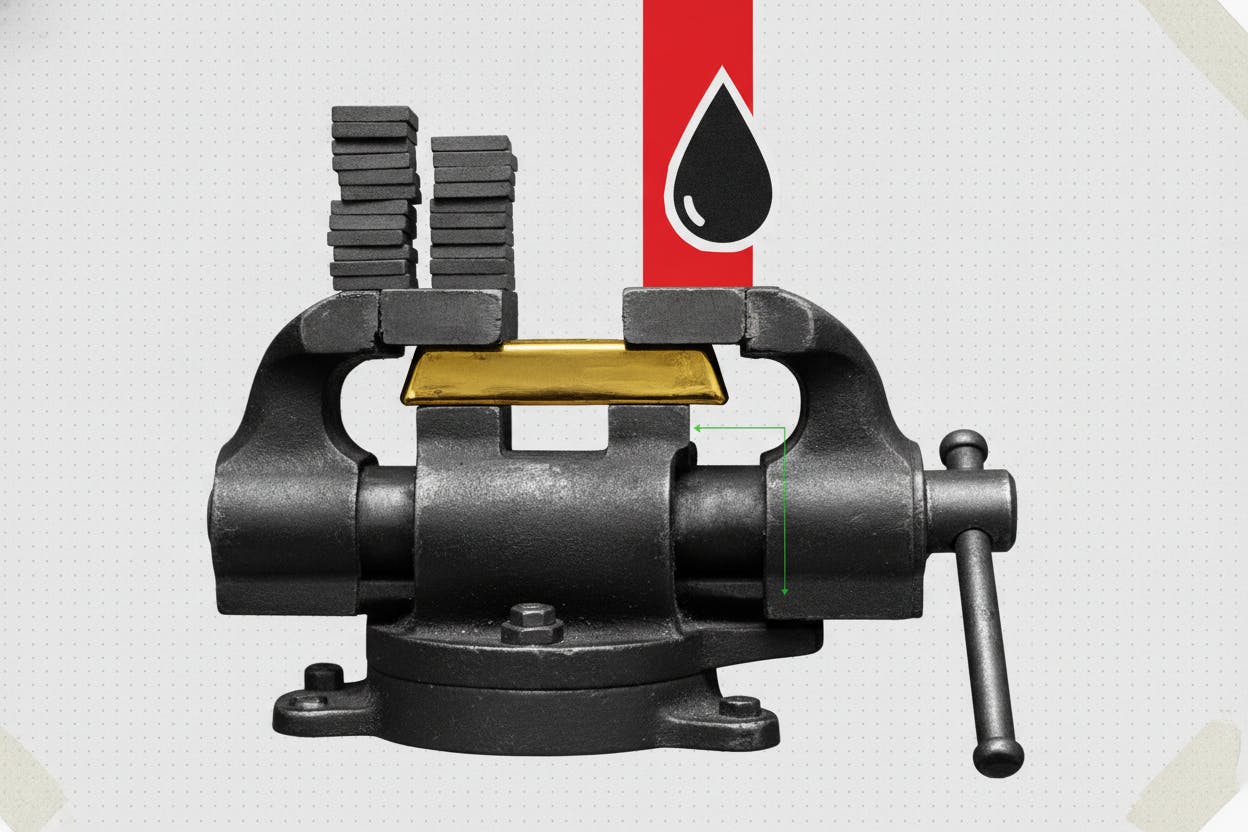
Gold prices edged lower on Thursday as a fresh round of US-Iran military strikes sent crude oil to a near two-week high and reinforced expectations that the Federal Reserve will keep interest rates elevated for longer. The move highlights a rare moment where geopolitical turmoil, which typically boosts gold's safe-haven appeal, is instead working against the precious metal.
What happened to gold and oil?
The United States launched new strikes against Iranian targets, escalating tensions in the Middle East and pushing crude oil prices higher. Brent crude rose to its highest level in nearly two weeks, adding to gains from earlier in the week. The rally in oil has been a key driver of market sentiment, as higher energy costs can feed into broader inflation.
For gold, the immediate impact was negative. Spot gold fell as investors reassessed the outlook for interest rates. While geopolitical uncertainty often drives demand for gold as a store of value, this time the oil-driven inflation fears are dominating the narrative.
Why higher rates hurt gold
Gold is a non-yielding asset, meaning it doesn't pay interest or dividends. When central banks raise interest rates, the opportunity cost of holding gold increases because investors can earn a return from other assets like bonds or savings accounts. The Federal Reserve has signaled it is in no rush to cut rates, and Thursday's oil surge only strengthens the case for caution.
Markets are now pricing in a higher probability that the Fed will keep rates at current levels for longer, a scenario that tends to weigh on gold prices. Treasury yields have risen in response, making interest-bearing assets more attractive relative to bullion.
This dynamic is playing out even as geopolitical risks remain elevated. Typically, gold benefits from safe-haven buying during times of conflict, but the inflation and rate implications of the oil spike are proving more powerful.
What it means for investors
For everyday investors, the pullback in gold is a reminder that the metal's price is influenced by a complex mix of factors. Geopolitical tensions can boost gold, but only if they don't also stoke inflation that forces central banks to keep rates high. In the current environment, the oil price surge is creating a headwind for gold that may persist as long as the conflict continues.
Investors should also watch the broader market reaction. Higher oil prices can squeeze corporate profits and consumer spending, potentially weighing on stocks. Meanwhile, the dollar has slipped as oil surges, which could provide some support for gold in the longer term, but the immediate focus is on rate expectations.
Related reading: Oil Surges as Trump Threatens Iran Strikes, Fed Minutes Show Split on Rate Cuts and Dollar Slips as Oil Surges on US-Iran Tensions; Fed Minutes in Focus.
What to watch next
Markets will be closely watching for any further escalation in the Middle East, as well as comments from Fed officials that could clarify the path for interest rates. The next major data point is the US jobs report, which could influence the Fed's thinking. If oil prices continue to rise, inflation expectations may push higher, further reducing the likelihood of rate cuts this year.
For gold, the key level to watch is whether it can hold above recent support levels. A sustained break lower could signal that the rate narrative is firmly in control, while a rebound might require a de-escalation in tensions or a shift in Fed rhetoric.
In the meantime, investors should be aware that the relationship between gold and oil is not always straightforward. While both are commodities, their drivers can diverge, as this week's price action shows.



