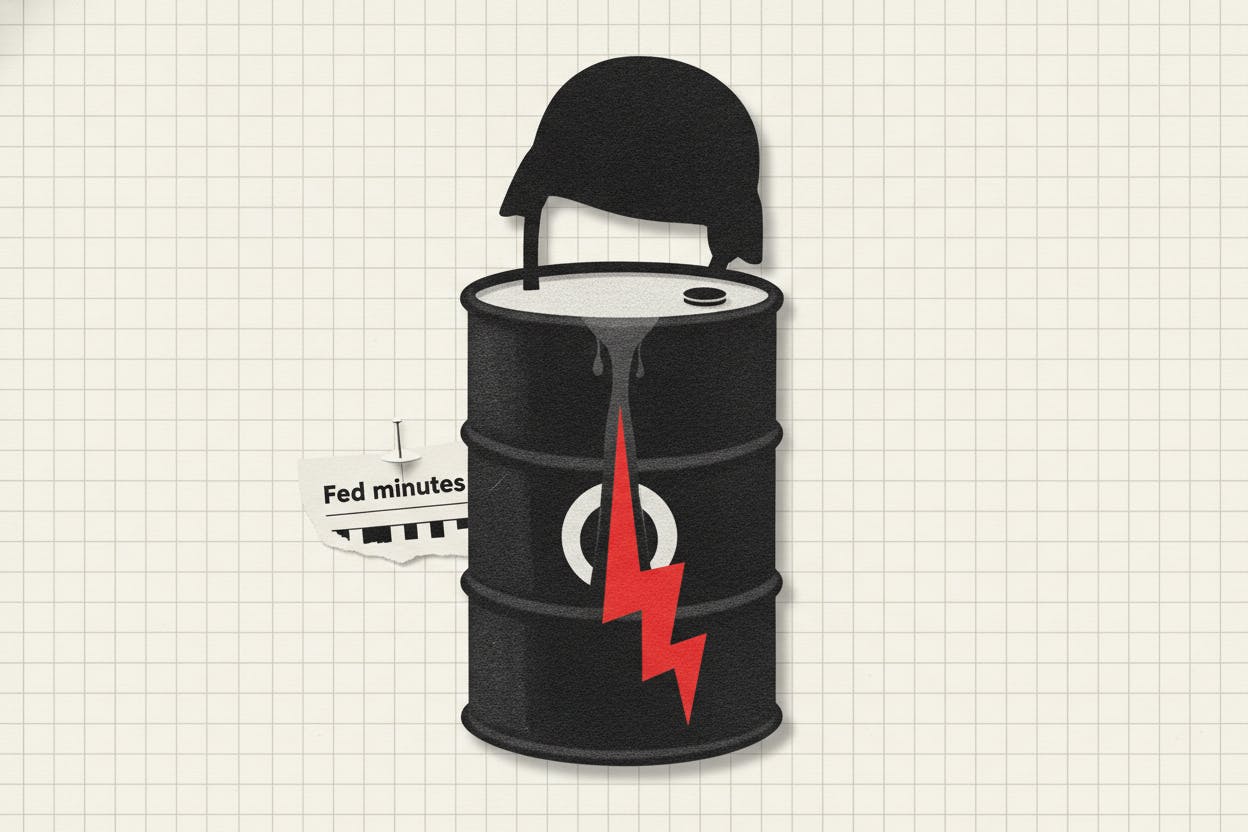
Oil prices climbed sharply on Tuesday after President Donald Trump suggested the US could launch more strikes on Iran, before later trying to dial back fears of a wider conflict. The move injected fresh uncertainty into markets already wrestling with mixed signals from the Federal Reserve.
What happened to oil prices?
August West Texas Intermediate crude rose $3.78 to settle at $74.22 a barrel, while September Brent crude added $4.55 to close at $78.71. The jump came after Trump said Iran's attacks on commercial shipping meant the ceasefire “is over,” though he later softened his tone. The comments revived geopolitical risk premiums that had faded in recent weeks.
For everyday investors, a move of this size in oil matters because gasoline and diesel prices are among the fastest costs to show up in household budgets. When energy costs rise, they can feed directly into inflation expectations, which in turn influence how the Federal Reserve approaches interest rates.
Fed minutes add to the mix
The oil spike landed at an awkward time for the central bank. Minutes from Kevin Warsh's first mid-June meeting as Fed chair showed policymakers were divided. Some saw cooling inflation as enough to justify rate cuts, while others still saw enough price pressure to warrant keeping rates higher.
That split matters because higher oil prices can tilt the balance. If inflation expectations rise, it becomes harder for the Fed to cut rates, even if the broader economy is slowing. Traders immediately began adjusting their bets on future rate moves, which showed up in Fed-funds futures and Treasury yields.
For context, the Fed's decisions ripple through everything from mortgage rates to credit card APRs. When rate cuts look less likely, borrowing stays expensive for longer, which can weigh on stocks that depend on future growth, especially in the tech sector.
How stocks reacted
US stocks finished mixed, which fits the typical pattern when an energy shock hits: it raises inflation worries without immediately changing the growth outlook. The S&P 500 and Nasdaq saw modest moves, while the Dow edged lower.
One standout was Nvidia, which rose 3.7% after a report from The Information said that Chinese tech giants Alibaba, ByteDance, and DeepSeek may get permission to buy limited volumes of the company's H200 chips. That would help ease an AI-chip shortage in China, a key market for Nvidia's data-center business.
Other sectors were less fortunate. Consumer stocks slid after Domino's issued a cautious outlook, and healthcare stocks fell following downgrades from Barclays. Financial stocks also faced pressure as rising yields complicated the outlook for banks. For more on those moves, see our coverage of consumer stocks sliding on Domino's warning and healthcare stocks sliding on Barclays downgrades.
What it means for investors
For everyday investors, the key takeaway is that oil at $78.71 a barrel hits hardest when the Fed's next move is up for debate. A $4-5 jump in crude can nudge near-term inflation expectations higher through fuel-price pass-through. When the Fed is already divided, that can push traders to price fewer or later rate cuts, creating extra churn in markets.
The knock-on effects tend to land on rate-sensitive, long-duration stocks. These are companies whose valuations rely more on profits expected far in the future, which get discounted more when yields rise. Think of high-growth tech stocks or companies that carry a lot of debt.
At the same time, energy stocks can benefit from higher oil prices, though that's not a recommendation to buy them. The broader lesson is that geopolitical events can quickly reshape the investing landscape, and it pays to understand how they connect to interest rates and inflation.
For a deeper look at how oil and yields interact, see our analysis of Treasury yields rising as oil surges and the broader market reaction in oil surging 6% as Trump declares Iran deal over.