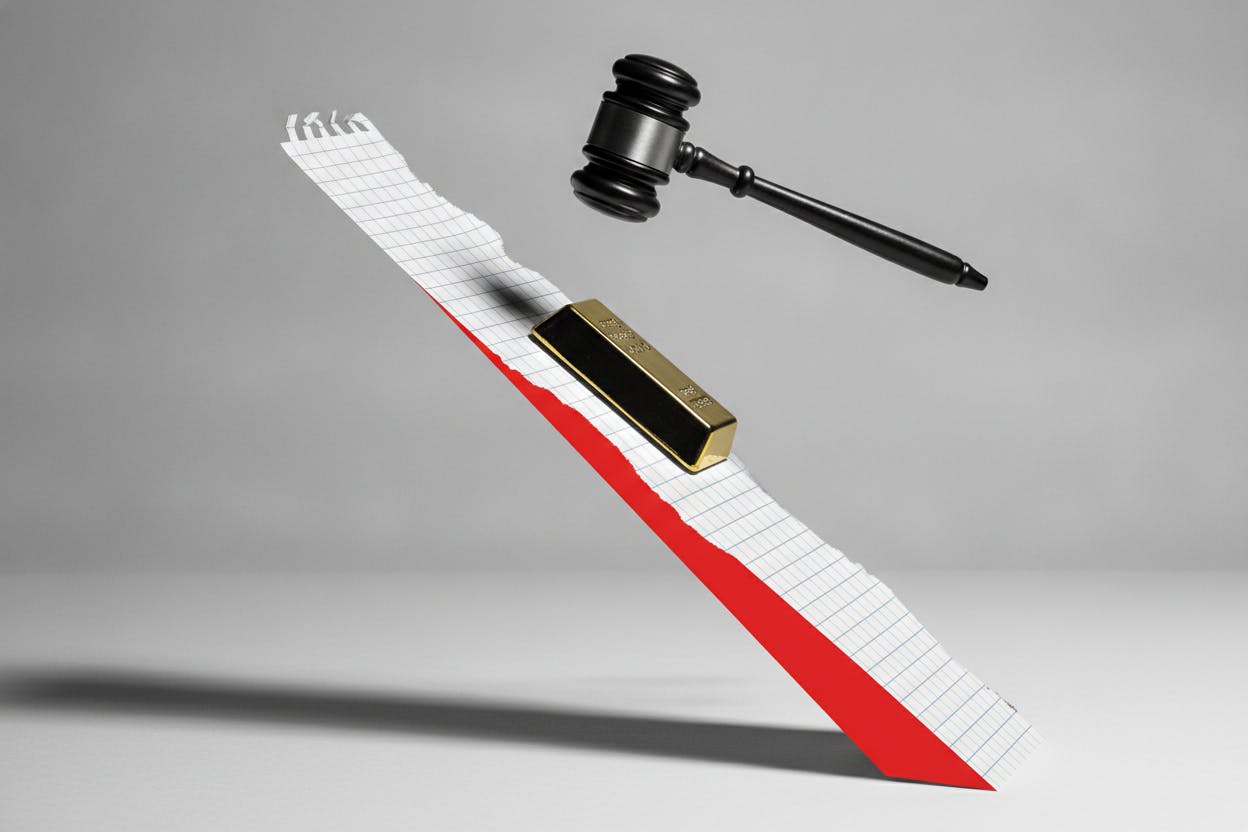
Gold prices fell more than 1% on Tuesday after Federal Reserve Chair Kevin Warsh said the central bank still has “work to do” in bringing inflation down. The comments, delivered at the annual Jackson Hole symposium, quickly shifted market expectations, with traders now pricing in a 56% chance of a rate hike at the Fed's September meeting.
Spot gold slid to about $4,563 an ounce after touching $4,529, while December gold futures fell to roughly $4,615, according to Reuters. The drop marks one of the sharpest single-day moves for bullion in recent weeks, as investors recalibrated their outlook for U.S. monetary policy.
Why Warsh's words moved markets
Warsh, who took over as Fed chair earlier this year, has been clear about his priority: price stability. His latest remarks reinforce that stance, suggesting that if inflation does not convincingly head back toward the Fed's 2% target, additional tightening is on the table.
For gold, the math is straightforward. Higher interest rates make non-yielding assets like bullion less attractive compared with bonds or cash, which offer income. When rate-hike odds rise, gold typically comes under pressure as investors rotate toward assets that pay a return.
The 56% probability of a September hike is a notable jump from just days ago, when markets were more evenly split. This shift reflects not only Warsh's comments but also a broader reassessment of the inflation outlook, which has proven stickier than many hoped.
What this means for everyday investors
For ordinary investors, the immediate takeaway is that gold's recent rally may be hitting a wall. Bullion had been supported by safe-haven demand and expectations that the Fed would soon pivot to cutting rates. Those hopes have now been pushed back, at least for September.
If you hold gold or gold-focused funds, expect continued volatility as each new inflation report or Fed speech reshapes rate expectations. The metal's price is now highly sensitive to any hints about the timing of future rate moves.
For those considering adding gold to a portfolio, the current environment suggests caution. Rising rates tend to dampen gold's appeal, and the Fed has signaled it is not done fighting inflation. That said, gold can still serve as a hedge against uncertainty, especially if the economy slows unexpectedly or inflation reignites.
Broader market context
The reaction in gold was mirrored across global markets. Stocks dipped ahead of Warsh's speech, and European markets held steady as investors awaited clarity. In Asia, markets were cautious, with traders reluctant to take big positions before the Fed's next move.
The dollar, which often moves inversely to gold, strengthened after Warsh's comments. A firmer dollar makes gold more expensive for overseas buyers, adding another headwind for bullion.
Warsh's stance is a departure from the previous Fed leadership, which had signaled a possible pause in rate hikes. His emphasis on the 2% inflation target, reiterated at Jackson Hole, suggests the central bank is willing to tolerate some economic pain to bring prices under control.
What to watch next
Investors will now focus on upcoming inflation data and any additional Fed commentary. The September meeting is less than a month away, and the odds of a hike could shift again if economic reports surprise.
Key indicators to watch include the Consumer Price Index (CPI) and the Personal Consumption Expenditures (PCE) price index, the Fed's preferred inflation gauge. A hotter-than-expected reading would likely push hike odds higher, further pressuring gold. Conversely, a cooler print could revive hopes for a pause and give bullion a lift.
For now, the message from the Fed is clear: the fight against inflation is not over. That means gold investors should brace for more turbulence as the central bank navigates a delicate balance between curbing prices and supporting growth.
As always, it's wise to remember that gold is just one piece of a diversified portfolio. Its price swings can be sharp, but for many investors, its role as a long-term store of value remains unchanged.



