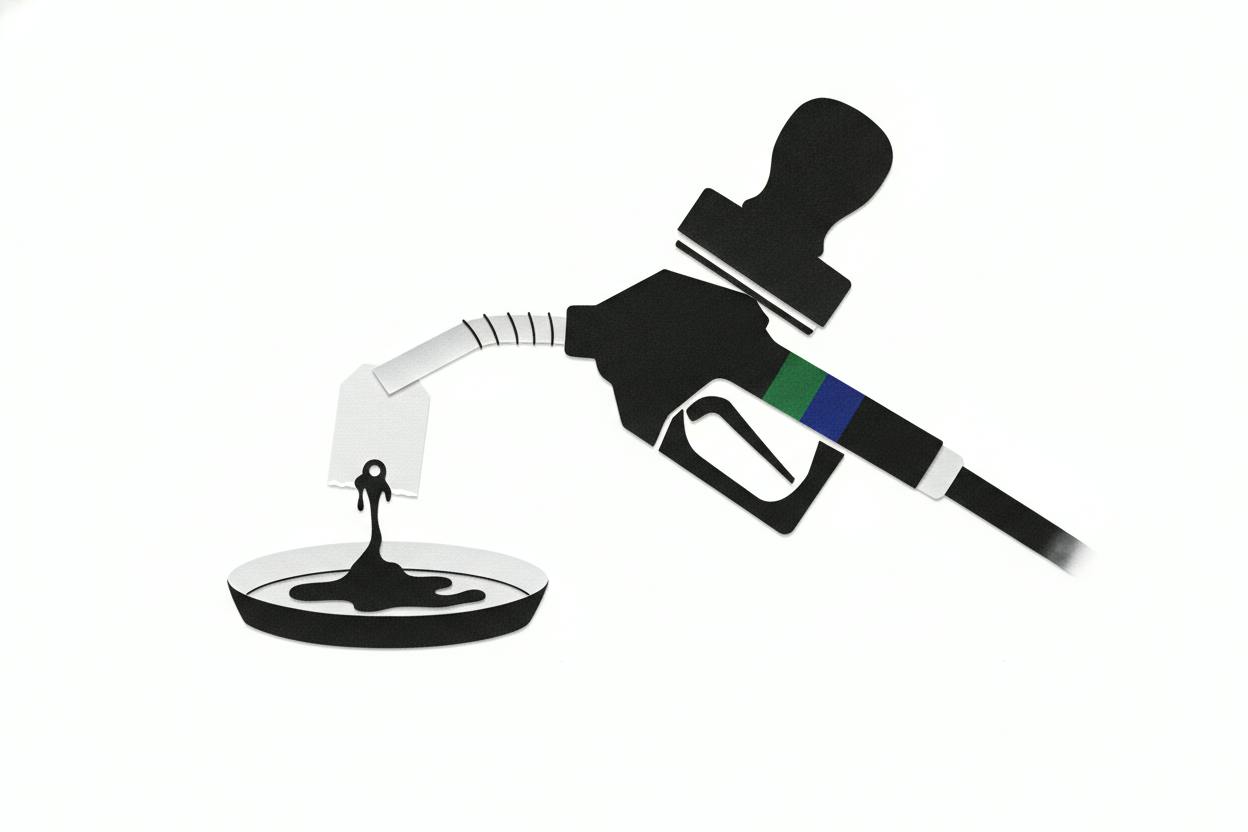
The Greek government is extending and deepening its diesel discount program, aiming to keep fuel prices from climbing too far as the autumn begins. Starting immediately, the state subsidy on diesel will rise by €0.05 to €0.15 per liter for the next two weeks, and when combined with cuts funded by a major refiner, the total pump discount will reach €0.20 per liter. The goal is to keep diesel prices below €1.75 per liter at the pump.
How the discount works
The discount comes from two sources. On one side, the government is increasing its direct subsidy on diesel. On the other, Helleniq Energy, one of Greece's largest refiners, has said it will continue cutting €0.0405 per liter off diesel and €0.0795 off unleaded gasoline through October 14th. These refiner-funded reductions have been in place since July 14th and are now being extended.
This two-pronged approach means the total relief at the pump is larger than either measure alone. For a typical motorist filling a 50-liter tank, the combined €0.20 discount would save about €10 per fill-up compared with the full price.
Why diesel matters for the economy
Diesel is more than just a fuel for passenger cars. It powers the trucks that move goods across the country, the vans that make deliveries, and the machinery used by many small businesses. When diesel prices rise, those costs often get passed on to consumers in the form of higher prices for food, clothing, and other everyday items. That's why governments and central banks watch fuel prices closely—they can feed directly into broader inflation.
Greece, like many European countries, has been grappling with elevated inflation in recent years. While price growth has cooled from its peaks, energy costs remain a sensitive area. By subsidizing diesel, the government hopes to shield households and businesses from the worst of any price spikes, particularly as the heating season approaches.
What it means for investors
For investors, the extension of fuel subsidies is a reminder that energy prices remain a key variable in the inflation outlook. When governments step in to cap or subsidize fuel costs, it can temporarily mask underlying price pressures. That's important for anyone holding bonds or stocks sensitive to interest rates, because central banks—including the European Central Bank—tend to react to inflation data.
If fuel subsidies keep headline inflation lower than it would otherwise be, it could reduce the urgency for rate hikes. That's a dynamic seen elsewhere too: for example, India's central bank faces similar pressure as inflation broadens, and strong eurozone data has revived the case for an ECB hike. In Greece, the subsidy is a short-term measure, but it highlights how governments can influence the inflation picture.
For companies, cheaper diesel is a modest positive for logistics firms, delivery services, and any business with large fuel bills. It can also support consumer spending by leaving more money in people's pockets. However, the subsidy is temporary—it runs only through mid-October—so any benefit is likely to be short-lived.
Broader context
Greece's move is part of a wider pattern of governments using subsidies or tax cuts to manage fuel prices. Similar measures have been seen across Europe and beyond. The effectiveness of such policies is often debated: they provide immediate relief but can be costly for public finances and may not address the root causes of high energy prices, such as global supply constraints or geopolitical tensions.
For everyday investors, the key takeaway is that fuel prices remain a swing factor for both inflation and corporate profits. While the Greek subsidy is a small, country-specific measure, it underscores how energy costs continue to influence economic policy and market expectations. As always, keeping an eye on fuel price trends can offer clues about where inflation—and interest rates—might head next.
In the meantime, Greek motorists and businesses will enjoy a bit of relief at the pump, at least until the discount expires in mid-October.