Grupo Mexico, one of the world's largest copper producers, has announced plans to spend $4-6 billion over the next three years to expand its US operations. The investment will focus on Asarco's Arizona mines and the potential restart of the Hayden smelter, a move that could significantly boost the company's American copper footprint.
The announcement comes as the company reported a roughly 2% decline in third-quarter copper output, underscoring the need to invest in new capacity. While the drop is modest, it highlights the challenges miners face in maintaining production levels as ore grades decline and operations age.
What's on the drawing board
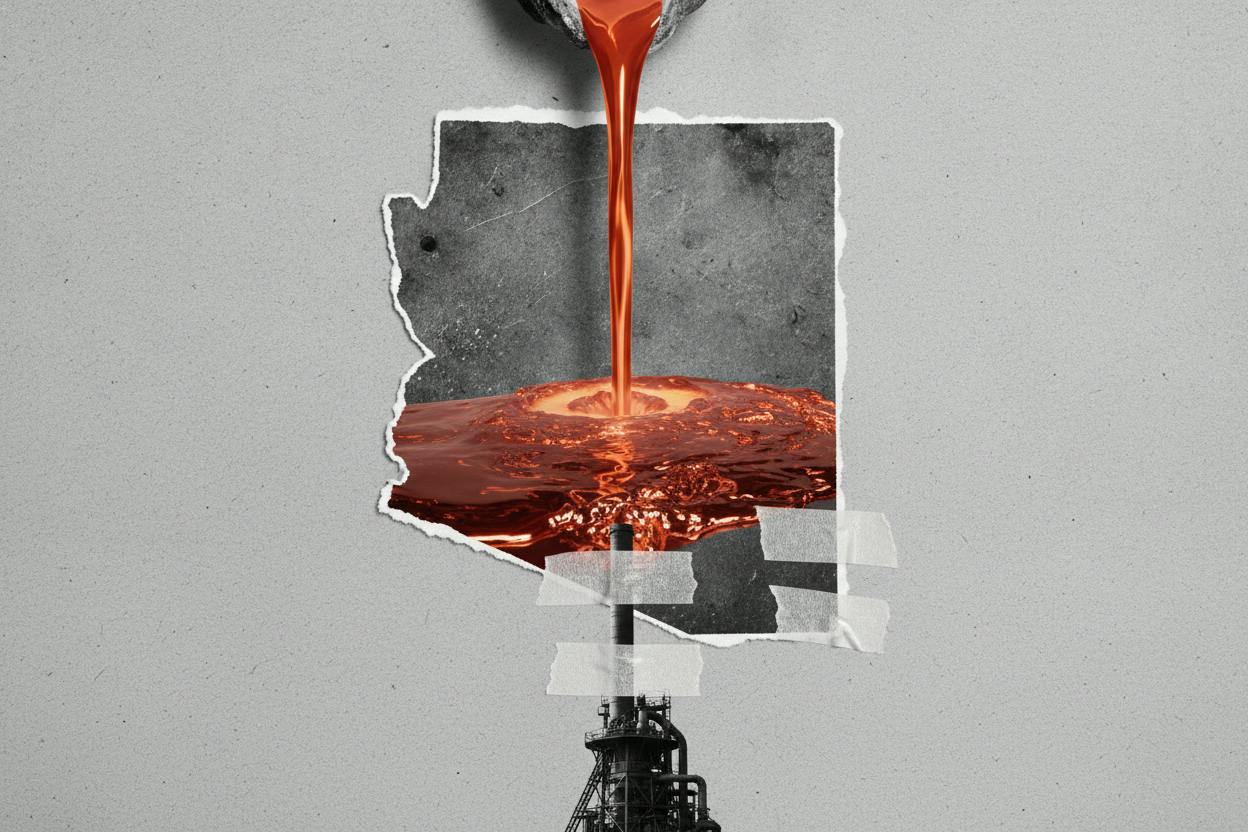
Asarco's expansion plans center on two key Arizona sites: the Ray mine and the Silver Bell mine. The Ray mine, which is already in operation, is moving forward with expansion plans. Silver Bell, however, is still in the feasibility stage, meaning the company is still studying whether to proceed with a major investment there.
The most strategic piece of the plan is the Hayden smelter. Smelters and refineries are the crucial middle step in the copper supply chain, turning raw concentrate into refined metal that factories can actually use. Restarting Hayden would give Asarco more control over its supply chain and potentially allow it to capture more value from its mining operations.
To put the scale of this investment in perspective, Asarco spent about $101 million in 2024. Even the low end of the new spending range—$4 billion—represents a dramatic step-up in capital expenditure, roughly 40 times last year's level.
Why copper matters now
Copper is often called "Dr. Copper" because its price is seen as a barometer for global economic health. The metal is used in everything from construction and electronics to electric vehicles and renewable energy infrastructure. As the world transitions toward cleaner energy, demand for copper is expected to grow, making investments like this one particularly timely.
However, the copper market has been volatile recently. Copper prices hit a five-week low as stockpiles on the London Metal Exchange climbed for a fourth straight day, a sign that supply may be catching up with demand in the short term. Meanwhile, US copper stockpiles have hit a 12-year high as traders brace for potential tariffs, which could affect the economics of domestic production.
These market dynamics add a layer of complexity to Grupo Mexico's plans. On one hand, higher stockpiles and lower prices could make large capital investments less attractive in the near term. On the other hand, the long-term demand outlook for copper remains strong, and companies that invest now may be better positioned to meet future needs.
What it means for investors
For everyday investors, this announcement is a signal that a major producer sees value in expanding US copper production. It also reflects a broader trend of companies reshoring critical supply chains, particularly for metals that are essential to the energy transition.
Investors should note that this is a multi-year plan with significant execution risk. Large-scale mining and smelting projects often face delays, cost overruns, and regulatory hurdles. The feasibility stage for Silver Bell means that project could still be scaled back or shelved entirely.
The restart of the Hayden smelter, if successful, could be a game-changer for Asarco's profitability. Smelters typically earn a fee for processing concentrate, and owning that capability can insulate a miner from some of the volatility in concentrate markets. However, smelters also require substantial ongoing investment to meet environmental standards, which could add to costs.
For those watching the broader copper sector, Grupo Mexico's move is a reminder that the industry is betting on strong long-term demand. Anglo American recently missed copper output forecasts, prompting analysts to adjust their expectations, and other miners are also grappling with production challenges. This suggests that supply growth may not keep pace with demand, which could support prices over time.
That said, investors should be cautious about reading too much into any single company's capital spending plans. The copper market is influenced by global economic growth, trade policies, and technological shifts. Mexico's inflation ticked up to 3.62%, keeping rate cuts on hold, which could affect the broader economic environment for commodities.
Ultimately, Grupo Mexico's investment is a bet on the future of copper. Whether it pays off will depend on how well the company executes its plans and how the global market for the metal evolves. For now, it's a notable development in the ongoing story of copper's role in the modern economy.