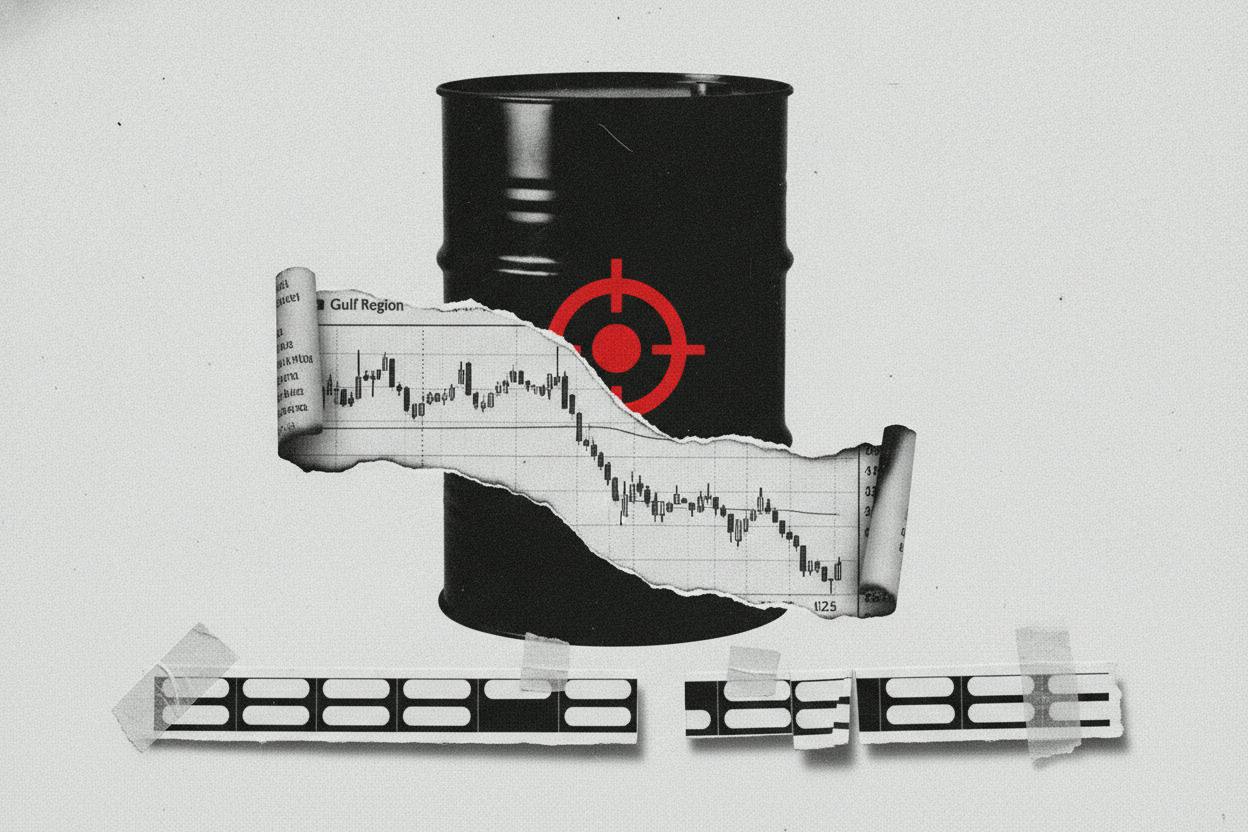
Gulf stock markets closed lower on Monday as investors weighed fresh geopolitical risk after Yemen's Iran-aligned Houthi group claimed attacks on Saudi Arabian targets, including an oil facility, while crude prices spiked to a six-year high.
What happened
Saudi Arabia's benchmark index fell 1.7%, leading declines across the region. Qatar's market slid to a six-year low, and other Gulf Cooperation Council (GCC) bourses also came under pressure as traders moved to reduce exposure to regional assets.
The Houthis said they struck a Saudi Aramco facility in Yanbu, the Shaybah oilfield, and airports in Riyadh and Abha. Saudi authorities did not immediately confirm the claims, and Reuters could not independently verify them. Still, the news was enough to jolt energy markets.
Brent crude briefly climbed to $111.75 a barrel, its highest level in about six years, before paring some gains. The jump in oil reflects the market's sensitivity to any disruption in the world's largest oil-exporting region.
Why it matters
For everyday investors, the immediate takeaway is that geopolitical risk is back at the centre of market moves. When attacks threaten energy infrastructure in the Gulf, oil prices tend to spike, and that has knock-on effects across global markets.
Higher oil prices can feed into inflation, which in turn influences central bank policy. If inflation stays hot, major central banks may keep interest rates higher for longer, which tends to pressure stock valuations, especially for growth and technology companies.
For Gulf markets specifically, the selloff reflects a flight to safety. Investors are pricing in the possibility of supply disruptions, even if actual damage is unconfirmed. That uncertainty alone can be enough to drive volatility.
What investors should watch
Several factors will determine whether this is a short-term blip or the start of a sustained risk-off phase:
- Official confirmation: Whether Saudi authorities confirm damage to energy infrastructure. Any confirmed disruption to production or exports would likely push oil higher and keep Gulf markets under pressure.
- Oil price direction: Brent holding above $110 a barrel would signal persistent geopolitical risk. A quick retreat would suggest the market views the attacks as contained.
- Central bank response: If oil-driven inflation pressures build, watch for hawkish signals from the U.S. Federal Reserve and other major central banks.
- Regional diplomatic moves: Any signs of de-escalation, such as ceasefire talks, could quickly reverse the selloff.
Bottom line
Geopolitical shocks like this are a reminder that markets can turn quickly. For long-term investors, the key is not to overreact to a single day's move. But for those with exposure to Gulf equities or energy-sensitive sectors, it's worth monitoring how the situation develops over the coming days.
Oil at multi-year highs can be a double-edged sword: it benefits energy producers and oil-exporting nations, but it also raises costs for consumers and businesses, and it complicates the inflation picture. As always, diversification remains the most reliable defence against events that no one can predict.