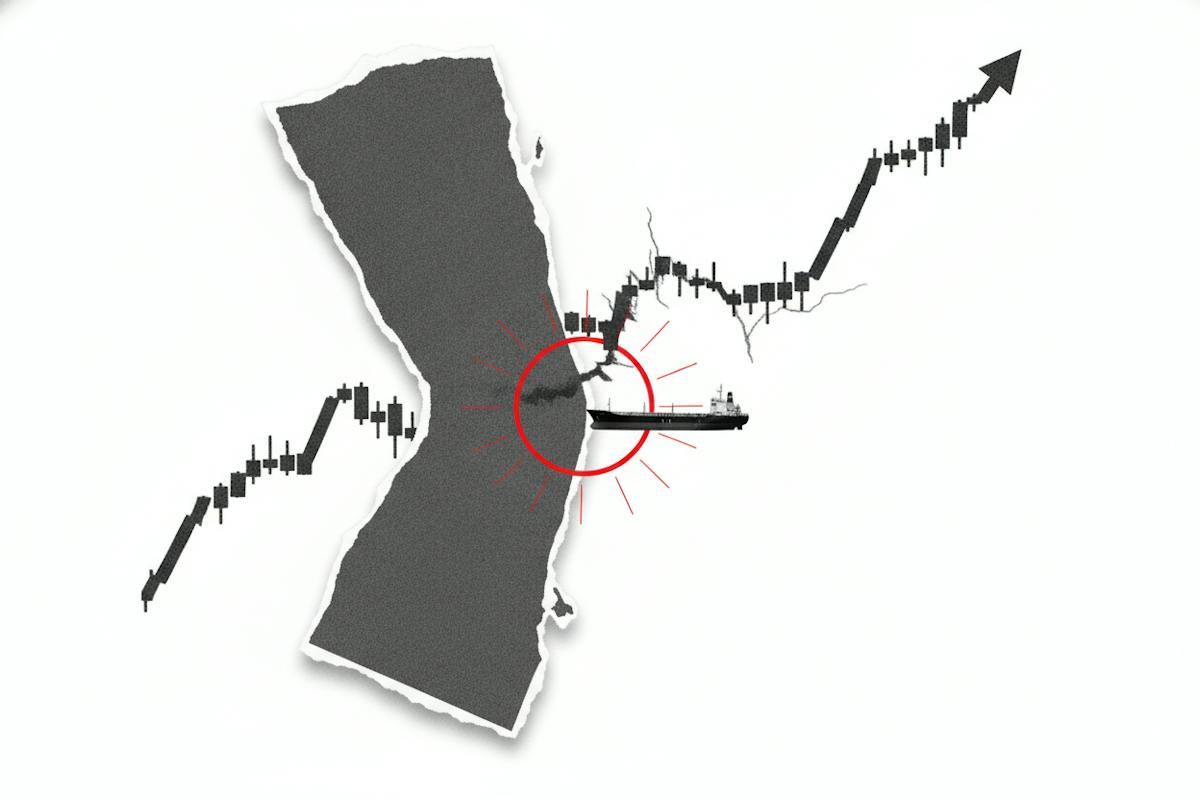
Gulf stock markets opened higher on Tuesday, catching a tailwind from a sharp rebound in Asian equities, but the mood remained cautious as fresh reports of tanker fires in the Strait of Hormuz kept geopolitical risk firmly on investors' radar.
Saudi Arabia's benchmark index rose 0.9%, while Dubai and Abu Dhabi added 0.6% and 0.8% respectively, with banking shares leading the advance. The gains mirrored a broader risk-on move across global markets, as MSCI's broad index of Asia-Pacific shares outside Japan jumped 4% after sliding to an eight-month low in the previous session.
Asia's bounce lifts sentiment
The rebound in Asian markets was driven by a recovery in technology stocks, particularly after a strong performance from Nvidia and other AI-related names. That optimism spilled over into the Gulf, where investors were quick to embrace the improved risk appetite. The region's banks, which are closely tied to economic growth and often act as a barometer for investor confidence, were the main beneficiaries.
However, the rally was tempered by persistent concerns over the Strait of Hormuz, a narrow waterway through which roughly a fifth of the world's oil passes. Reports of tanker fires in the area revived fears of potential supply disruptions, even as oil prices slipped. Brent crude fell to $89.04 a barrel, suggesting that traders were not yet pricing in a major escalation, but the uncertainty kept a lid on gains.
Oil's mixed signals
The drop in Brent, despite the Hormuz headlines, reflects a complex oil market. On one hand, geopolitical tensions typically push prices higher. On the other, ample global supply and concerns about demand have been weighing on crude in recent weeks. The fact that oil didn't rally on the tanker fire reports suggests that investors may view the incidents as isolated, or that they believe any disruption would be short-lived.
For Gulf economies, which are heavily reliant on oil revenues, the direction of crude prices is a key driver. Lower oil prices can squeeze government budgets and slow economic growth, while higher prices boost revenues and support stock markets. The current level around $89 a barrel is still relatively comfortable for most Gulf states, but any sustained drop could start to hurt.
What it means for investors
For everyday investors, the takeaway is that Gulf markets are being pulled in two directions. On the upside, a global recovery in risk appetite, particularly in tech, can lift regional equities. On the downside, geopolitical flashpoints like Hormuz can quickly reverse sentiment and create volatility.
Investors should also note that the region's banks, which led Tuesday's gains, are often sensitive to interest rate expectations and economic data. If the global economy slows, banking profits could come under pressure, even if the immediate mood is positive.
The situation in the Strait of Hormuz remains a wildcard. Any significant disruption to shipping through the strait could send oil prices sharply higher, which would be a double-edged sword for Gulf markets: higher oil revenues would be positive, but the global economic fallout from an energy shock could hurt investor confidence everywhere.
For now, the market seems to be taking a 'wait and see' approach. The gains on Tuesday are encouraging, but they are built on a fragile foundation. Investors should keep an eye on both oil prices and any further developments in the region, as either could quickly change the narrative.
As always, diversification remains a prudent strategy. While Gulf markets offer attractive opportunities, they are also exposed to unique risks that can be difficult to predict. Balancing regional exposure with global investments can help mitigate some of that uncertainty.