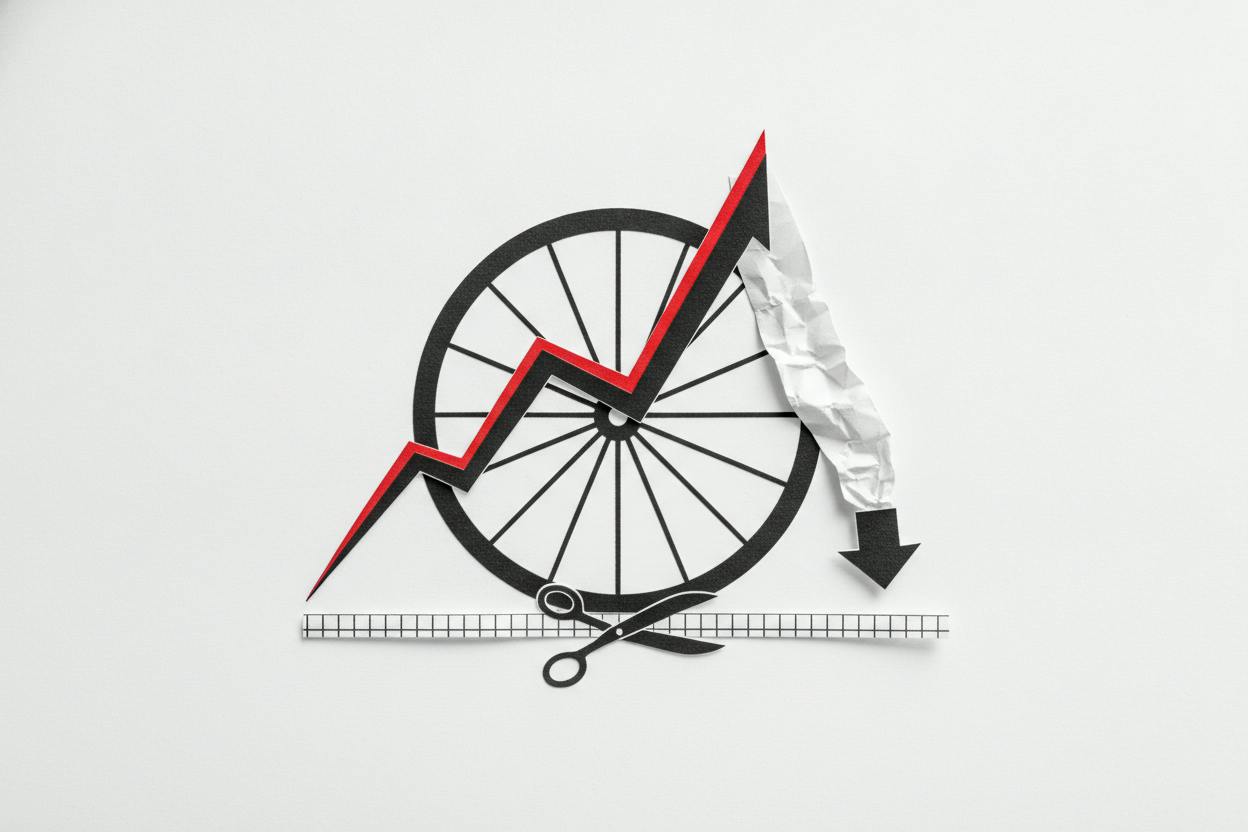
Halfords, the UK's largest retailer of cycling and motoring products, reported a 7.1% rise in like-for-like sales for the 26 weeks to October 2 and reaffirmed its full-year profit guidance. Yet the market reaction was surprisingly negative: the stock fell as much as 9.7% in early trading, just a day after hitting a near five-year high.
The disconnect between solid operational numbers and a falling share price is a classic case of "buy the rumour, sell the news." Investors had already pushed the stock up in anticipation of strong results, and once the figures were out, many chose to lock in gains rather than hold for further upside.
What the numbers show
Like-for-like sales are a key retail metric that measures growth from existing stores and online channels, excluding the impact of new store openings or closures. A 7.1% increase indicates that Halfords is selling more to its current customer base, which is generally a sign of healthy demand.
The company also reaffirmed its profit outlook, suggesting that management remains confident in its ability to convert those sales into earnings. That reassurance, however, was not enough to offset the profit-taking pressure.
Halfords has been benefiting from a few tailwinds. The company has expanded its range of electric bikes and services for electric vehicles, and it has also grown its garage and autocentre business, which provides higher-margin services like tyre fitting and vehicle servicing. These moves have helped diversify its revenue beyond traditional retail.
Still, the broader retail environment in the UK remains challenging. Consumers are watching their spending closely amid persistent inflation and higher interest rates, which can weigh on discretionary purchases like new bikes or car accessories. That backdrop makes any sales growth noteworthy, but it also means investors may be cautious about how sustainable that growth is.
Why did the stock fall?
The drop is best understood in context. The day before the announcement, Halfords shares had reached their highest level in nearly five years. That rally likely reflected optimism ahead of the results, and once the news was out, some investors decided to take profits.
This pattern is common in markets. When a stock has a strong run-up before an event, the actual news often triggers a sell-off, even if the news is positive. It's not necessarily a reflection of the company's fundamentals, but rather a shift in investor sentiment and positioning.
It's also worth noting that a 9.7% intraday drop is a sharp move, but it comes after a period of significant gains. For long-term investors, such volatility can be unsettling, but it's important to look at the bigger picture.
What it means for investors
For everyday investors, this episode highlights a few key lessons. First, a company's share price doesn't always move in line with its reported results. Short-term trading dynamics, such as profit-taking, can overshadow the underlying business performance.
Second, it's crucial to distinguish between the company's health and the market's reaction. Halfords' sales growth and reaffirmed guidance suggest the business is on a stable footing, even if the stock took a hit on the day.
Investors should also consider the broader context. The UK consumer is under pressure, and retail stocks can be sensitive to changes in spending habits. If inflation continues to ease and interest rates peak, that could provide some relief to consumer-facing companies. On the other hand, any further economic weakness could hurt demand.
Halfords' focus on services and electric mobility positions it well for long-term trends, but those trends may take time to play out. As always, diversification is key. Holding a mix of sectors can help cushion the impact of any single stock's volatility.
For those watching the retail sector, the reaction to Halfords' results is a reminder that even good news can be met with a sell-off if expectations have run too high. It's a dynamic that plays out across markets, from Domino's UK sales rise to OPmobility's mixed results.
Investors will now be watching Halfords' next update to see if the sales momentum continues and whether the company can deliver on its profit promise. In the meantime, the sharp drop serves as a reminder that markets are not always rational in the short term.
As with any investment, it's wise to focus on the fundamentals and your own financial goals rather than getting caught up in daily price swings. The stock's fall after good news is a textbook example of why a long-term perspective often beats short-term trading.