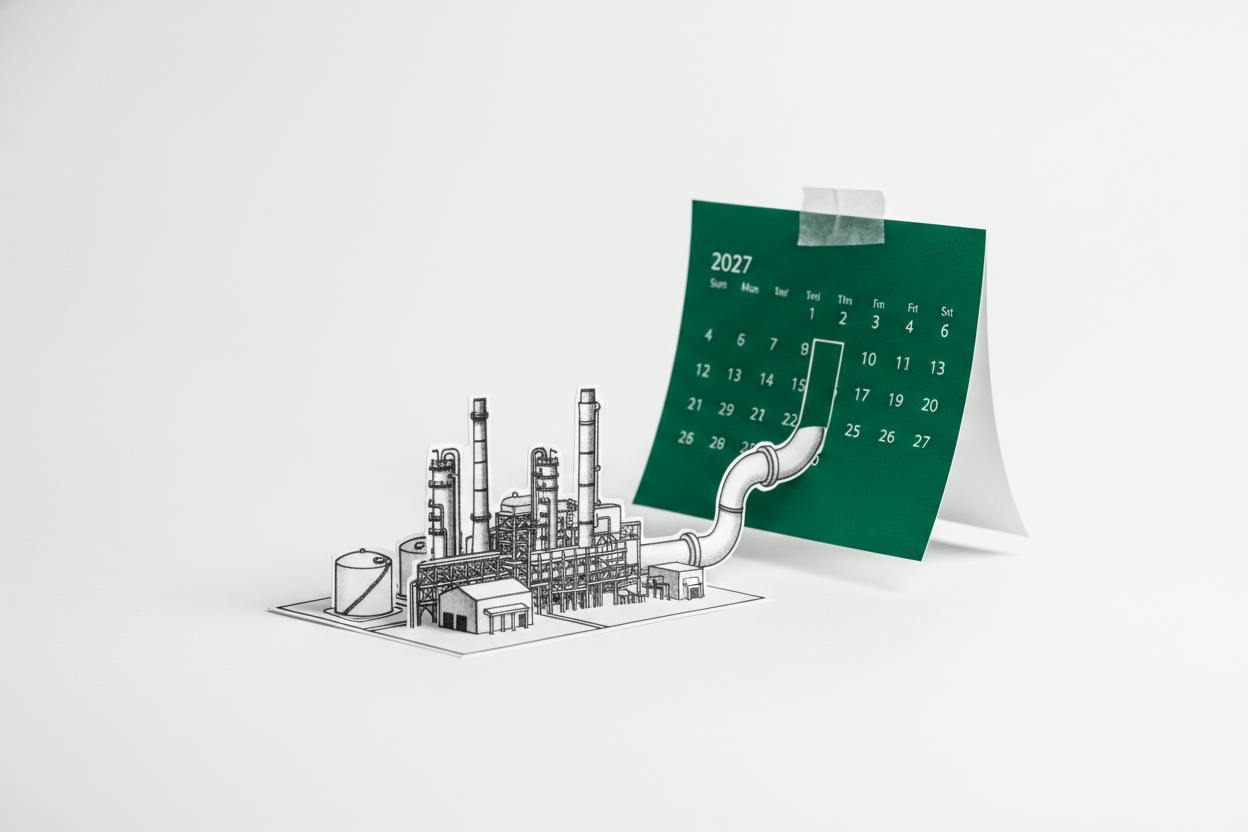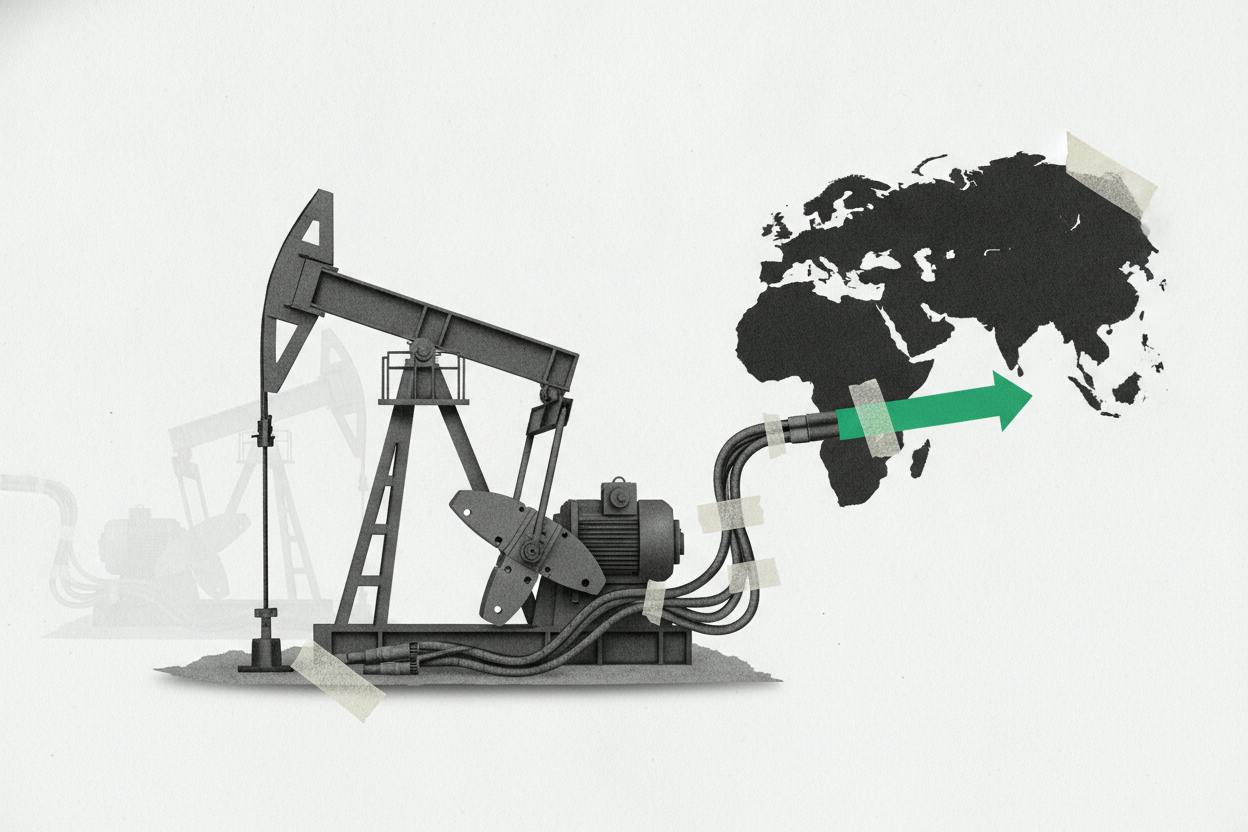
Halliburton, one of the world's largest oilfield services companies, has signaled that its future growth will come from the Middle East rather than a revival of US fracking. In a recent investor update, the company laid out a 2027 plan that anticipates mid-single-digit revenue growth and operating margins around 15%, even as activity in North America is expected to remain flat.
This strategic pivot reflects a broader reality in the energy sector: US shale producers have become more disciplined, prioritizing shareholder returns over aggressive drilling. That means less demand for the pressure pumping and other services that Halliburton provides in its home market. Meanwhile, national oil companies in the Middle East continue to invest heavily in expanding production capacity, offering a more predictable pipeline of work.
What the numbers tell us
Halliburton's guidance for 2027 is notable for what it implies about the company's trajectory. Mid-single-digit revenue growth is modest but steady, and a margin around 15% would represent a healthy improvement from recent levels. The fact that this can be achieved with a flat North America suggests the company sees enough opportunity abroad to offset any domestic stagnation.
For context, oilfield services firms like Halliburton earn money by providing equipment, technology, and expertise to drill and complete wells. Their fortunes are closely tied to the level of drilling activity, which in turn depends on oil prices and the spending plans of exploration and production companies. When US shale activity booms, Halliburton benefits; when it slows, the company has to look elsewhere.
That elsewhere is increasingly the Middle East, where state-owned oil companies are less sensitive to short-term price swings and more focused on long-term capacity goals. This is not a new trend—Halliburton has been expanding its international footprint for years, and its recent results have already shown strength in regions like Latin America and the Middle East. But the 2027 plan makes it clear that international work is now the primary growth engine.
Why North America is staying flat
The US fracking boom that transformed the energy landscape over the past decade has matured. Many shale operators have shifted from a growth-at-all-costs model to one that emphasizes free cash flow and returning money to shareholders. As a result, drilling activity has plateaued, and oilfield services companies have had to compete for a smaller pool of work.
This is not necessarily a bad thing for Halliburton. A more disciplined US market can lead to better pricing for the services that are still in demand, and it reduces the boom-and-bust cycles that have historically plagued the industry. But it does mean that the company cannot rely on a US rebound to drive its numbers.
Instead, Halliburton is betting that its international operations, particularly in the Middle East, will provide the growth needed to meet its 2027 targets. The company has been investing in technology and local partnerships to strengthen its position in these markets, and the guidance suggests management is confident in that strategy.
What it means for investors
For everyday investors, Halliburton's outlook offers a window into the shifting dynamics of the energy sector. The company is essentially saying that the future of oilfield services lies outside the US, and that investors should expect a more moderate but potentially more stable growth profile.
This is a different story from the one that played out during the shale boom, when US-focused service companies could see explosive growth. Now, the emphasis is on international expansion and margin improvement, which can be just as rewarding but requires patience.
Investors should also note that Halliburton's guidance is just a forecast—it can change if oil prices swing dramatically or if geopolitical events disrupt operations in the Middle East. The region is a key source of global supply, and any instability could have ripple effects on the company's plans.
Still, the message is clear: Halliburton is not waiting for a US fracking comeback. It is building its future on the Middle East, and it believes that will be enough to keep growing. For those following the energy sector, this is a signal worth heeding.
As always, it's important to consider how this fits into your broader portfolio. Energy stocks can be volatile, and oilfield services companies are particularly sensitive to commodity prices. But for investors looking for exposure to the energy industry, understanding where the growth is coming from is half the battle.