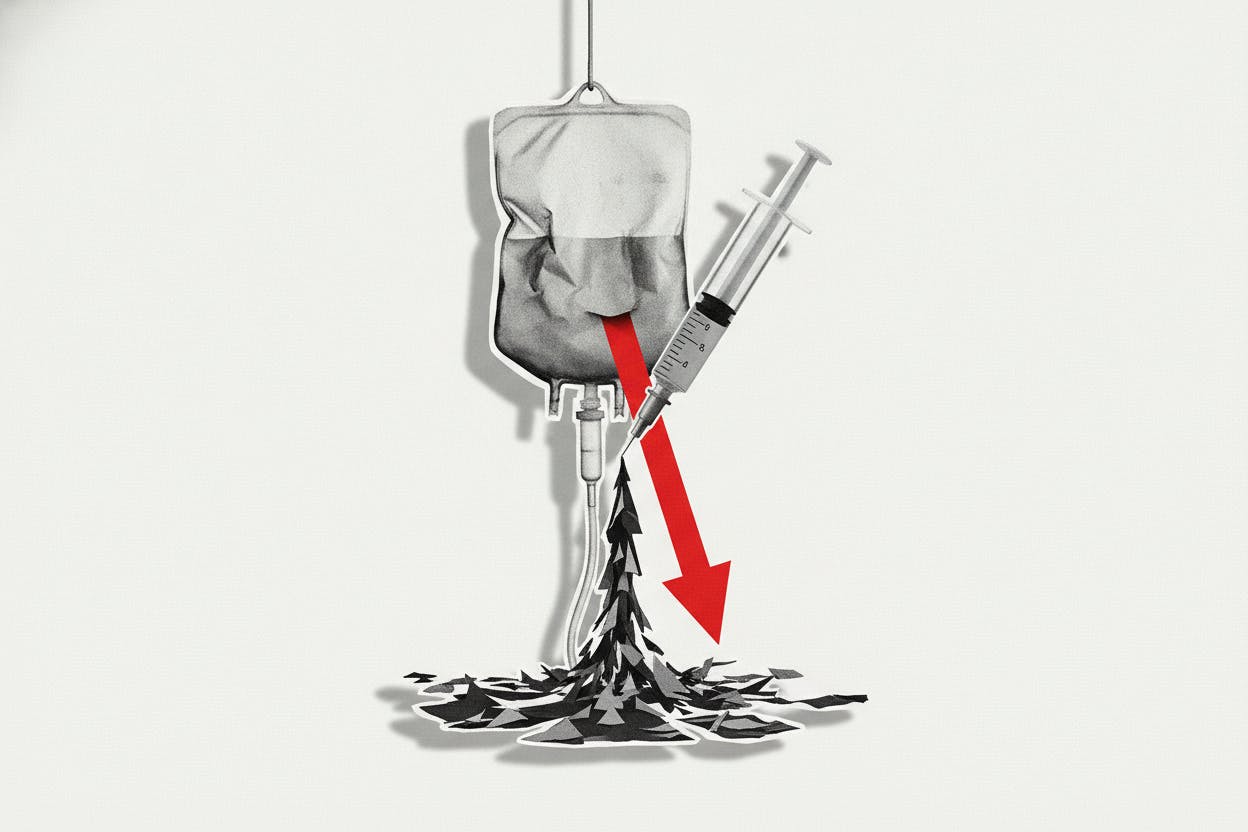
Healthcare stocks took a hit on Tuesday after two of the sector's biggest names announced significant spending and acquisition plans. Eli Lilly pledged $750 million to boost US production of its KwikPen devices, while Johnson & Johnson lined up a $2.58 billion option to acquire Sail Biomedicines. Investors treated both announcements as near-term cash drains, sending shares of both companies and the broader healthcare sector lower.
What the deals involve
Eli Lilly's $750 million commitment is aimed at expanding domestic manufacturing capacity for its KwikPen, a pre-filled injector used for several of the company's diabetes and weight-loss drugs. The investment underscores Lilly's push to meet growing demand for its blockbuster treatments like Mounjaro and Zepbound, which have seen surging sales. By building more production capacity in the US, Lilly is also aligning with broader industry and government efforts to reduce reliance on overseas supply chains.
Johnson & Johnson, meanwhile, is pursuing a potential acquisition of Sail Biomedicines, a private biotech firm. The deal is structured as an option worth up to $2.58 billion, meaning J&J can choose to buy the company at a later date, likely after certain milestones are met. Sail Biomedicines focuses on developing innovative therapies, though specific details about its pipeline were not disclosed in the announcement. This type of option deal is common in the pharmaceutical industry, allowing big companies to test the waters before committing fully.
Why investors are selling
From an investor's perspective, both announcements signal large outflows of cash in the near term. Eli Lilly's $750 million factory investment will take years to pay off, and Johnson & Johnson's potential $2.58 billion acquisition adds uncertainty about future returns. In a market where investors are increasingly focused on profitability and cash flow, such spending can weigh on stock prices, especially when the benefits are not immediate.
The broader healthcare sector has also been under pressure recently, with concerns about drug pricing regulation and competition from cheaper generics. The sell-off in Lilly and J&J dragged down other healthcare names, contributing to a weak day for the sector overall. For context, healthcare stocks had been relatively resilient earlier in the year, but this week's moves highlight how quickly sentiment can shift when big companies open their wallets.
What it means for everyday investors
For ordinary investors, these developments are a reminder that even the most established companies face trade-offs between investing for growth and maintaining near-term financial performance. Eli Lilly's spending on manufacturing is a bet on future demand for its drugs, which could pay off if sales continue to climb. Johnson & Johnson's option deal is a more speculative move, typical of big pharma's strategy to acquire promising biotech startups rather than develop everything in-house.
Investors should watch for updates on both fronts. For Lilly, any signs of production delays or weaker-than-expected drug sales could amplify the negative reaction. For J&J, the key will be whether Sail Biomedicines' pipeline delivers results that justify the price tag. In the meantime, the sell-off may create buying opportunities for those with a longer time horizon, though no one should rush in without doing their own research.
The healthcare sector's performance also ties into broader market trends. Recently, stocks rebounded as Microsoft eased AI spending fears, but healthcare's struggles show that sector-specific news can still drive divergence. Similarly, European ADRs rallied as bank stocks led a broad advance, highlighting how different industries can move in opposite directions on the same day.
Looking ahead
Both Eli Lilly and Johnson & Johnson are scheduled to report quarterly earnings in the coming weeks, which will give investors a clearer picture of their financial health and how these spending plans fit into their overall strategies. Analysts will be listening for details on how quickly the KwikPen investment will boost production capacity, and whether J&J's option deal signals a larger acquisition spree.
For now, the message from the market is clear: big spending, even for good reasons, can hurt stock prices in the short term. Everyday investors should keep an eye on these companies' fundamentals and not overreact to daily price moves. As always, diversification across sectors can help cushion the impact of any single stock's decline.