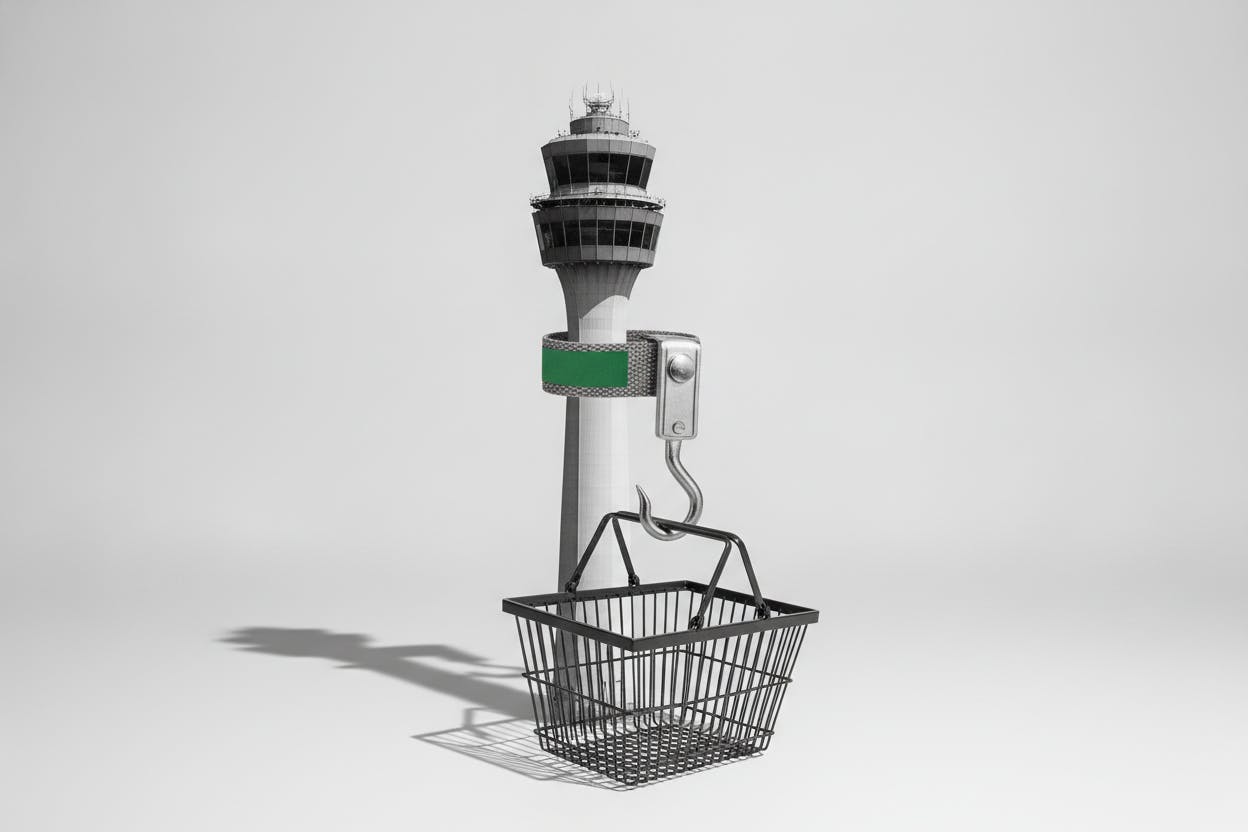
Two very different parts of the UK economy — aviation and grocery retail — are sending a similar message this week: the ability to raise prices is under pressure. Regulators have proposed a cap on what Heathrow Airport can charge airlines per passenger in 2027, while Sainsbury's has joined larger rival Tesco in reporting a slowdown in first-quarter underlying sales growth.
The combination suggests that both official regulation and consumer caution are squeezing pricing power, a dynamic that investors will be watching closely for signs of a broader economic trend.
Heathrow's fee cap: what it means for airlines and passengers
The UK Civil Aviation Authority (CAA) has proposed a temporary cap of £28.398 per passenger on the fees Heathrow can charge airlines in 2027. Heathrow is a regulated airport, meaning the CAA sets a maximum per-passenger charge that the airport can levy on airlines for using its runways and terminals. Airlines then typically pass that cost through to passengers in the form of higher ticket prices or surcharges.
The proposed cap is a fixed, per-person figure. That matters because it sets a ceiling on one specific part of an airline's cost base on Heathrow routes. When the airport raises its charge, carriers often argue that fare increases are justified by higher airport costs. A cap limits that argument, at least for the fee component. It does not prevent airlines from raising fares for other reasons — higher fuel costs, staffing expenses, or profit margin targets — but it does remove one potential driver of price increases.
The effect is likely to be most noticeable on economy tickets, where a fixed per-passenger charge makes up a larger share of the total fare than in premium cabins. For a short-haul economy ticket that might cost £100, a £28 airport fee is a significant slice. For a long-haul business class ticket costing several thousand pounds, the same fee is a much smaller proportion.
It is important to note that the cap is still a proposal. The CAA will consult on the figure before finalising it, and Heathrow may push for a higher level. The final number could change. But the direction is clear: regulators are signalling that they want to keep airport charges in check.
Grocery growth cools as shoppers stay value-conscious
On the same day, Sainsbury's, the UK's second-largest supermarket chain, reported that its first-quarter underlying sales growth had slowed. The company did not give a precise figure in the brief, but the message was clear: growth is decelerating. That echoes comments from Tesco, the market leader, which earlier reported a similar slowdown in its own first-quarter sales.
Underlying sales growth is a measure of how much revenue from existing stores has changed, excluding the impact of new store openings or closures. It is a key indicator of a retailer's health because it shows whether customers are spending more or less at the same shops. When underlying growth slows, it typically means shoppers are either buying less, switching to cheaper products, or both.
The slowdown at both Sainsbury's and Tesco suggests that UK consumers remain cautious about spending, even as inflation has eased from its 2022-2023 peaks. Shoppers are still looking for value, which makes it harder for supermarkets to raise prices without losing customers to discounters like Aldi and Lidl. That dynamic is a headwind for profit margins at the big grocers.
What it means for investors
The common thread between the Heathrow fee cap and the grocery slowdown is that pricing power is being tested from two different directions. In aviation, the constraint is regulatory: the CAA is capping what Heathrow can charge. In food retail, the constraint is consumer behaviour: shoppers are pushing back against higher prices by trading down or shopping around.
For investors in UK-listed companies, this matters because pricing power is a key driver of revenue and profit growth. When companies can raise prices without losing customers, they can grow even in a slow economy. When pricing power weakens, growth becomes harder to achieve, and margins can come under pressure.
The grocery slowdown is particularly relevant for investors in UK consumer stocks. Tesco and Sainsbury's are bellwethers for the health of the British consumer. If their sales growth continues to slow, it could signal that the post-inflation recovery in consumer spending is losing momentum. That would have implications not just for grocers, but for a wide range of retailers and consumer goods companies.
The Heathrow fee cap, meanwhile, is a longer-term factor for airlines and airport operators. For airlines like British Airways (owned by IAG) or easyJet, a lower Heathrow charge could slightly reduce their cost base on one of the world's most expensive airports. But the impact is modest relative to fuel and labour costs. For Heathrow itself, a lower cap means less revenue from its core business, which could affect its ability to invest in infrastructure or pay dividends to its shareholders.
Investors should also watch for the final CAA decision on the Heathrow cap, and for the next set of sales data from Tesco and Sainsbury's. If the trend continues, it could reinforce the view that the UK economy is entering a phase of slower growth and constrained pricing power — a backdrop that typically favours defensive stocks over cyclical ones.