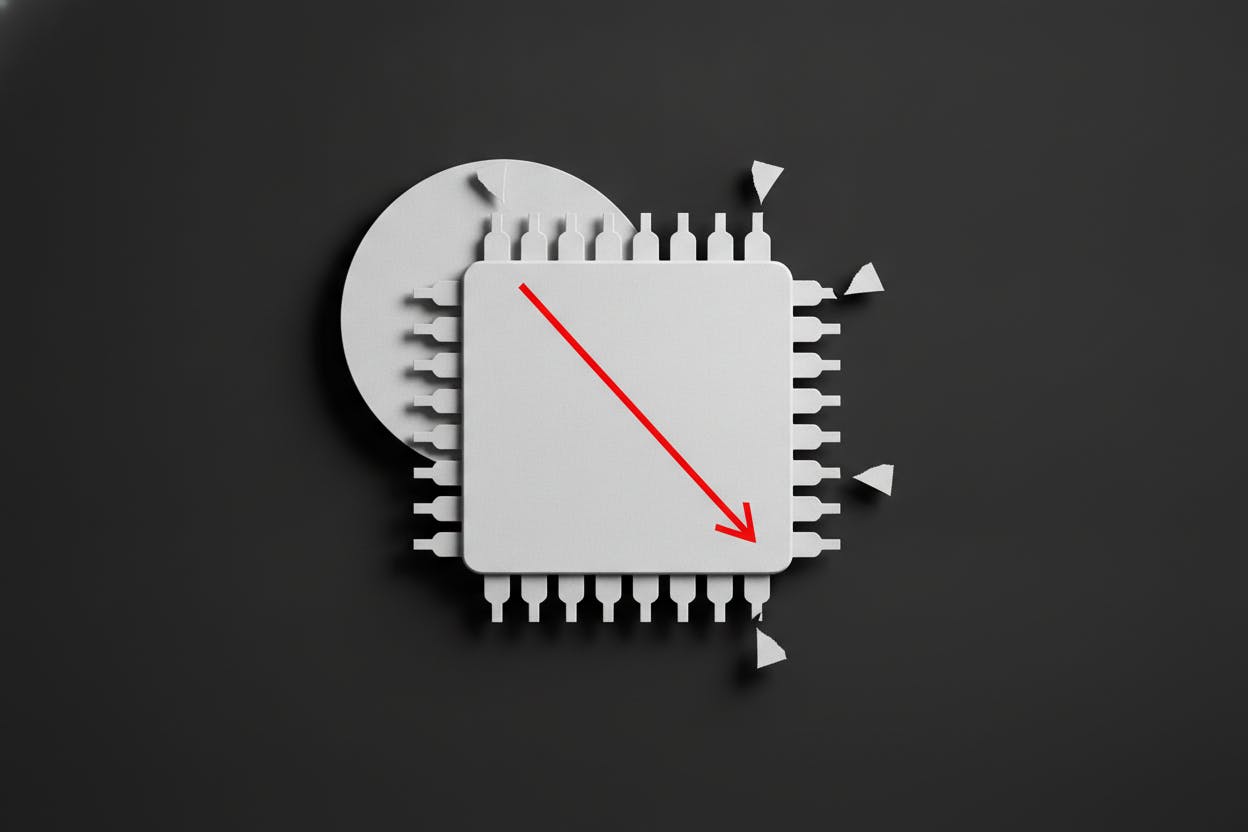
Hedge funds have been steadily reducing their exposure to US semiconductor and tech hardware stocks for four straight weeks, according to a note from Goldman Sachs. The selling pressure comes as the Philadelphia Semiconductor Index (SOX) fell 4.2% in the week ending July 3, signaling growing caution around a sector that had been a major driver of market gains.
What the data shows
Goldman Sachs, a global investment bank that tracks institutional flows, told clients that information technology was the most "net sold" US equity sector for the fourth consecutive week. The selling was concentrated in individual semiconductor and hardware names rather than broad market indexes. At the same time, hedge funds were net buyers of index and exchange-traded fund (ETF) products, suggesting they are hedging or rotating rather than fleeing equities entirely.
The Philadelphia Semiconductor Index, a benchmark that tracks 30 major chip companies including Nvidia, Intel, and Taiwan Semiconductor, fell 4.2% during the week. That decline reflects broader concerns about valuation and demand in a sector that has seen explosive growth tied to artificial intelligence (AI) and data center spending.
Why hedge funds are trimming
Hedge funds often adjust positions ahead of earnings season, which kicks off in mid-July. With many chip stocks trading at elevated price-to-earnings ratios, some fund managers may be locking in profits or reducing risk before companies report quarterly results. The SOX has more than doubled since early 2023, driven by AI optimism, but recent data points—such as softening PC and smartphone demand—have raised questions about whether the rally can continue.
The selling also comes amid a broader rotation in global markets. In Asia, for example, chip stocks have faced similar headwinds: Korea's KOSPI dropped 3% as chip stocks faced valuation doubts, while Japan's Nikkei was flat as chip stocks cooled. These moves suggest the pullback is not isolated to US markets.
What it means for everyday investors
For ordinary investors, the hedge fund selling is a signal worth watching but not necessarily a reason to panic. Hedge funds often trade on short-term momentum and can reverse course quickly. The broader market, as measured by the S&P 500, has continued to grind higher, and many analysts still see long-term demand for semiconductors driven by AI, cloud computing, and electric vehicles.
However, the four-week selling streak does highlight that even the hottest sectors can face profit-taking. Investors who own chip stocks or tech-heavy ETFs should be aware that volatility may increase as earnings season approaches. Diversification across sectors—such as adding exposure to Indian bank stocks or New Zealand equities—can help cushion against sector-specific downturns.
The broader backdrop
The chip sell-off also takes place against a mixed economic picture. The US dollar has strengthened, pressuring emerging market currencies and stocks, while investors await key inflation data from China that could shape policy from the People's Bank of China. In the US, the Federal Reserve has held interest rates steady, and markets are pricing in a potential cut later this year, which could provide a tailwind for growth stocks.
Goldman's note did not specify which individual stocks were sold most heavily, but the broad-based nature of the selling suggests it is not limited to any single company. The SOX's 4.2% weekly drop was its worst in over a month, and further declines could test support levels around 3,500 points.
Looking ahead
All eyes will be on upcoming earnings reports from major chipmakers like Nvidia, Intel, and AMD. If results beat expectations and guidance is strong, hedge funds may quickly reverse course and buy back in. If earnings disappoint, the selling could accelerate. For now, the message from Goldman Sachs is clear: institutional investors are taking a cautious stance on semiconductors, and everyday investors should be aware of the risks.
As always, the key is to focus on long-term fundamentals rather than short-term fund flows. The chip industry remains central to technological progress, but even the best sectors experience periodic pullbacks.