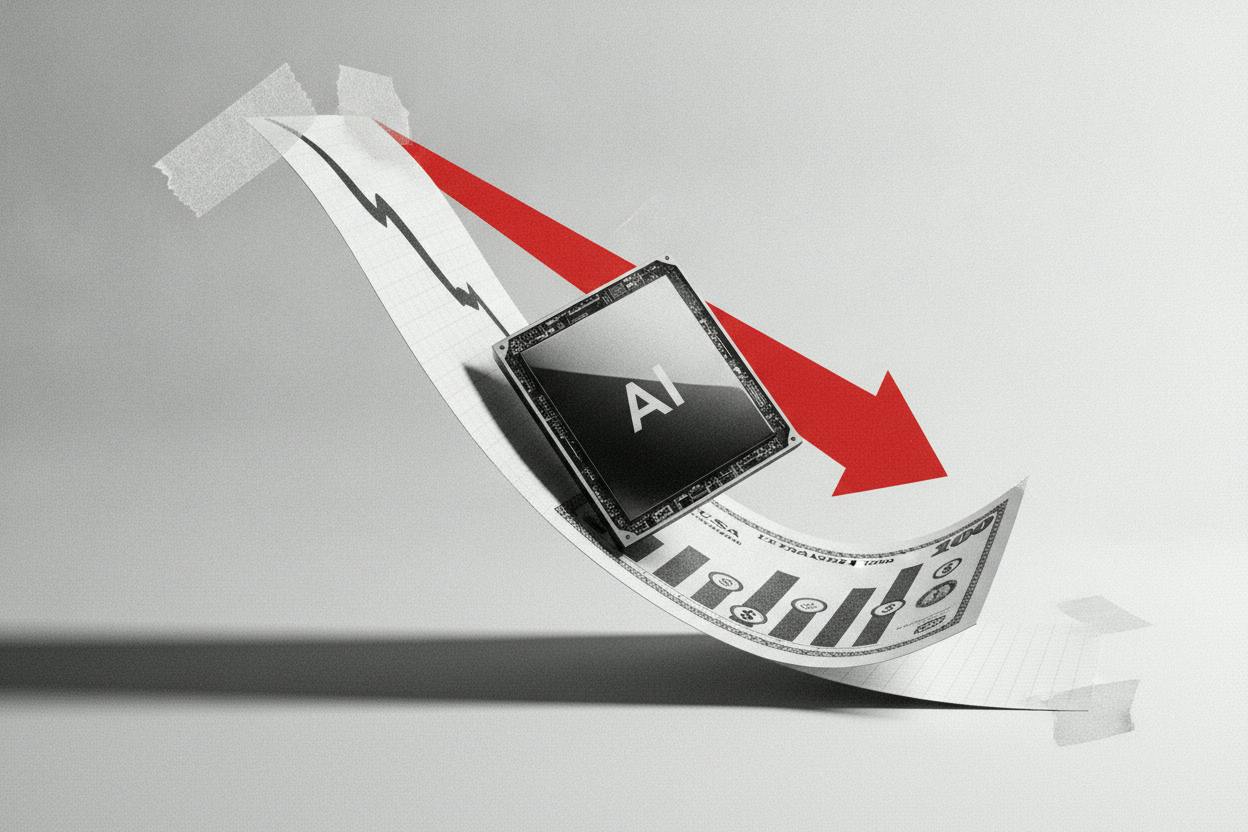
October was a tough month for hedge funds, as a selloff in technology and AI-related stocks hit portfolios harder than the broader market's relatively calm headlines suggested. JPMorgan, the global investment bank, told clients that “October is a month that most [hedge funds] will probably want to forget,” estimating that global hedge funds fell 2.6% from October 1st to 29th, and were on track for a roughly 3.5% drop for the full month.
The pain was concentrated in tech. The Nasdaq 100, which is packed with large technology companies, sank 6.6% in October, its biggest monthly fall in 18 months. In contrast, the S&P 500 slipped just 0.5%, and Europe’s STOXX 600 actually rose 1.8%. That divergence shows how much of the damage was specific to tech and AI-linked names, rather than a broad market downturn.
Why tech stocks fell
The weakness in tech was driven by a combination of factors. JPMorgan pointed to “AI/tech” as the main culprit, with credit worries and disappointing earnings weighing on sentiment. Investors had piled into AI-related stocks earlier in the year, betting on a boom in artificial intelligence. When some of those companies reported earnings that failed to meet high expectations, or when concerns about debt and financing costs emerged, the enthusiasm quickly faded.
This is a reminder that even the hottest sectors can cool off quickly. For everyday investors, it’s worth noting that a single sector can drag down a portfolio that looks diversified on the surface. The Nasdaq 100’s 6.6% drop was much steeper than the S&P 500’s 0.5% decline, highlighting how a heavy tilt toward tech can amplify losses.
Hedge funds feel the squeeze
Hedge funds, which use a variety of strategies to try to generate returns in any market, were hit from multiple angles. Goldman Sachs, another major investment bank, said systematic long-short funds dropped 3.6% and fundamental long/short funds fell 3.5% in October. This was the first time since 2016 that both groups were down more than 3% in the same month.
Long-short funds bet on some stocks rising and others falling. When the market moves in unexpected ways, these bets can go wrong. The fact that both systematic (rule-based) and fundamental (human-driven) funds suffered suggests that the selloff caught many investors off guard.
Bonds rally as stocks fall
As stocks slid, money moved into safer US government bonds, pushing bond prices up and yields down. The 10-year Treasury yield fell 36 basis points in October. A basis point is one-hundredth of a percentage point, so that’s a meaningful move. When bond prices rise, yields fall, and this flight to safety is a classic response to stock market turbulence.
For investors, this is a reminder of the value of diversification. While stocks were falling, bonds provided a cushion. That’s why many financial advisors recommend holding a mix of both.
What it means for trend-following funds
Societe Generale, a French bank, noted that “slower strategies were hardest hit by the reversal, while faster strategies benefited from reducing their positions more aggressively.” This refers to trend-following funds, often called commodity trading advisors (CTAs). These funds use models to identify and ride trends in markets. Slower models update their signals with a lag, so they can stay positioned for yesterday’s market—typically long stocks and short bonds—even as tech drops and Treasuries rally. Faster models cut exposure sooner when volatility jumps, limiting losses.
This creates big performance gaps within the same “trend” bucket. Some CTAs did well, others did poorly, depending on how quickly their models reacted.
What investors should watch next
The follow-on matters because many of these programs also shrink risk automatically after losses, using rules like volatility targeting and stop-losses. That mechanical de-risking can reduce their ability to add to a rebound in Nasdaq 100-type risk assets in the next month, while keeping marginal demand more tilted toward Treasuries after yields fell in October.
For everyday investors, the key takeaway is that market turbulence can be unpredictable, and even sophisticated investors like hedge funds can struggle. It’s a good reminder to stay diversified and not to chase the latest hot sector. If you’re invested in tech-heavy funds or ETFs, be prepared for volatility, and consider whether your portfolio has enough balance to weather a downturn.
As always, past performance is not a guarantee of future results. Keep an eye on how markets react in the coming weeks, especially if AI-related stocks continue to be volatile. For more on the tech selloff, see our coverage of chip stocks steadying after Monday's tech selloff and Asia stocks sliding on MSCI and AI jitters.