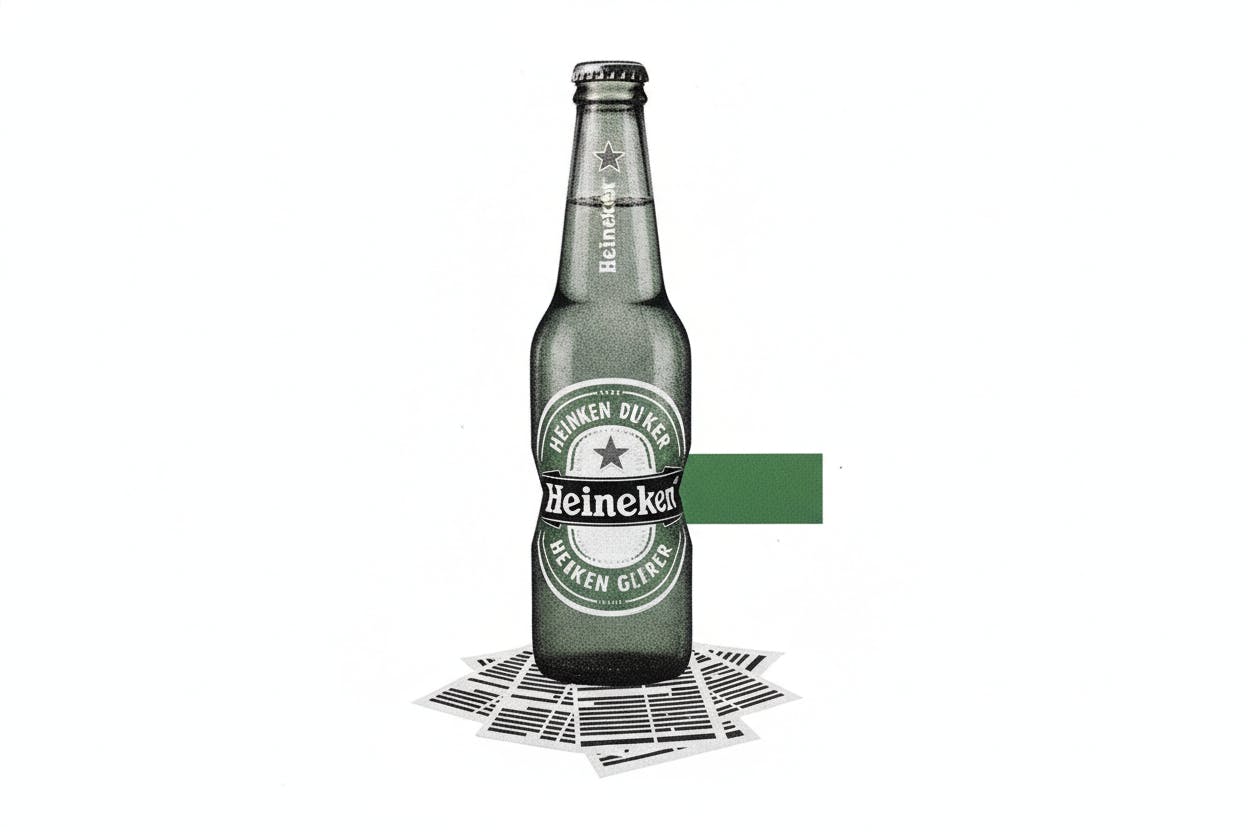
Heineken, the world's second-largest brewer, said its first-half profit rose more than expected, thanks to a cost-cutting program that has already eliminated about 3,000 jobs. The company, known for brands like Heineken, Tiger, and Sol, reported a 6.7% increase in organic operating profit for the first six months of the year, beating analysts' average estimate of 3.3%.
Cost cuts drive margin improvement
The Amsterdam-based brewer announced in February a restructuring plan that aims to cut up to 6,000 roles globally. By the end of June, it had worked through about half of those layoffs, and the savings are showing up in the bottom line. The company said the restructuring helped lift its operating profit margin, a key measure of profitability.
Organic operating profit, which strips out currency swings and acquisitions, rose 6.7% compared with the same period last year. That's a significant beat against the 3.3% that analysts had penciled in, according to the brief. The improvement came even as the company faced higher costs for ingredients, energy, and logistics—pressures that have hit the entire beverage industry.
Volume growth remains modest
Heineken also reported that beer volumes grew 1.2% in the first half, a modest gain that suggests consumers are still buying its brands despite higher prices. The company has been raising prices to offset inflation, and the volume growth indicates that demand hasn't collapsed as a result.
However, the growth is not uniform across markets. Heineken operates in more than 70 countries, and its performance varies by region. In Europe, where the cost-of-living crisis has squeezed household budgets, volume growth has been slower. In emerging markets like Asia and Latin America, demand has been stronger, helping to offset weakness elsewhere.
What this means for investors
For everyday investors, Heineken's results are a reminder that cost discipline can be a powerful driver of earnings, even when revenue growth is sluggish. The company's ability to beat profit forecasts by a wide margin—6.7% versus 3.3% expected—shows that management's focus on efficiency is paying off.
But there are caveats. The restructuring is only halfway done, and the remaining 3,000 job cuts could still weigh on morale and potentially disrupt operations. Also, the company's reliance on price increases to drive revenue could eventually hit a wall if consumers push back.
Investors will likely watch for updates on the rest of the layoffs and whether volume growth can be sustained. The company's next earnings report will show whether the cost savings continue to flow through, and whether the margin improvement is durable.
Broader context
Heineken's results come at a time when many consumer goods companies are grappling with similar challenges: rising input costs, cautious consumers, and the need to balance price hikes with volume retention. The company's success in cutting costs while still growing volumes is a positive signal, but it's not a guarantee for the future.
For comparison, other companies in the sector have also been focusing on efficiency. For instance, Suncor's record refining output helped it beat profit forecasts, showing that operational improvements can drive results across industries. Similarly, EOG's profit beat was aided by higher oil prices, but cost control played a role too.
In the beverage space, Heineken's performance stands out. Its organic profit growth of 6.7% is well above the 3.3% analysts expected, and the margin improvement is a direct result of the restructuring. The company is also investing in premium brands and non-alcoholic beers, which could provide additional growth avenues.
Risks to watch
While the first-half results are encouraging, investors should keep an eye on a few risks. First, the remaining job cuts could create uncertainty among employees and potentially affect productivity. Second, if inflation persists, Heineken may need to raise prices further, which could hurt volume growth. Third, currency fluctuations could impact reported profits, even though organic growth strips out those effects.
Heineken's stock price reaction to the earnings will depend on how investors weigh these factors. The beat on profit is a positive, but the modest volume growth and the ongoing restructuring could temper enthusiasm.
Bottom line
Heineken's first-half results show that cost-cutting can boost profitability even when sales growth is slow. The company's organic operating profit rose 6.7%, beating forecasts, and its margin improved. But with half the planned layoffs still to come, and with consumer demand uncertain, the second half of the year will be a test.
For investors, the key takeaway is that Heineken is making progress on efficiency, but the full benefits of the restructuring won't be clear until the program is complete. As always, it's wise to consider how this fits into your overall portfolio and risk tolerance.