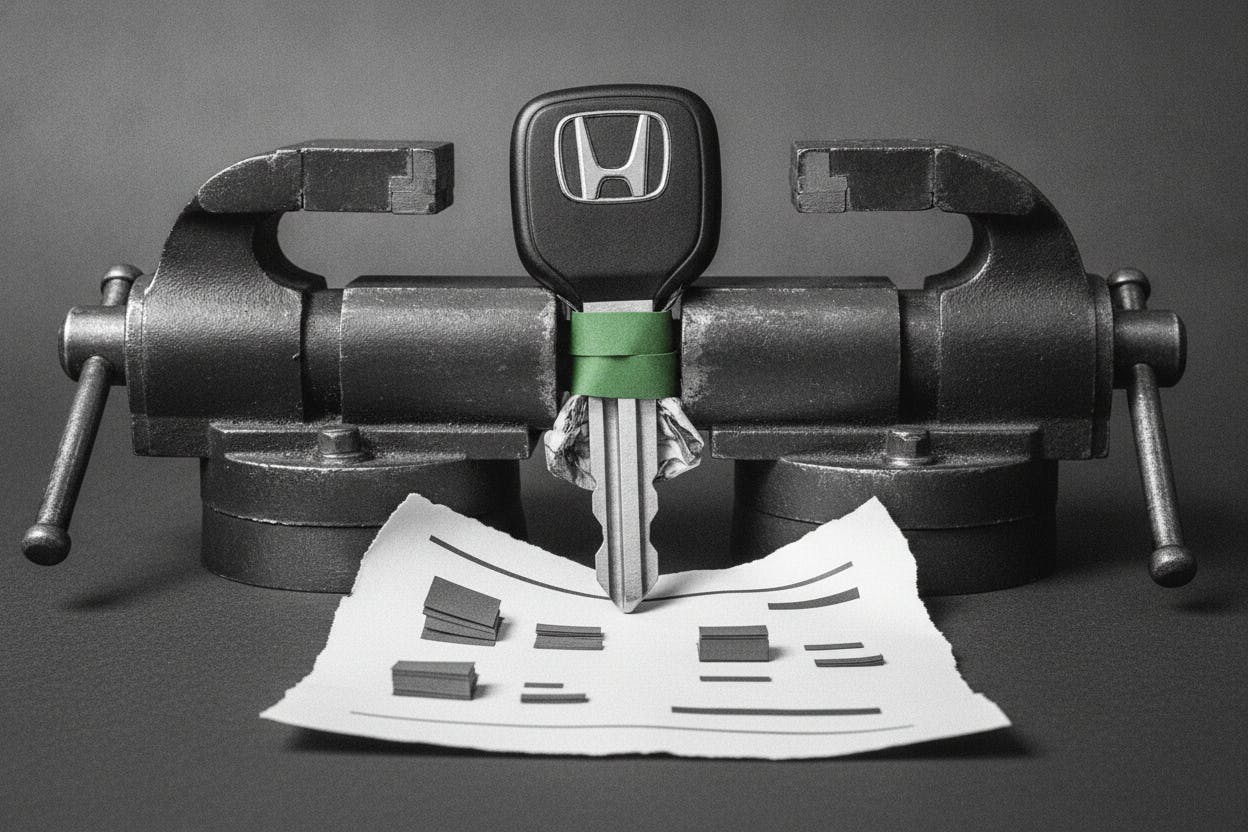
Honda is turning to its supply chain to help it survive a brutal price war in the global auto industry. According to internal documents seen by Reuters, the Japanese carmaker is asking suppliers to slash costs by as much as 30% on key components, part of a broader plan to save 1.5 trillion yen (about $9.4 billion) by 2030.
The pressure is coming from Chinese electric-vehicle makers like BYD, which have driven down prices worldwide with low-cost EVs. Honda, like many traditional automakers, is struggling to match those prices while still making a profit. The company's response is to squeeze its own supply chain, a common but often painful move in the auto industry.
What Honda is asking for
At a spring meeting with major suppliers in Utsunomiya, Japan, Honda laid out its cost-cutting targets. The documents show the company wants 30% reductions in the cost of pressed and forged components, electrical parts, and hardware for software-defined vehicles (SDVs). SDVs are cars where software controls many functions, from entertainment to driving assistance, and they are a key battleground in the EV transition.
Honda also signaled it may buy more directly from Chinese suppliers and encouraged its existing partners to use more China-made inputs. That is a significant shift for a company that has long relied on a close-knit network of Japanese suppliers. By opening the door to cheaper Chinese parts, Honda is putting its traditional partners on notice: adapt to the new cost reality or risk losing business.
Why the pressure is so intense
The global auto market is in the middle of a pricing squeeze. Chinese EV makers, backed by massive scale and government support, have been able to offer electric cars at prices that undercut many Western and Japanese models. This has forced incumbents like Honda to cut costs aggressively just to stay competitive.
For Honda, the stakes are high. The company has been slower than some rivals to embrace EVs, and it is now playing catch-up in a market where price is often the deciding factor. The cost-cutting plan is part of a broader effort to make its EV lineup profitable, but it also reflects a harsh reality: if Honda can't reduce costs, it may lose market share in key regions like China and Europe.
This is not just a Honda problem. Other automakers are facing similar pressures, and the ripple effects are being felt across the supply chain. Suppliers, especially smaller ones, are being asked to absorb more of the burden, which can squeeze their own margins and force them to make tough choices about where to invest.
What it means for investors
For everyday investors, this story is a reminder that the auto industry is undergoing a major transformation, and not all companies are equally prepared. Honda's move to cut costs is a defensive strategy, but it also signals that the company is serious about competing in the EV era. That could be a positive sign for long-term investors, but it also carries risks.
If Honda succeeds in reducing costs, it could protect its profit margins and maintain its competitive position. But the plan depends on suppliers agreeing to steep cuts, which is not guaranteed. Suppliers may push back, especially if they are already operating on thin margins. There is also the risk that cutting costs too aggressively could hurt quality or delay new product launches.
Investors should also watch how this plays out in the broader market. The pressure on traditional automakers is one reason why some investors are turning to companies that are aggressively cutting prices to win customers, a strategy that can boost sales but often at the expense of profits. In the auto sector, the winners will likely be those that can balance cost cuts with innovation.
Another factor to consider is the global bond market, where borrowing costs have risen to multi-year highs. Higher interest rates make it more expensive for automakers to finance their EV investments, adding to the pressure to cut costs elsewhere. Honda's plan is partly a response to that environment, as it seeks to free up cash for future investments.
For now, Honda's suppliers are the ones feeling the immediate heat. But the long-term impact will be felt by anyone who owns auto stocks or funds that invest in the sector. The shift toward Chinese suppliers and cheaper components is a trend that could reshape the global auto supply chain, with implications for jobs, trade, and investment.
As always, it's important to remember that cost-cutting plans don't always go as expected. Honda's targets are ambitious, and the company will need to execute well to achieve them. Investors should keep an eye on how suppliers respond and whether Honda can maintain its production quality while reducing costs.
In the meantime, the message from Honda is clear: the era of cheap Chinese EVs is forcing everyone to rethink how they build and price cars. For traditional automakers, the race to cut costs is just beginning.



