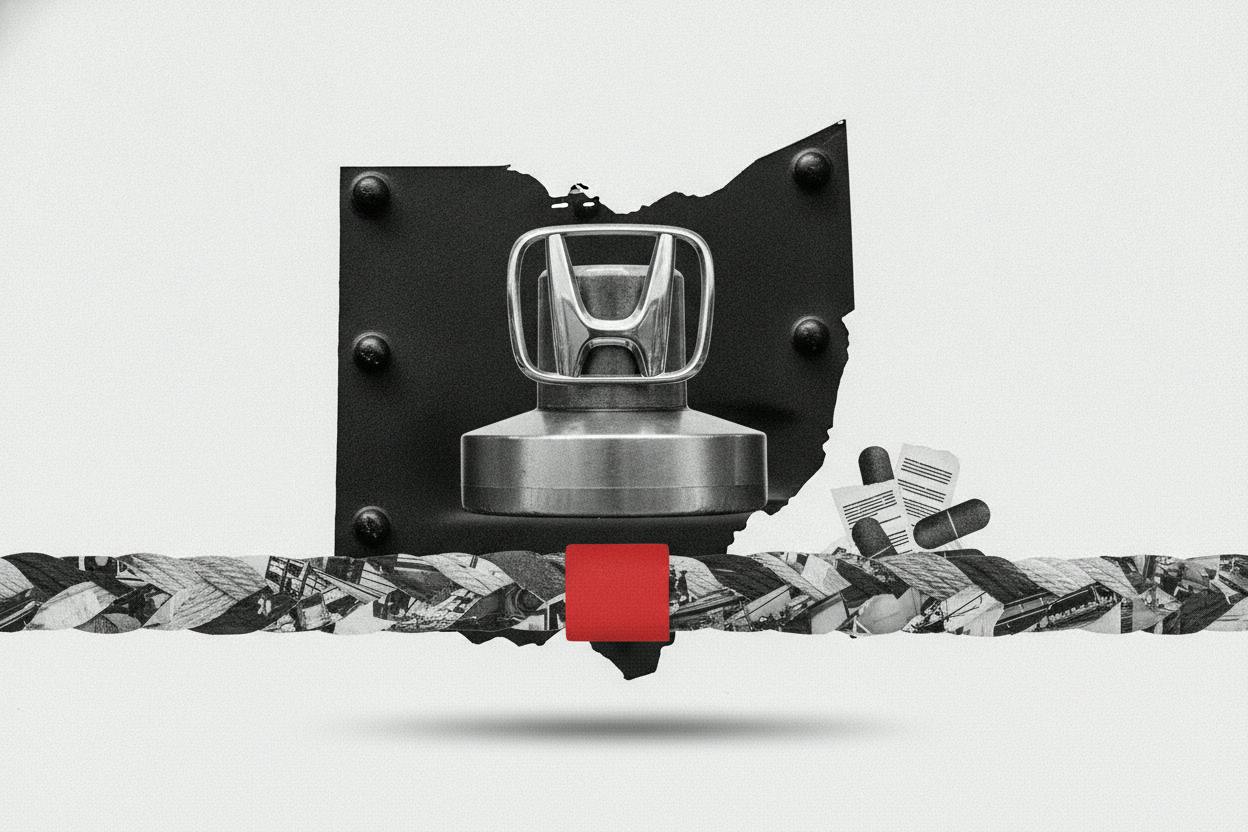
Honda is doubling down on hybrids. The Japanese automaker announced plans to spend $3 billion on a new plant in central Ohio dedicated to building hybrid vehicles, with production slated to start in 2029. The facility will have the capacity to make 240,000 vehicles a year, lifting Honda's total US output capacity to 1.3 million vehicles annually.
The move comes as automakers worldwide navigate a tricky transition. While many have poured billions into fully electric vehicles, consumer demand has been uneven, with concerns about charging infrastructure, range anxiety, and higher upfront costs. Hybrids—which combine a gasoline engine with an electric motor—have emerged as a popular middle ground, offering better fuel economy without requiring drivers to change their habits.
More than just one plant
Honda's investment isn't confined to Ohio. The company says it is spreading money across its North American footprint, including new hybrid engine work in Alabama and upgrades at engine and transmission plants in Ohio and Georgia. It also reaffirmed fresh commitments in Canada, with support from the Canadian government.
This broad approach suggests Honda sees hybrids as a long-term pillar of its North American strategy, not a stopgap. By upgrading existing facilities and adding new ones, the company is positioning itself to meet demand for both hybrids and traditional vehicles while keeping its options open for further electrification down the road.
What this means for investors
For everyday investors, Honda's decision is a signal about where the auto industry is headed. It reflects a pragmatic bet that hybrids will remain a significant part of the market for years, even as EVs gain ground. That could have implications for companies across the supply chain, from battery makers to parts suppliers.
Honda's move also highlights the importance of manufacturing capacity in the US. By boosting local production, the company can better serve American buyers and potentially avoid some of the tariffs and supply chain disruptions that have plagued the industry. That's a factor investors may want to watch, especially as other automakers make similar choices.
It's worth noting that Honda's investment comes at a time when the broader auto sector is facing headwinds, including rising interest rates and shifting consumer preferences. Tesla's recent decision to phase out the Cybertruck and pivot its Austin plant to a new model underscores how quickly the landscape can change. Honda's hybrid bet is a more conservative play, but it's not without risks.
Hybrids vs. EVs: the bigger picture
Hybrids have been around for decades, but they've gained renewed attention as automakers recalibrate their EV ambitions. While pure EVs still dominate headlines, hybrids offer a practical compromise for many drivers. They deliver better fuel economy than conventional cars, produce fewer emissions, and don't require access to charging stations.
For Honda, the strategy makes sense. The company has been slower than some rivals to embrace fully electric vehicles, and its hybrid lineup has been well-received. By investing in hybrid production, Honda is betting that demand will remain strong, especially in markets like the US where charging infrastructure is still developing.
Investors should also consider the broader economic backdrop. Interest rates remain elevated, which can make big-ticket purchases like cars more expensive. That could weigh on auto sales in the near term, but Honda's long-term investment suggests it's looking past the current cycle.
What to watch next
Honda's plant won't open until 2029, so the immediate impact on its financials will be limited. But the announcement offers clues about the company's strategic direction. Investors will likely watch for updates on construction progress, any changes to Honda's EV plans, and how the company manages its capital spending.
It's also worth keeping an eye on how competitors respond. If hybrids continue to gain traction, other automakers may follow suit, which could reshape the competitive landscape. In other sectors, companies are making big bets on energy infrastructure, and the auto industry is no exception.
For now, Honda's $3 billion commitment is a clear statement: hybrids are here to stay, at least for the foreseeable future. Whether that bet pays off will depend on consumer demand, regulatory policies, and the pace of EV adoption. But for investors, it's a reminder that the road to electrification isn't a straight line—and that companies are placing their bets accordingly.