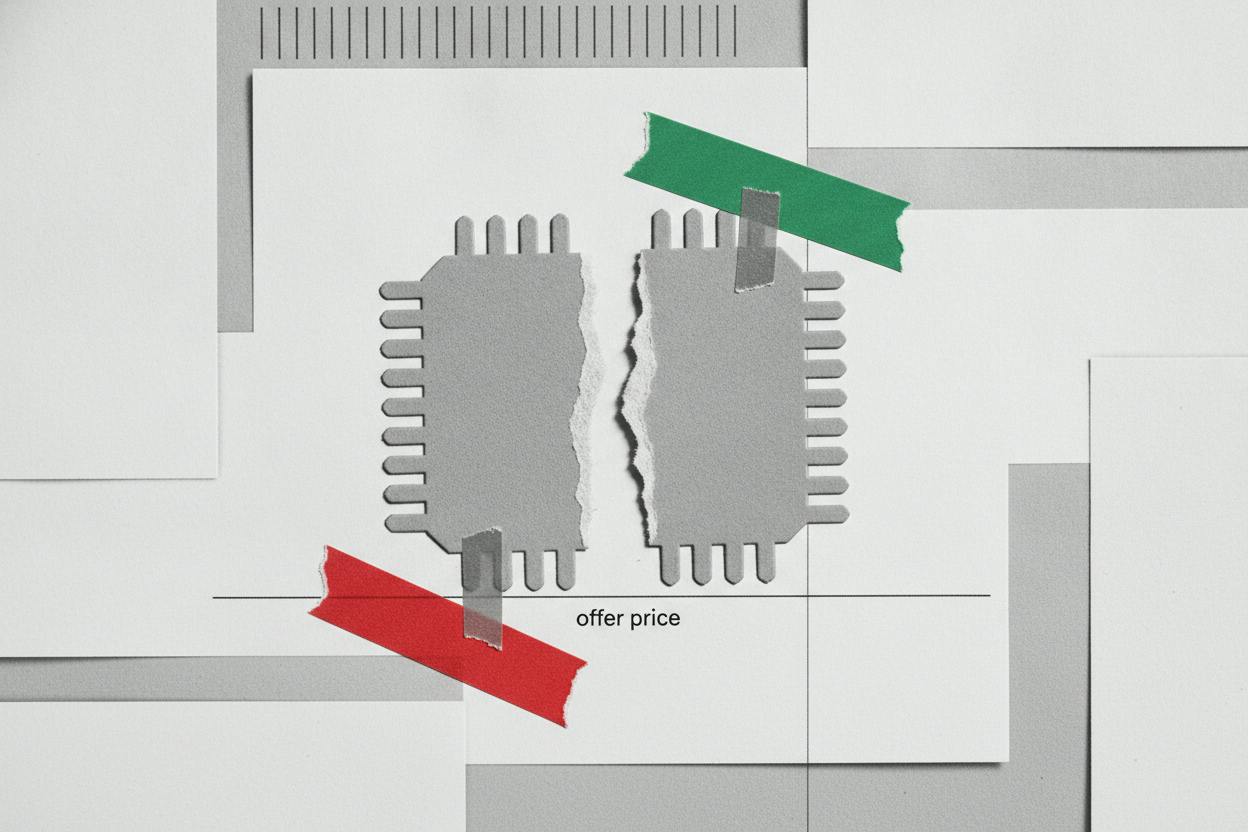
Two Chinese semiconductor companies made their Hong Kong debuts on the same day, but the market gave them very different welcomes. Suzhou Denglin, a maker of graphics processing units (GPUs) for artificial intelligence, saw its shares fall below the offer price, while Jiangsu Xinde, a chip packaging firm, jumped more than 20% at the open. The two listings together raised HK$2.36 billion, according to Reuters.
A tale of two chip listings
Suzhou Denglin priced its IPO at the bottom of its marketed range, raising HK$1.41 billion. Demand looked thin: its retail tranche was only 2.11 times subscribed, and the international tranche was 1.34 times covered. That weak appetite set the stage for a disappointing first day, with the stock dipping below its offer price.
In contrast, Jiangsu Xinde, which provides packaging and testing services for semiconductors, saw strong demand. Its shares jumped more than 20% at the open, reflecting investor enthusiasm for a more established, services-oriented chip business.
Why the divergence?
The split debut highlights how selective investors have become, even within the same broad “chips plus AI” narrative. Suzhou Denglin is a pure-play AI GPU maker, a sector that has attracted huge attention globally thanks to the boom in artificial intelligence. But the company is relatively young and faces intense competition from established players like Nvidia, which has its own troubles that have deepened its woes.
Jiangsu Xinde, on the other hand, operates in the more mature semiconductor packaging and testing segment. These firms are less glamorous but often have steadier revenue streams and clearer paths to profitability. Investors may be rewarding that stability over the higher-risk, higher-reward AI GPU story.
What it means for investors
For everyday investors, the mixed debut is a reminder that not all chip stocks are created equal. The AI boom has lifted many related companies, but valuations can be stretched, and not every firm will deliver on the hype. Suzhou Denglin's weak subscription numbers suggest that even in a hot sector, investors are doing their homework and demanding reasonable prices.
The strong performance of Jiangsu Xinde shows that there is still appetite for well-positioned semiconductor firms, especially those with tangible businesses and proven demand. Packaging and testing may not be as exciting as designing cutting-edge GPUs, but it is essential to the chip supply chain and can offer more predictable growth.
For those watching the broader market, the listings come at a time when Treasury yields are mixed and investors are awaiting key inflation data, which could influence risk appetite globally. In Asia, Australian stocks slipped below 9,000 as bank losses weighed, showing that sentiment remains fragile.
Looking ahead
The performance of these two stocks in the coming weeks will be closely watched. If Suzhou Denglin can recover above its offer price, it may signal that the dip was just a temporary hiccup. If it continues to slide, it could dampen enthusiasm for other AI-related IPOs in Hong Kong.
Jiangsu Xinde's strong start will likely encourage other chip packaging and testing firms to consider listing. The sector is benefiting from the global push to diversify semiconductor supply chains, and Hong Kong remains a key fundraising hub for Chinese tech companies.
For investors, the key takeaway is to look beyond the “AI” label and examine a company's fundamentals, competitive position, and valuation. The market is rewarding companies with clear business models and punishing those that are overhyped. As always, diversification and due diligence remain essential.