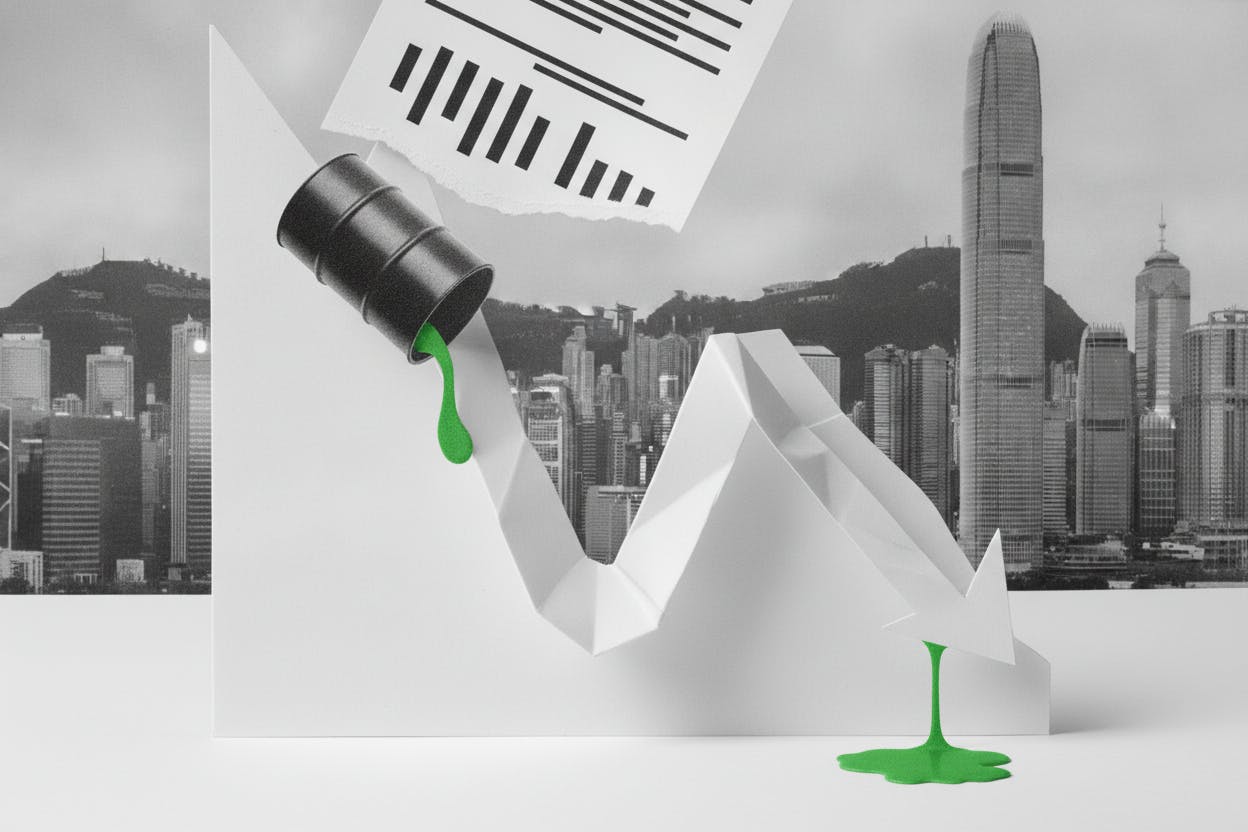
Hong Kong stocks fell on Friday as investors faced a double dose of uncertainty: jittery oil prices tied to Middle East tensions and a fresh round of US tariffs announced by President Trump. The Hang Seng Index closed down 1% at 24,963.23, while the Hang Seng China Enterprises Index also slipped 1% to 8,271.06.
What's Behind the Drop?
The sell-off reflects a market trying to price two distinct risks at once. First, oil prices have been volatile as geopolitical tensions in the Gulf region keep energy markets on edge. Recent weeks have seen crude oil prices surge, with oil prices set for a 13% weekly gain as risks mount around key shipping routes like the Strait of Hormuz and the Red Sea. That volatility can seep into everyday costs, raising fears that inflation could cool more slowly than hoped and keep interest rates higher for longer.
Second, President Trump announced the US will impose tariffs of 10% to 12.5% on dozens of countries, including the European Union. Tariffs act as a tax on imported goods, which can raise prices for consumers and businesses, potentially feeding inflation. They also disrupt global supply chains and can hurt corporate profits, especially for companies that rely on international trade.
Why Oil and Tariffs Matter for Stocks
For everyday investors, the combination of higher oil prices and new tariffs creates a challenging backdrop. Higher oil prices increase costs for transportation, manufacturing, and energy-intensive industries, which can squeeze profit margins. Meanwhile, tariffs can make imported materials more expensive, further pressuring companies that operate globally.
Both factors also influence central bank policy. If inflation stays elevated, central banks may keep interest rates higher for longer. Higher rates matter for stocks because they raise the “discount rate” investors use to value future profits, which can drag on price-to-earnings multiples. That means stocks, especially those with high growth expectations, can become less attractive when rates are high.
The broader Asian market has also felt the pressure. Asia stocks tumbled as AI spending fears and $100 oil hit South Korea's KOSPI, while Asia stocks slid as $100 oil and AI spending doubts hit chipmakers across the region.
What Investors Are Watching Next
Investors will be closely monitoring oil prices in the coming days. If tensions in the Middle East escalate further, energy costs could remain elevated, adding to inflationary pressures. The US dollar has also been firming, as the dollar holds firm as oil above $100 and tariffs fuel inflation fears. A stronger dollar can weigh on emerging market stocks, including those in Hong Kong, by making dollar-denominated debt more expensive and reducing the appeal of riskier assets.
On the tariff front, markets will watch for any retaliation from affected countries, which could escalate into a broader trade conflict. The EU, for example, has previously signaled it would respond to US tariffs with its own measures. Such a tit-for-tat scenario could further disrupt global trade and hurt corporate earnings.
For Hong Kong stocks specifically, the Hang Seng Index's decline reflects the market's sensitivity to global trade and energy dynamics. The index includes many companies with exposure to international markets, such as technology, financial, and industrial firms, making it vulnerable to shifts in global economic conditions.
What It Means for Everyday Investors
For ordinary investors, the key takeaway is that markets are facing a period of heightened uncertainty. Volatile oil prices and new tariffs create a complex environment where inflation, interest rates, and corporate profits are all in flux. Diversification across asset classes and geographies can help manage risk, as can focusing on companies with strong balance sheets and pricing power that can weather higher input costs.
It's also worth noting that energy stocks may benefit from higher oil prices, but the broader market impact is negative when inflation fears rise. Investors should stay informed about developments in the Middle East and trade policy, as these factors are likely to drive market moves in the near term.
As always, it's important to remember that short-term market moves are normal, and a long-term perspective can help ride out periods of volatility. The Hang Seng Index's 1% decline is a reminder that markets react quickly to new information, but patient investors who focus on fundamentals are often rewarded over time.



