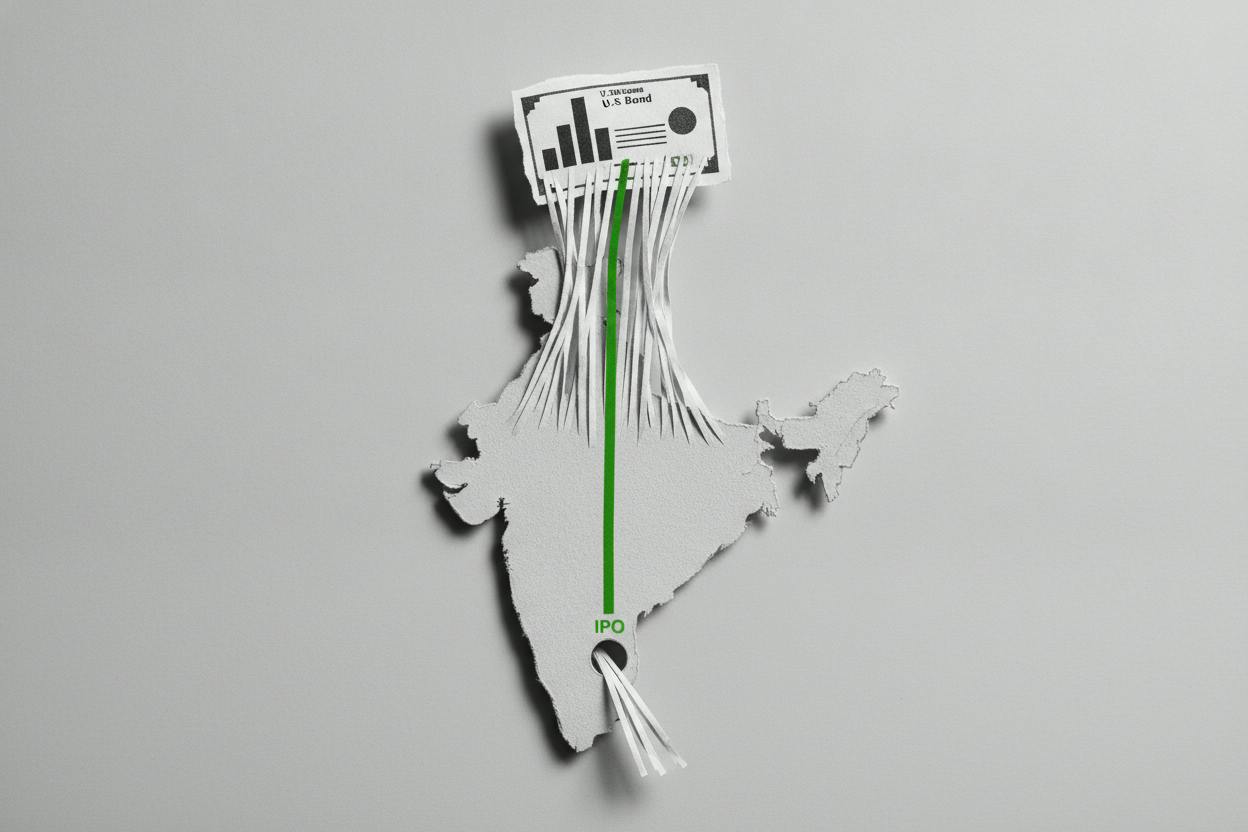
Indian stocks are feeling the heat from across the Atlantic. A hotter-than-expected US inflation reading has revived worries that the Federal Reserve will keep interest rates higher for longer, and that is weighing on Indian equities after a prolonged stretch of foreign selling.
According to Reuters, foreign investors have sold Indian shares for 14 consecutive sessions, pushing year-to-date outflows to a record $32.7 billion. The selling reflects a familiar dynamic: when US inflation runs hot, investors start pricing in higher US interest rates. That tends to strengthen the dollar and make US bonds look more attractive, which can pull money out of emerging markets like India.
Why US inflation matters for Indian stocks
The link between US inflation and Indian stocks might not be obvious at first glance, but it is a key driver of global capital flows. When US inflation is high, the Fed typically raises interest rates to cool the economy. Higher US rates make dollar-denominated assets, such as Treasury bonds, more appealing because they offer better yields. As a result, global investors often shift money out of riskier emerging markets and into safer US assets.
India, as one of the largest emerging markets, is particularly sensitive to these flows. Foreign institutional investors play a significant role in Indian markets, and their selling can put downward pressure on stock prices, especially in large-cap names that are heavily held by overseas funds.
The current bout of selling is part of a broader trend. Earlier this year, hot US inflation lifted the dollar and sent gold to a two-month low, and similar concerns have hit other Asian markets. For instance, hot US inflation hit Asian tech stocks, with South Korea's KOSPI dropping 5.6%. The ripple effects are being felt across the region.
Domestic catalysts: Wipro's results and a busy IPO calendar
With the risk-off mood in place, traders are also watching near-term catalysts at home. One is Wipro's quarterly results, which are due soon. The IT services giant's numbers will be scrutinised for clues about demand, pricing, and profit margins in the sector. A weak showing could add to the negative sentiment, while a strong one might offer some support.
Another factor is the busy IPO calendar. A flurry of new listings can soak up cash from the secondary market, even when company fundamentals haven't changed. Reuters noted that Jio Platforms' planned raise of up to $3.2 billion would be India's largest IPO to date. Two traders said strong primary-market activity could keep diverting liquidity from day-to-day stock trading.
What it means for investors
For everyday investors, the key takeaway is that big IPOs don't just compete for headlines—they compete for cash. Large investors often set money aside ahead of time to apply for shares, and they typically free up that cash by selling the easiest-to-sell positions they already own, which are often big, index-heavy names. Some also use index futures to temporarily reduce market exposure while they wait for IPO allocations.
That "fund-the-IPO" dynamic can cap near-term gains in benchmarks like the Nifty 50 even without new bad news, because the secondary market effectively becomes the cash machine for primary-market demand.
For those with money in Indian stocks, the combination of foreign selling, a hot IPO pipeline, and US rate fears could mean continued volatility in the near term. It's a reminder that global factors—like US inflation—can have a direct impact on domestic portfolios, and that even solid company fundamentals can be overshadowed by broader market flows.
Investors should also keep an eye on how the Fed reacts to the inflation data. If rate expectations continue to rise, the dollar could strengthen further, putting more pressure on emerging markets. On the other hand, any signs that inflation is cooling could ease the selling pressure and provide some relief.
In the meantime, the focus will be on Wipro's results and the progress of Jio Platforms' IPO. Both could offer clues about the direction of Indian markets in the coming weeks.