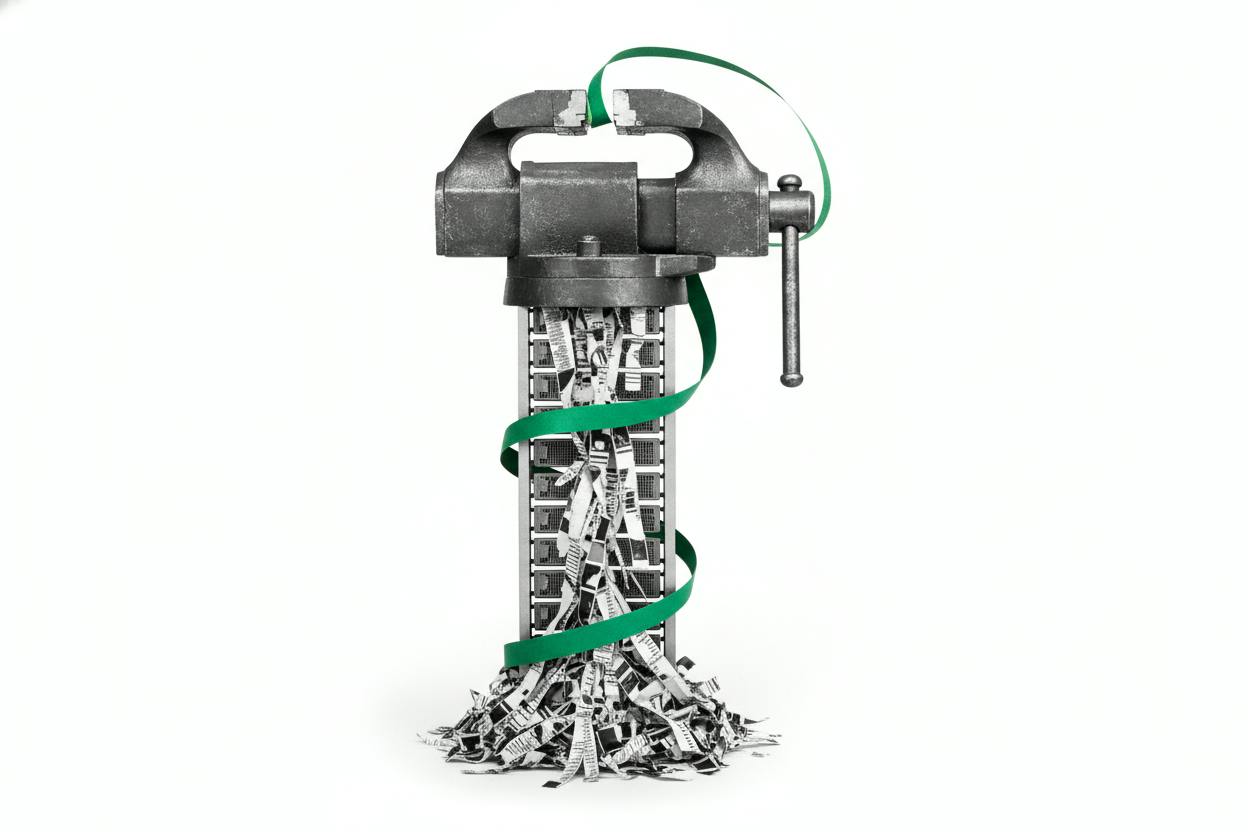
Hewlett Packard Enterprise (HPE) delivered a seemingly upbeat message: it lifted its fiscal 2027 revenue growth outlook to a range of 27% to 35%. But the market's reaction was anything but celebratory. Shares fell about 12% in premarket trading as investors zeroed in on a different number: the profit margins in the company's fast-growing cloud and AI unit.
The disconnect highlights a key lesson for everyday investors: growth alone doesn't move stock prices. What matters is how much profit that growth generates. HPE's upgraded forecast points to faster expansion, but analysts argue that expansion is likely to come with thinner margins than the market had hoped.
Why a bigger forecast didn't help
HPE's results and longer-term outlook signaled stronger growth in its Cloud & AI segment, which includes servers and services for artificial intelligence workloads. That's a hot area, and investors generally reward companies that can ride the AI wave. But the excitement was tempered by concerns about profitability.
Piper Sandler, an investment bank, said the guidance implies a second-half slowdown and margin compression. JPMorgan, a global investment bank, estimates that the Cloud & AI operating margin could slide to about 14% by fiscal 2027. That's a significant drop from what some investors may have expected, and it shifts the conversation from “How fast can HPE grow?” to “What quality of growth is it getting?”
This is a classic market dynamic. When a company raises its revenue forecast, the stock often jumps. But if investors believe that revenue will come with lower profit per dollar, they may punish the stock instead. That's exactly what happened here: the market didn't reject growth, it discounted how much profit that growth is likely to produce.
What it means for investors
Stock prices tend to follow expected profits, not just sales. If HPE's upgraded 27%-35% revenue growth is driven mainly by a lower-margin mix in Cloud & AI, then earnings and cash flow may rise more slowly than revenue. That makes the company look less valuable on common yardsticks like the price-to-earnings (P/E) ratio.
In this setup, the market often “resets” both forward earnings expectations and the valuation multiple at the same time. That's how you can see a sharp drop—like the roughly 12% premarket slide—right after a big jump the day before. Investors aren't rejecting growth; they're re-pricing it.
For ordinary investors, this is a reminder to look beyond headline revenue numbers. When a company talks up its growth prospects, it's worth asking: What are the margins? Is the growth profitable? A company can grow quickly and still be a poor investment if profits don't follow.
HPE's situation is not unique. Many companies in the AI and cloud space face similar questions. The market is increasingly focused on the bottom line, not just the top line. That's why a big forecast upgrade didn't protect HPE's stock from a selloff.
Investors will likely watch HPE's next earnings reports closely to see if the margin pressure materializes as analysts predict. If the company can show that its cloud and AI business is becoming more profitable, the stock could recover. But if margins continue to slide, the market may keep punishing the shares.
For now, the takeaway is clear: growth is good, but profitable growth is better. HPE's story is a case study in how the market weighs those two factors.