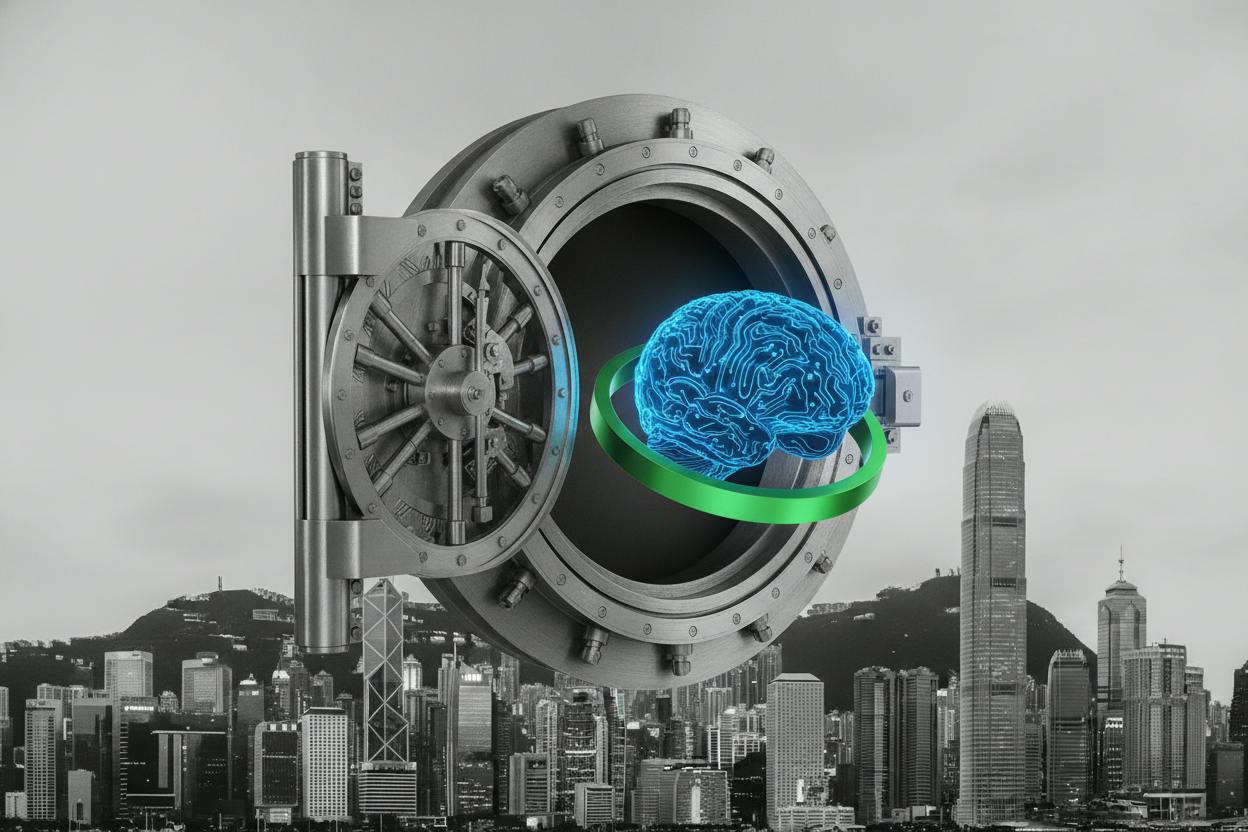
HSBC has chosen Hong Kong as the home of its next major artificial intelligence push, announcing plans to open an AI and emerging technology institute in the first quarter of 2027. The bank's CEO, Georges Elhedery, unveiled the plan at Hong Kong's Fintech Week, positioning the city as a key hub in the lender's global AI strategy.
The institute will work with the Hong Kong University of Science and Technology, and will later relocate to the city's Northern Metropolis development project once that site is ready. The announcement comes as the Hong Kong Monetary Authority (HKMA), the city's de facto central bank and banking regulator, prepares new guardrails specifically aimed at "AI agents" in finance.
What are AI agents and why do they matter?
AI agents are software programs that can perform tasks autonomously, such as answering customer queries, processing transactions, or even making investment decisions, with minimal human oversight. In banking, they are seen as a way to cut costs and improve efficiency, but they also raise questions about accountability, data privacy, and the risk of errors or bias.
The HKMA's move to set rules for these agents signals that regulators are paying close attention to how banks deploy the technology. For HSBC, having a dedicated institute in Hong Kong—one of the world's largest financial centres—puts it at the heart of that regulatory conversation.
HSBC's broader AI push
The Hong Kong institute is part of a wider effort by HSBC to embed AI across its operations. In July, the bank said it would hire more than 100 AI specialists for a new AI centre in Singapore. It is also rolling out AI training across its roughly 200,000-strong workforce, a sign that the bank sees AI as a core skill for all employees, not just a niche team.
This is not HSBC's first foray into AI. The bank has been using machine learning for fraud detection and customer service for years. But the creation of dedicated institutes and large-scale hiring suggests a more aggressive push to lead in the technology, rather than simply follow.
What it means for investors
For everyday investors, the news is a reminder that big banks are betting heavily on AI to cut costs and improve services. HSBC's commitment to Hong Kong also underscores the city's continued importance as a global financial hub, even as other centres like Singapore compete for talent and business.
Investors should watch how these AI investments translate into measurable results—such as lower operating costs, higher revenue from new products, or better risk management. Banks that deploy AI effectively could see improved profit margins over time, while those that stumble could face regulatory fines or reputational damage.
The HKMA's forthcoming rules on AI agents are also worth monitoring. Clear regulation can provide certainty for banks and investors alike, but overly strict rules could slow adoption. The balance the regulator strikes will shape how quickly AI becomes mainstream in Hong Kong's financial sector.
HSBC's move also fits a broader trend of banks expanding their tech capabilities. For context, other companies are making similar strategic bets—for instance, Virgin Media O2 plans job cuts to tackle its debt, showing how firms are reshaping operations to stay competitive. Meanwhile, emerging markets have been sliding on AI spending doubts, highlighting that investor sentiment toward tech investments can be volatile.
For HSBC shareholders, the key question is whether these AI investments will pay off. The bank has not disclosed the exact cost of the Hong Kong institute, but the scale of its AI ambitions—spanning multiple cities and its entire workforce—suggests a significant outlay. Investors will likely look for updates on how these initiatives are progressing in future earnings calls.
Looking ahead
The institute is still more than two years away, so there is plenty of time for details to evolve. What is clear is that HSBC is positioning itself as a leader in AI within the banking sector, and Hong Kong is set to play a central role in that strategy.
For the broader market, the combination of HSBC's investment and the HKMA's regulatory framework could make Hong Kong a testbed for how AI agents are used in finance globally. That could have implications for other banks and fintech companies operating in the region.
As always, investors should keep an eye on how these developments unfold, but the news is a positive signal for HSBC's long-term strategy and for Hong Kong's status as a financial technology hub.