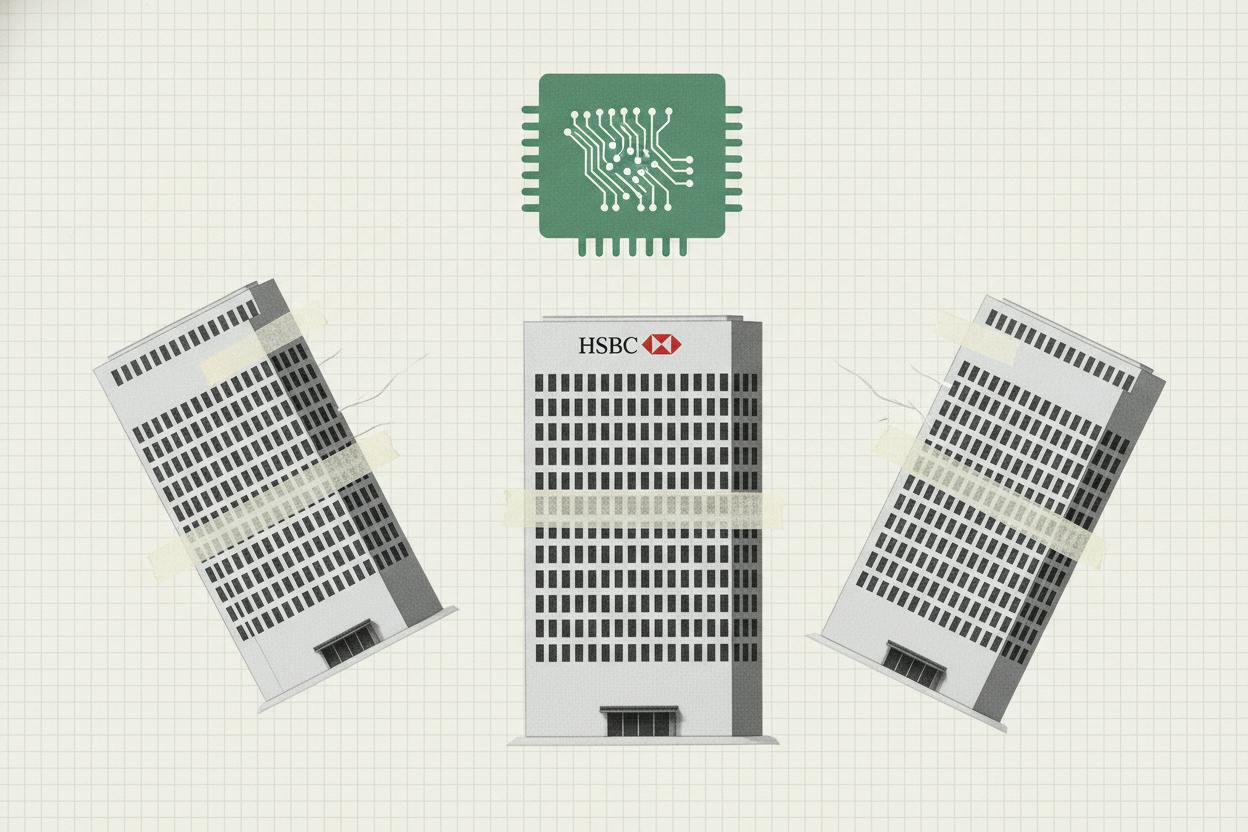
HSBC is reorganising its finance operations in India, concentrating work in three cities and leaning more heavily on automation and artificial intelligence to bring down costs, according to a Bloomberg report.
The bank plans to focus finance roles in Chennai, Gurugram, and Bengaluru, while shifting responsibilities away from Hyderabad and Pune. The reshuffle could affect several hundred positions, though staff are expected to receive relocation support rather than extra financial incentives, the report said.
HSBC told Bloomberg it is trying to keep “the right roles in the right locations” to support customers. But the underlying goal is clear: lower the ongoing, back-office cost base rather than chase new revenue.
Why consolidate?
For a global bank like HSBC, finance operations cover everything from daily accounting and regulatory reporting to risk checks and internal controls. These are essential but repetitive tasks that have traditionally required large teams spread across multiple sites.
By concentrating that work in fewer locations, the bank can standardise processes, reduce duplicated teams, and make it easier to automate routine tasks. Fewer sites also mean simpler management of risk and controls, which regulators increasingly scrutinise.
The move is part of a broader industry trend. Banks worldwide have been shifting back-office work to lower-cost centres for years, and now they are adding AI to handle tasks like data entry, reconciliation, and even some compliance checks. HSBC's pivot toward Chennai, Gurugram, and Bengaluru — all established tech and finance hubs — suggests it wants to combine cost savings with access to skilled talent.
What it means for investors
For investors, the significance lies less in the relocation of a few hundred roles and more in what it signals about HSBC's cost discipline. In banking, expenses are often the fastest-moving driver of profits when revenue growth is slow. Cutting the cost base can directly improve the cost-to-income ratio — a key metric that shows how much of each revenue dollar is eaten by operating costs.
A lower cost-to-income ratio means more revenue flows through to the bottom line. That is why investors tend to watch quarterly cost lines and return on tangible equity (ROTE), a measure of profit against the bank's hard capital, rather than the one-off disruption of moving jobs.
HSBC has been under pressure from shareholders to improve efficiency, and this move is consistent with that push. The bank has also been investing in technology across its global operations, and India is a key part of that strategy.
The reshuffle comes as India's financial sector sees other cross-currents. Foreign investors have been pouring money into Indian stocks, partly on hopes of a tech-driven rally, though some analysts suggest Indian equities could serve as a hedge for AI-heavy portfolios. Meanwhile, the rupee has slipped as global AI rallies pull foreign money away, and Indian banks have been urging the central bank to mop up excess dollars as inflows surge.
For HSBC, the India hub reorganisation is a cost story, not a revenue one. But in a low-growth environment, cost savings can be just as valuable as new income. The bank will need to show that the promised savings actually materialise in its financial results over the coming quarters.
Investors should also consider the human element. Moving roles between cities is disruptive for employees, and while relocation support helps, it may not be enough to retain everyone. That could lead to short-term productivity dips or even higher-than-expected severance costs. But over the longer term, a leaner, more automated finance function should support the bank's profitability.
HSBC's move is also a reminder that AI is not just about customer-facing chatbots or trading algorithms. Much of the near-term payoff from AI in banking is likely to come from automating internal processes, and that is exactly what this reorganisation is designed to capture.
For everyday investors, the takeaway is simple: watch HSBC's cost-to-income ratio and return on tangible equity in the next few earnings reports. If the India reshuffle delivers the expected savings, those numbers should improve. If not, the disruption may outweigh the benefits.