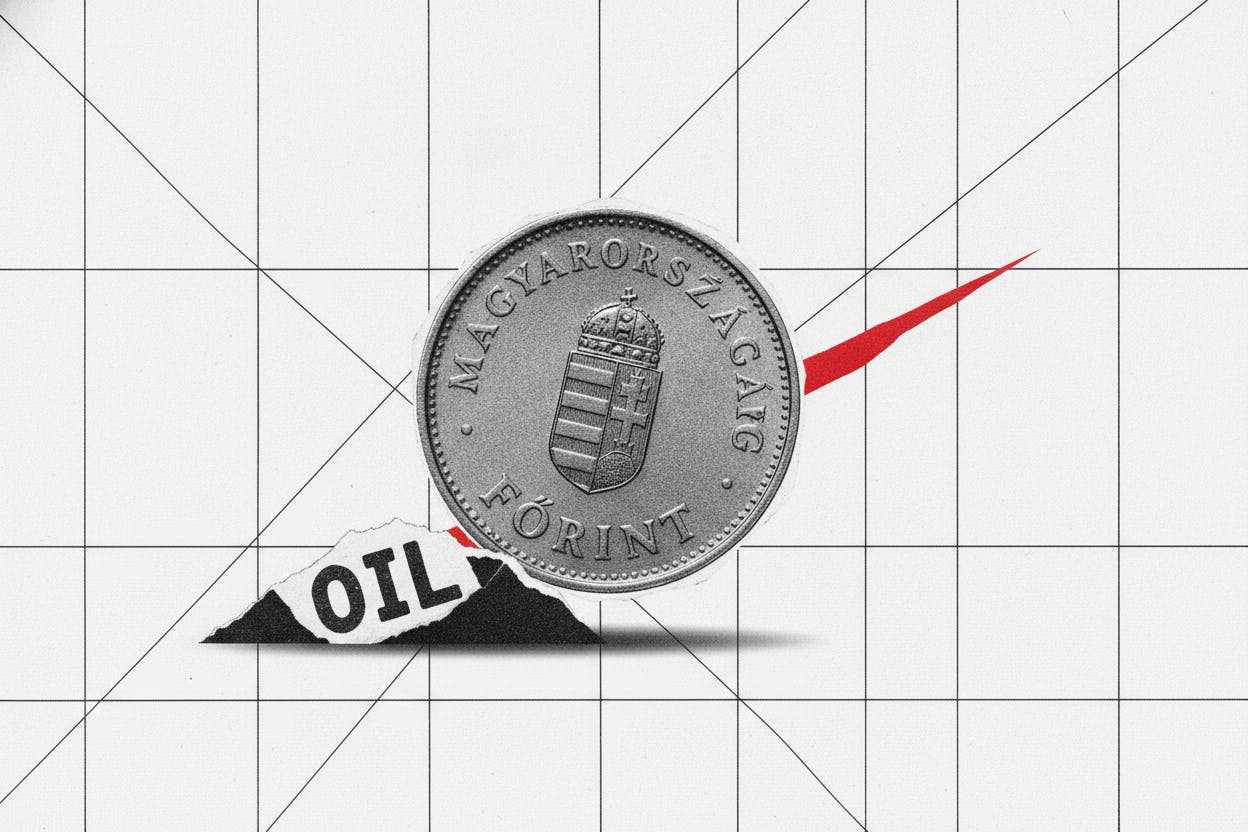
Central European currencies took a hit on Tuesday, with the Hungarian forint leading the decline as a jump in oil prices and anticipation of the Federal Reserve's latest rate decision sent investors scrambling for safer assets.
The forint slid 0.47% to 361.30 per euro, a move that traders attributed to a combination of geopolitical jitters and a broad shift toward the US dollar. Other currencies in the region also weakened, though the forint was the biggest mover of the day.
What's driving the move?
The immediate trigger appears to be a spike in crude oil prices, which rose on renewed tensions in the Middle East. A trader in Budapest told Reuters that the forint had steadied earlier when markets believed the Strait of Hormuz — a critical chokepoint for global oil shipments — might remain open. But when Iran rejected a proposal relayed via Oman and oil prices climbed, the forint weakened again.
Higher oil prices are a double-edged sword for emerging-market currencies like the forint. They raise import costs for countries that rely on foreign energy, worsening trade balances and putting downward pressure on the currency. At the same time, they often push global investors toward the US dollar, which is seen as a safe haven during periods of geopolitical uncertainty.
Adding to the cautious mood, traders were also waiting for the Federal Reserve's rate decision, scheduled for 1800 GMT. The Fed is widely expected to hold rates steady, but markets will be watching closely for any signals about the timing of future cuts. Higher US interest rates tend to attract capital away from emerging markets, making currencies like the forint more vulnerable.
For more on how global rate expectations are affecting markets, see our coverage of Japan's bond yield dip and copper's slip as traders brace for higher US rates.
What it means for investors
For everyday investors, this kind of currency wobble is a reminder of how quickly global headlines can ripple through smaller, more volatile markets. The forint is what traders call a "risk-on" currency — it tends to strengthen when investors are feeling optimistic and weaken when fear takes over.
When oil prices spike or geopolitical tensions rise, money often flows out of emerging-market currencies and into the dollar, yen, or Swiss franc. That can affect the value of international investments, especially for investors holding assets denominated in forints or other Central European currencies.
The broader backdrop also matters. Hungary's central bank has been cutting interest rates this year, which makes the forint less attractive to yield-seeking investors. Earlier this month, the forint steadied near 360 per euro as traders weighed the pace of rate cuts against oil-related risks, as we noted in our previous report.
For now, the key question is whether the Fed's decision will calm markets or add to the pressure. If the Fed signals that rates will stay higher for longer, emerging-market currencies could face further headwinds. If it hints at cuts ahead, the forint and its peers might find some relief.
Investors should also keep an eye on oil prices. Any further escalation in the Middle East could push crude higher, adding to the headwinds for Central European currencies. Conversely, a de-escalation could help the forint recover some of its losses.
For a broader view of how oil is affecting other markets, see our reports on Latin American markets rising on the oil rally and gold's rebound as oil slumped.
The bottom line
The forint's slide is a textbook example of how emerging-market currencies can be caught between global forces — in this case, higher oil prices and a hawkish Fed. For investors, the takeaway is to stay aware of these crosscurrents and to watch how the Fed's decision and oil market developments unfold in the coming days.