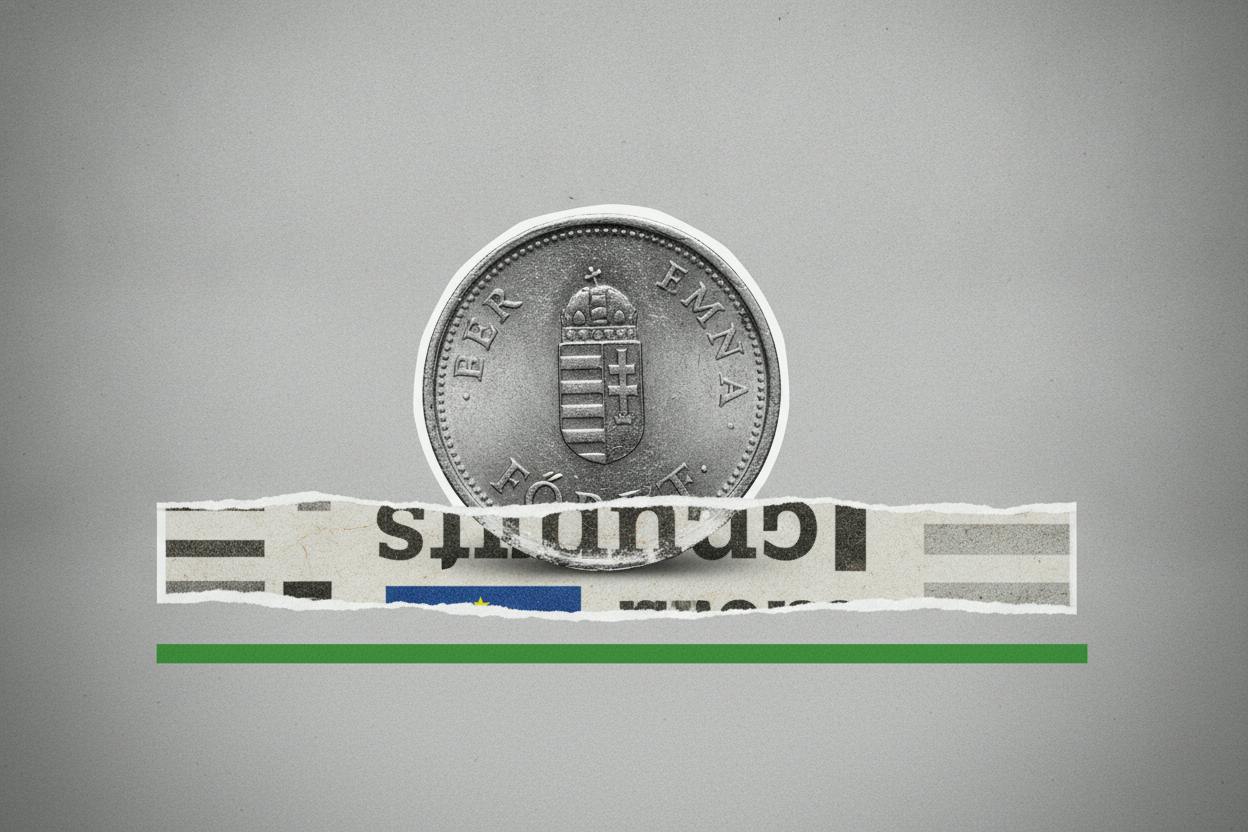
Hungary's forint found its footing on Monday, snapping a four-session losing streak as investors welcomed a credit outlook upgrade from Moody's and a government pledge of fresh European Union recovery funds. The currency traded around 372.20 per euro, recovering from last week's low of 374.29, helped also by a slightly softer US dollar.
What changed for the forint?
Moody's, one of the three major credit rating agencies, revised Hungary's outlook from "negative" to "stable." That shift signals that a downgrade of Hungary's sovereign credit rating is now considered less likely in the near term. For investors, a stable outlook reduces the risk of forced selling by funds that are mandated to hold only investment-grade debt.
Adding to the positive tone, Hungarian officials said they expect €10 billion in EU recovery funds to be disbursed by December 31. That money, part of the bloc's post-pandemic recovery package, has been held up for years over rule-of-law concerns. If the funds arrive, they would provide a significant boost to the country's finances and economic growth.
The US dollar's slight retreat also played a role. When the dollar weakens, emerging-market currencies like the forint tend to benefit, as global investors become more willing to take on risk in higher-yielding assets.
Why the forint matters to investors
The forint is a key barometer of investor confidence in Hungary, a central European economy heavily reliant on foreign capital and exports, particularly to Germany. A weak forint makes imports more expensive, feeding inflation, and raises the cost of servicing Hungary's foreign-currency debt. Conversely, a stable or strengthening forint helps calm inflation expectations and reduces pressure on the central bank to hike interest rates.
For everyday investors, the forint's moves matter in a few ways. If you hold Hungarian assets—stocks, bonds, or property—a steadier currency reduces the risk of losses from exchange-rate swings. If you're a Hungarian consumer, a firmer forint helps keep the prices of imported goods, from fuel to electronics, from climbing further.
What to watch next
The big question is whether the EU funds actually arrive. The government's promise is not the same as money in the bank. Brussels has its own procedures and conditions, and past disbursements have been delayed. Investors will be watching for official confirmation from the European Commission and for any signs of progress in Hungary's negotiations with the bloc.
Also on the radar is the Hungarian central bank. With inflation still above target, policymakers have kept interest rates relatively high. If the forint stays stable, the bank may feel less pressure to tighten further, which could support economic growth. But if the currency weakens again, rate hikes could return to the table.
The broader emerging-market backdrop also matters. A softer dollar, as seen recently, tends to lift currencies across the developing world. But global risk sentiment can shift quickly, especially with major central banks like the Federal Reserve still deciding on the path of interest rates. For more on how currency moves affect global markets, see our recent piece on the yen's outlook amid BOJ rate speculation.
What it means for your money
For most investors, the forint's daily moves are not something to trade on. But they are a useful signal of how the market views Hungary's economic management. A stable currency, supported by a credit upgrade and promised EU funds, suggests that the country's risk profile is improving. That could make Hungarian government bonds and blue-chip stocks more attractive to foreign investors, potentially lifting prices.
Still, it's wise to keep expectations in check. The forint has been volatile for years, and its fortunes are tied to factors beyond Budapest's control, including global interest rates and the health of the German economy. As with any emerging-market currency, there is always the risk of sudden swings.
If you're invested in Hungarian assets, the recent stability is a positive sign, but it's not a reason to change your strategy. Diversification remains key, and it's always prudent to consider how currency risk fits into your overall portfolio. For a broader look at how consumer sentiment is affecting markets, you might find our analysis of retail stocks and holiday outlook useful.
In the coming weeks, the focus will be on the actual transfer of EU funds and any further comments from Moody's or other agencies. If the money arrives as promised, the forint could strengthen further. If not, the currency may give back its gains. Either way, investors will be watching closely.



