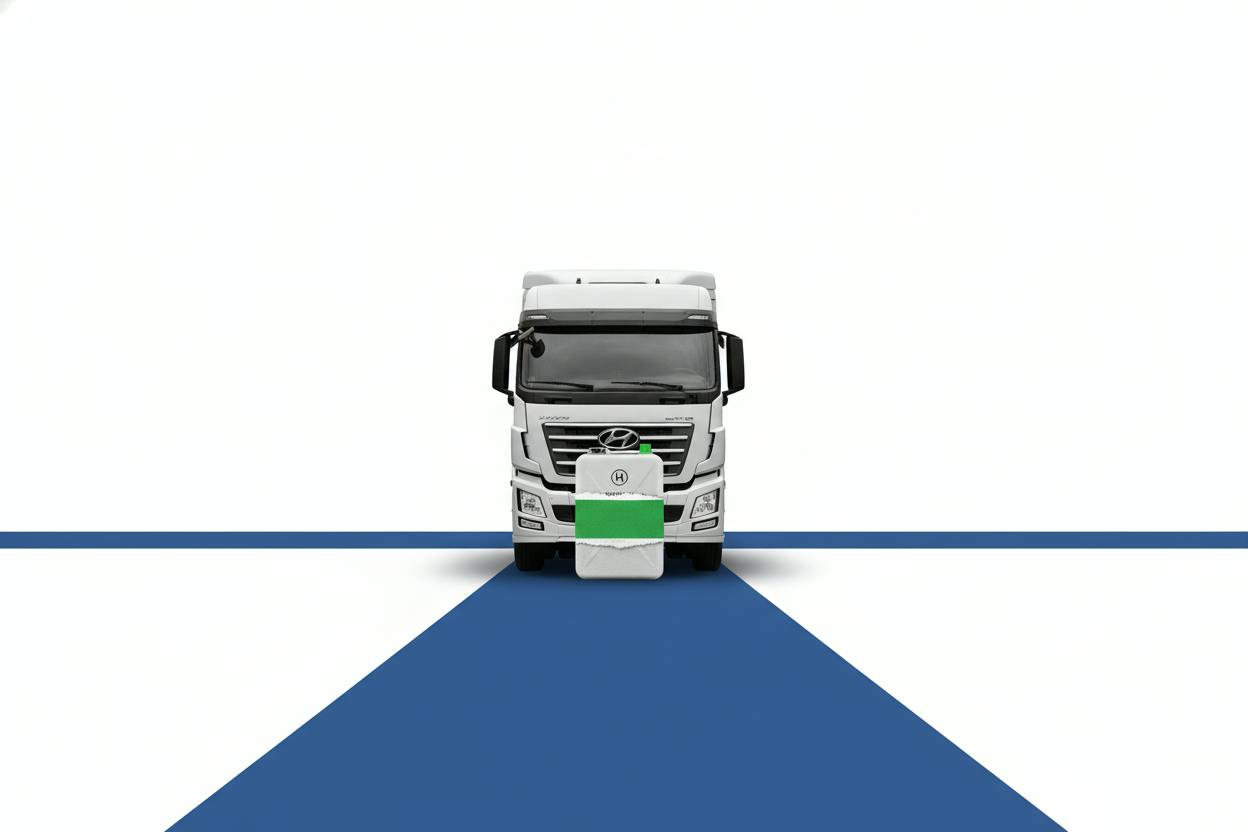
Hyundai Motor and Kia are taking a significant step toward commercializing autonomous trucking. According to a report from The Korea Times, the two automakers plan to run a roughly 500-kilometer road test using two Xcient heavy-duty trucks, one of which will be powered by a hydrogen fuel cell. The trial is designed to demonstrate that Level 4 autonomous driving—where the vehicle can handle all driving tasks without human intervention in certain conditions—can work on real logistics routes, not just in controlled demos.
What the test involves
The plan, as outlined in the report, involves supplying two Xcient trucks early next year and testing them on two set routes. One route is a 100-kilometer loop that mixes highways and city streets, testing how the trucks handle varied traffic and road conditions. The other is a 400-kilometer long-distance route, which would push the vehicles' endurance and autonomous systems over a more extended stretch.
To make this happen, Hyundai and Kia have signed a memorandum of understanding with Hyundai Mobis, the group's auto parts maker, and Hyundai Glovis, its logistics arm. They are also partnering with two self-driving startups, Mars Auto and RideFlux, which will likely provide specialized software or sensor technology. This collaboration brings together the automakers' vehicle expertise, the parts supplier's components, the logistics company's operational knowledge, and the startups' autonomous driving algorithms.
Why Level 4 trucking matters
Level 4 autonomy is a big deal in the trucking industry. Unlike Level 2 or Level 3 systems, which still require a human driver to monitor the road and take over when needed, Level 4 vehicles can operate without a driver in specific, predefined conditions—such as on certain highways or in dedicated lanes. For logistics companies, that could mean lower labor costs, longer driving hours, and potentially fewer accidents caused by driver fatigue.
But getting there is hard. Autonomous trucks must handle unpredictable situations, from sudden lane changes to weather conditions, and they must do so safely over long distances. That's why Hyundai and Kia are starting with a test that covers both urban and highway environments. The 100-kilometer loop will test the system's ability to navigate city traffic, while the 400-kilometer route will test its reliability over a longer haul.
Hydrogen fuel cell technology is also a key part of the story. The Xcient is already available as a hydrogen-powered model, and using it in this test signals that Hyundai sees zero-emission and autonomous driving as complementary trends. For investors, this is a reminder that the company is betting on both the electrification of commercial vehicles and the automation of logistics.
What it means for investors
For everyday investors, this news is less about an immediate earnings impact and more about the long-term direction of Hyundai and Kia. Autonomous trucking is still in its early stages, and commercial deployment is likely years away. But successful tests like this could position the companies to win contracts with logistics firms that are eager to cut costs and improve efficiency.
It's also worth noting that Hyundai has been making other big moves recently. The company is investing heavily in India, with a $15.5 billion bet on manufacturing, R&D, and supply chains there. And it has had to deal with recalls, such as the recent one involving Genesis sedans over a seat-motor fire risk. These are reminders that while autonomous driving is exciting, the company still faces the day-to-day challenges of running a global automaker.
For investors, the key takeaway is that Hyundai and Kia are trying to stay ahead of the curve in a competitive industry. Autonomous trucking could be a significant revenue stream in the future, but it's not going to move the needle on next quarter's earnings. As with any emerging technology, there are risks—technical hurdles, regulatory approval, and the possibility that competitors like Tesla or traditional truck makers get there first.
What to watch next
Investors should keep an eye on the results of this test. If the trucks complete the routes without major issues, it could signal that Hyundai and Kia are closer to offering a commercial autonomous trucking service. That might lead to partnerships with logistics companies or even new business models, such as selling autonomous driving as a service.
Also watch for regulatory developments. South Korea has been relatively proactive in allowing autonomous vehicle testing, but broader commercial use will require clear rules. Any progress on that front could accelerate the timeline for deployment.
In the meantime, the test is a reminder that the auto industry is undergoing a massive transformation. From electric vehicles to self-driving technology, companies like Hyundai and Kia are investing heavily to stay relevant. For investors, understanding these trends is key to evaluating whether these stocks are a good long-term fit for their portfolios.