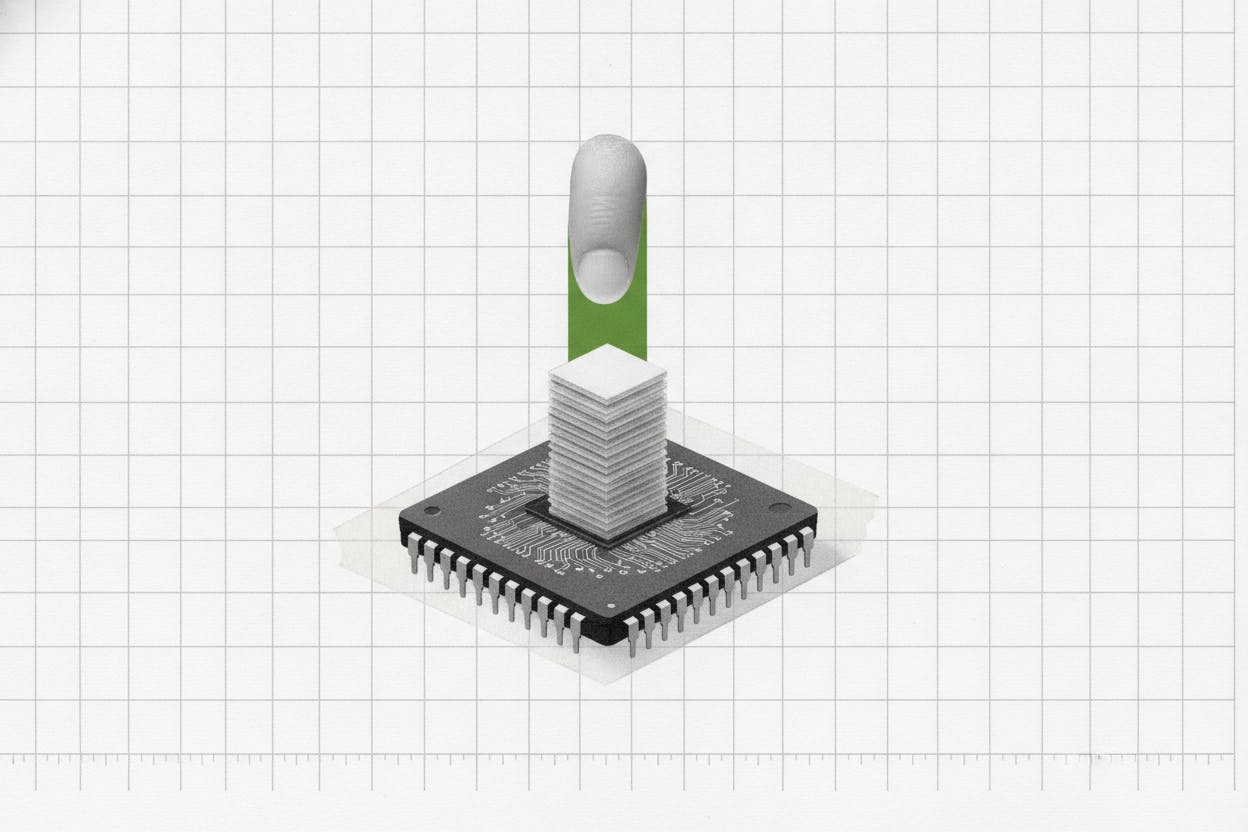
IBM has unveiled a new chip design that pushes the boundaries of miniaturization, claiming a 0.7-nanometer architecture that could pack nearly 100 billion transistors onto a surface the size of a fingernail. The company says the design, which it calls 'nanostack,' could be ready for manufacturing within five years, as demand for more powerful and efficient chips continues to surge, particularly for artificial intelligence workloads.
What is a 0.7-Nanometer Chip?
To understand the significance, it helps to know what 'nanometer' means in chipmaking. A nanometer is one-billionth of a meter, and the number refers to the size of individual transistors on a chip. Smaller transistors allow more of them to be packed into the same space, which typically translates to higher performance or lower energy consumption. The industry has been shrinking these nodes for decades, but the process has become increasingly difficult and expensive as physical limits are approached.
IBM's approach is notable not just for the tiny number but for how it achieves it. Instead of laying transistors flat on a single plane, the nanostack design stacks them vertically. This vertical stacking is one way to continue improving performance even as traditional scaling slows down. The company says the design could deliver up to 50% higher performance or 70% better energy efficiency compared to comparable designs.
Why This Matters for the Chip Industry
IBM is not a high-volume chip manufacturer, but it has a storied research division that has produced breakthroughs before. The company has previously licensed its chip technology to partners like Samsung and Rapidus, a Japanese chipmaking venture. For this design, IBM has not yet named a manufacturing partner, which means the milestone's real impact depends on whether it can be transferred into a foundry's production process.
The announcement comes at a time when the chip industry is racing to meet the demands of AI, which requires massive computing power. Companies like Micron are also making moves to secure supply chains, while others are investing heavily in next-generation processes. Intel, for example, recently said its 18A process has moved into risk production, and TSMC continues to dominate the leading edge. IBM's design could shift the competitive landscape if it proves viable, offering a differentiated path to higher transistor density and better performance-per-watt.
What It Means for Investors
For everyday investors, this news is less about immediate stock moves and more about the long-term trajectory of the semiconductor industry. Even if production is years away, credible research can influence today's market dynamics because advanced foundries sell a 'roadmap' as much as they sell wafers. If IBM can prove its nanostack approach works at scale, it could become a valuable intellectual-property supplier, giving potential partners like Samsung or Rapidus a competitive edge.
This, in turn, puts pressure on incumbents like TSMC and Intel, which are already investing billions in their own next-generation processes. It also raises the strategic ceiling for groups like Samsung and Rapidus if IBM repeats its past playbook and licenses the design rather than trying to manufacture it itself. For investors, the key takeaway is that the race for smaller, more efficient chips is far from over, and breakthroughs like this can reshape the pecking order over time.
In the broader context, the chip industry is a critical part of the global economy, and advancements like this can have ripple effects across sectors from AI to cloud computing to consumer electronics. While the timeline for production is uncertain, the direction is clear: the push for more powerful and efficient chips will continue to drive innovation and investment.