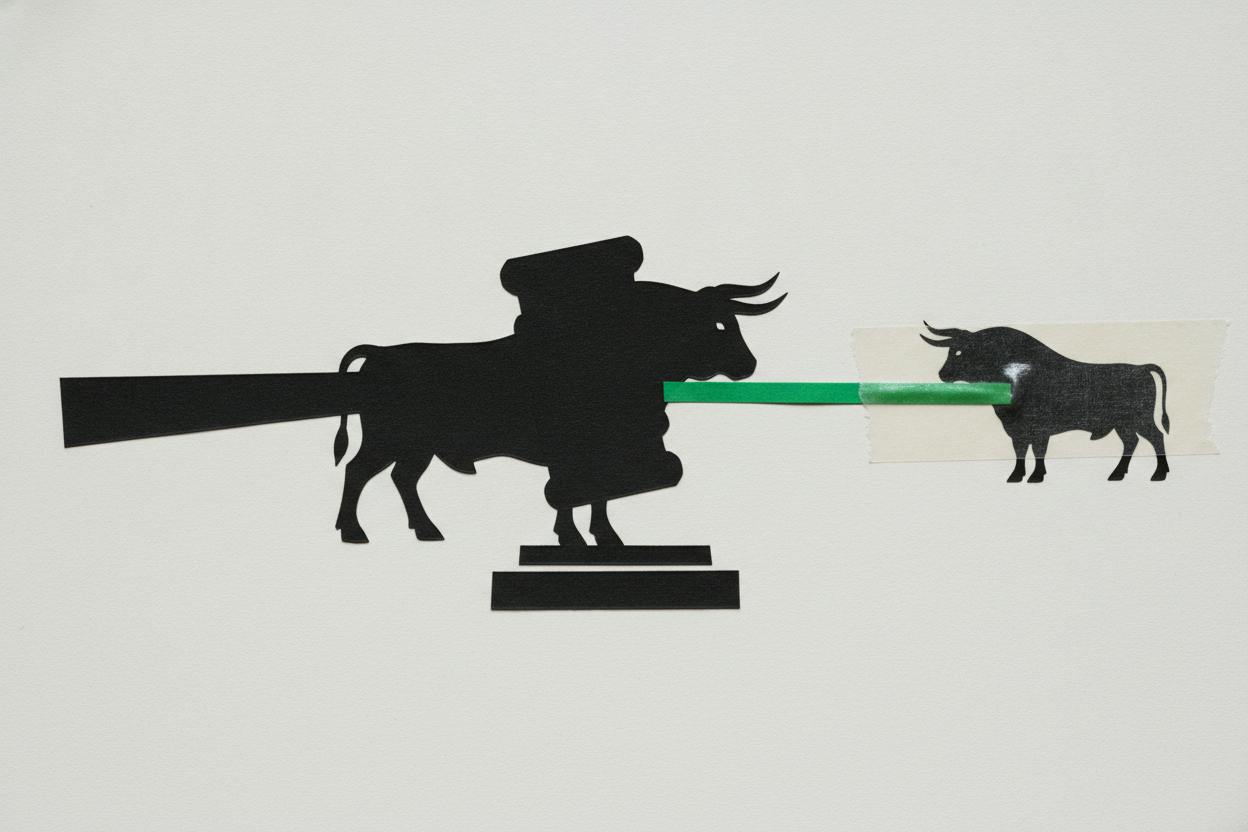
Intercontinental Exchange (ICE), the company best known for owning the New York Stock Exchange, is preparing to enter a market it has never traded before: US livestock. The exchange operator said it will list its first cattle and hog futures contracts on December 7, setting up a direct challenge to CME Group, which has dominated agricultural derivatives for decades.
The centerpiece of the launch is a physically delivered US live cattle future that will trade under the symbol MOO. ICE also plans cash-settled futures tied to live cattle, feeder cattle, and lean hogs. All of the contracts remain subject to regulatory review before they can begin trading.
Why livestock futures matter
Futures contracts are agreements to buy or sell a commodity at a set price on a future date. They exist so that farmers, ranchers, meatpackers and food companies can lock in prices and protect themselves from sudden swings in the cost of cattle or hogs. Speculators and institutional investors also trade them to bet on or hedge against price moves.
For decades, CME Group has been the venue of choice for these hedges. Its live cattle, feeder cattle and lean hog contracts are the benchmarks that much of the US meat industry relies on to price deals and manage risk. A rival exchange entering that space is significant because competition can affect trading fees, liquidity and how easily market participants can move in and out of positions.
ICE is not new to commodities. It already runs major energy and agricultural benchmarks, including futures tied to sugar, coffee and cocoa, as well as the Brent crude oil contract. But livestock is a different beast — literally. Cattle and hogs are living animals, not barrels of oil or bags of beans, and that makes the logistics of physical delivery far more complicated.
How ICE plans to win over traders
To make the switch as painless as possible, ICE says its MOO contract will match CME's contract size, trading hours and contract months. That matters because traders and hedgers do not want to learn a new set of rules or adjust their risk models just to use a different exchange. Matching the specifications lowers the friction of moving business from one venue to another.
The exchange also said it will begin listing contracts from June 2027, giving it time to build out the physical delivery infrastructure — the pens, inspections, transportation and paperwork that allow a futures contract to end with actual cattle changing hands. Physically delivered contracts are more complex to run than cash-settled ones, which are resolved with a payment rather than a transfer of animals.
That long runway suggests ICE is playing a patient game. Rather than trying to grab volume overnight, it appears to be laying the groundwork for a market that could take years to mature. Companies in this position often start by courting large commercial hedgers — the meatpackers and feedlots that trade in size — before attracting the speculative flow that deepens liquidity.
What it means for investors
For everyday investors, this is less about buying cattle futures and more about what it signals for the exchanges themselves. ICE and CME are both publicly traded companies, and their shares are sensitive to how well they grow trading volume and launch new products. A successful livestock launch would give ICE a new revenue stream and put pressure on CME to defend a franchise it has held for years.
Competition between exchanges can be good news for customers. When two venues offer similar contracts, they often compete on fees, technology and customer service. That can lower costs for the pension funds, asset managers and trading firms that use these markets — and, indirectly, for the investors whose money they manage.
It is worth remembering that new futures contracts frequently struggle at first. Liquidity tends to be thin in the early months, and traders often stick with the incumbent until the new market proves it can handle large orders without big price swings. ICE's decision to match CME's contract terms is a direct attempt to overcome that inertia, but it is no guarantee of success.
Investors watching the space will want to keep an eye on a few things: whether regulators sign off on the contracts, how much volume MOO attracts after launch, and whether CME responds with its own product changes or fee adjustments. Broader market conditions, from bank earnings and oil prices to bond yields and gold, will also shape how exchange stocks trade in the months ahead.
For now, the December 7 listing date is the first concrete step in what could become a long contest over one of the last corners of the derivatives world where CME has faced little direct competition. Whether ICE can turn MOO into a genuine rival benchmark — or simply a niche alternative — will depend on whether the ranchers, packers and traders who use these markets decide the new venue is worth their time.