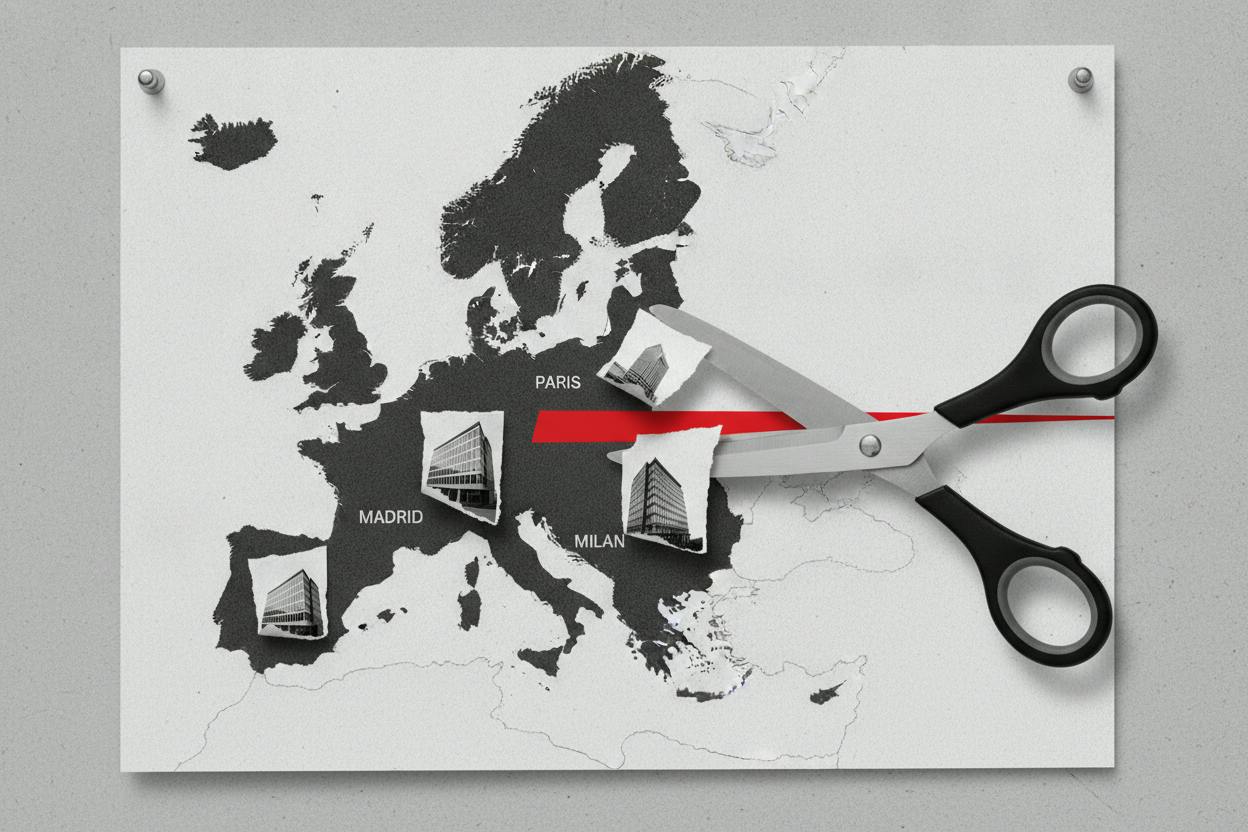
IG Group, the UK-based online trading platform, is planning to close offices in Paris, Madrid and Milan and cut about 50 jobs as part of a broader restructuring of its European operations. The news, first reported by Bloomberg on November 13, signals the company is tightening its cost base in a competitive and increasingly regulated trading environment.
What's happening?
According to Bloomberg, staff in the three European cities were told that their offices may shut as IG consolidates its European presence into fewer regional hubs. The company confirmed the direction in comments to MT Newswires, saying it has refreshed its organizational model as part of a strategic review and that Europe is part of that plan.
IG stressed that service for European customers will not change and that clients do not need to take any action. For employees, however, the shift is significant: the company said it is consulting with affected staff and offering support through the process.
Why is IG doing this?
Closing offices and trimming headcount is largely about lowering overhead—things like rent, utilities, and layers of local management. By consolidating into fewer hubs, IG can reduce its fixed costs while maintaining its product offering. This is a common move for companies that have expanded geographically and later find that some offices are underutilized or that operations can be run more efficiently from a central location.
The job cuts, while modest in number, are part of a wider trend among financial services firms to streamline operations and invest more in digital channels. For a trading platform like IG, most customer interactions already happen online, so physical offices in multiple cities may be less essential than they once were.
What does this mean for investors?
For shareholders, the key takeaway is that IG is focusing on cost efficiency. A leaner cost base can make profits grow faster when client trading activity is steady or rising, because more revenue “drops through” to the bottom line after expenses. That is a positive signal for profitability, especially if trading volumes remain healthy.
However, there is a tradeoff. Once those cost buffers are removed, results can become more sensitive to swings in trading volumes. In busy markets, the company may look better than before, but in quieter periods, the impact on earnings could be felt sooner. Investors should watch how IG's trading volumes evolve in the coming quarters, as well as any signs that the restructuring is disrupting client service.
The move also comes against a backdrop of mixed European economic data. The eurozone recently reported GDP that met forecasts in the third quarter, but the broader picture remains uneven. For a company like IG, which earns revenue from client trading activity, the health of the European economy and market volatility are important drivers.
What to watch next
Investors will likely look for more details on the restructuring when IG next reports earnings. Key questions include: how much will the cost savings amount to, and will there be any one-off charges related to the office closures and job cuts? Also, watch for any impact on client retention or trading volumes as the company transitions to its new structure.
For now, the message from IG is clear: it is streamlining its European operations to become more efficient, while reassuring customers that nothing changes for them. For employees in Paris, Madrid and Milan, the news is more difficult, but the company says it is supporting them through the process.
As with any cost-cutting initiative, the real test will be whether IG can maintain its competitive edge while operating with a leaner footprint. For everyday investors, this is a reminder that even well-known companies are constantly adjusting their operations to stay profitable in a changing market.



