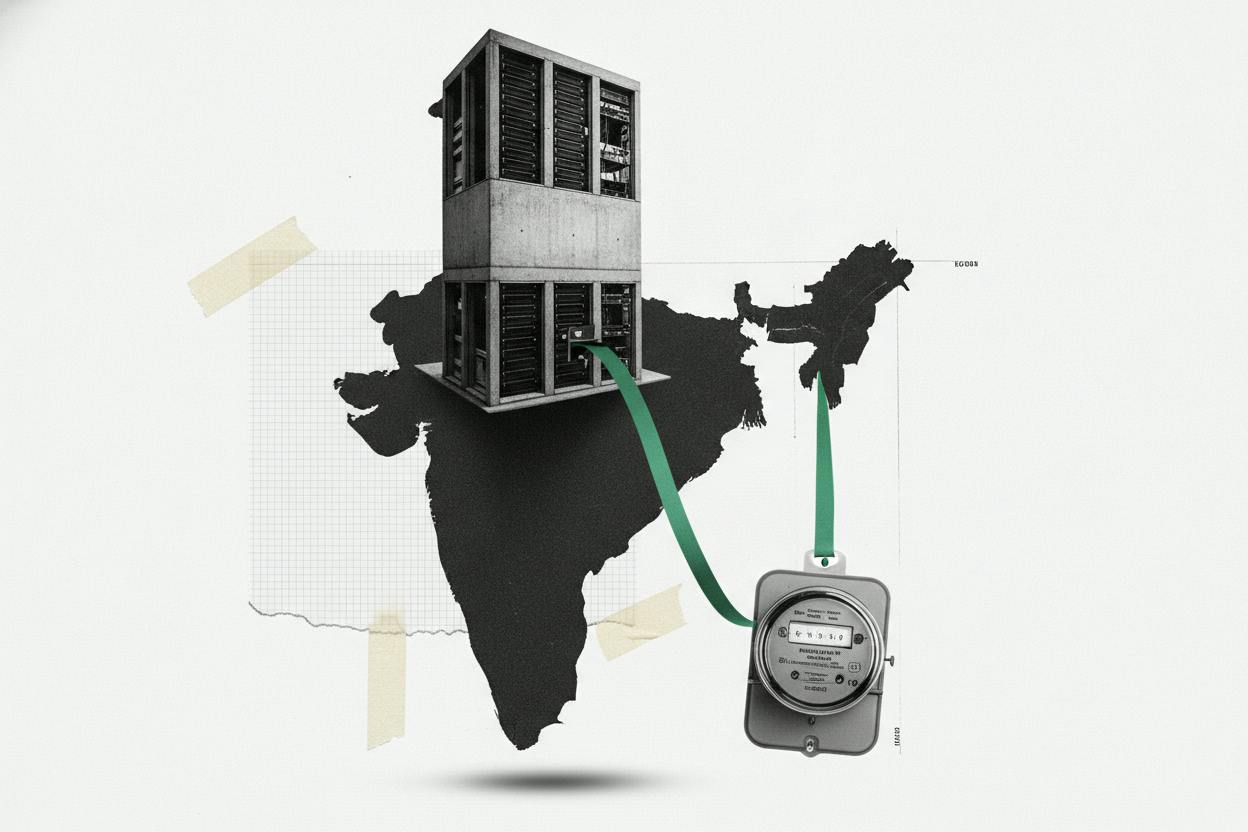
India's government says it is drafting a national data center policy aimed at keeping the sector's rapidly growing electricity consumption from pushing up household power bills. The announcement came from Junior IT Minister Jitin Prasada at a New Delhi event run by the Central Electricity Authority, following local protests near proposed Amazon and Google data center sites in Mumbai and Visakhapatnam.
Protesters raised concerns about power use, water consumption, and noise, according to Reuters. The backlash highlights a growing tension: data centers are a key part of Prime Minister Narendra Modi's push to attract foreign investment—officials have framed the opportunity as a $200 billion prize—but their energy appetite is becoming a political and economic issue.
Why a national policy is needed
India currently has no dedicated national rulebook for data centers. Projects typically move through existing building and environmental approvals, plus state-level incentives, creating a patchwork approach for an industry that depends on reliable, round-the-clock electricity. A unified policy would let officials decide where data centers cluster, how they connect to the grid, and who pays for the necessary upgrades.
That matters because a single hyperscale data center is not just another customer. It is a massive, steady load that can raise peak demand and force utilities to invest in new generation, transmission lines, and substations. Because electricity is a regulated utility, those costs are often recovered through tariffs, which can spread the burden across all customers—even those whose own electricity use hasn't changed.
Prasada pointed to an uncomfortable lesson from abroad: when a handful of giant facilities soak up large amounts of power, households can end up facing higher prices or a less reliable grid if utilities have to expand capacity quickly and then recover the cost from everyone.
What it means for your electricity bill
For everyday consumers, the policy is essentially a decision about who pays for the data center buildout. If projects like Google's planned $15 billion site in Visakhapatnam and Amazon's project outside Mumbai are placed on cost-reflective pricing—or required to secure dedicated power supply—households are less likely to subsidize the expansion. If not, some of those system costs could leak into broader retail electricity rates.
This is not just a theoretical concern. In other countries, data center booms have led to higher utility bills for residents and even grid strain during peak periods. India's approach could set a precedent for how emerging markets balance digital infrastructure growth with consumer protection.
Investor implications
For investors, the policy could shape the economics of India's data center sector. Companies building these facilities—and the utilities supplying them—will be watching closely. If the policy pushes more of the cost onto data center operators, it could raise their capital and operating expenses, potentially affecting profit margins. On the other hand, a clear national framework could reduce regulatory uncertainty, making India a more predictable place to invest in digital infrastructure.
The move also comes amid broader market dynamics. India's stock market has been under pressure from foreign selling and higher oil prices, as noted in recent market coverage. A stable policy environment for data centers could help attract the long-term investment that Modi's administration is courting.
For now, the details of the policy remain under wraps. Investors and consumers alike will be watching for specifics on grid connection rules, pricing structures, and how the government plans to balance growth with fairness. The outcome will determine whether India's digital boom comes at the expense of household budgets—or whether the costs are borne by those who benefit most.