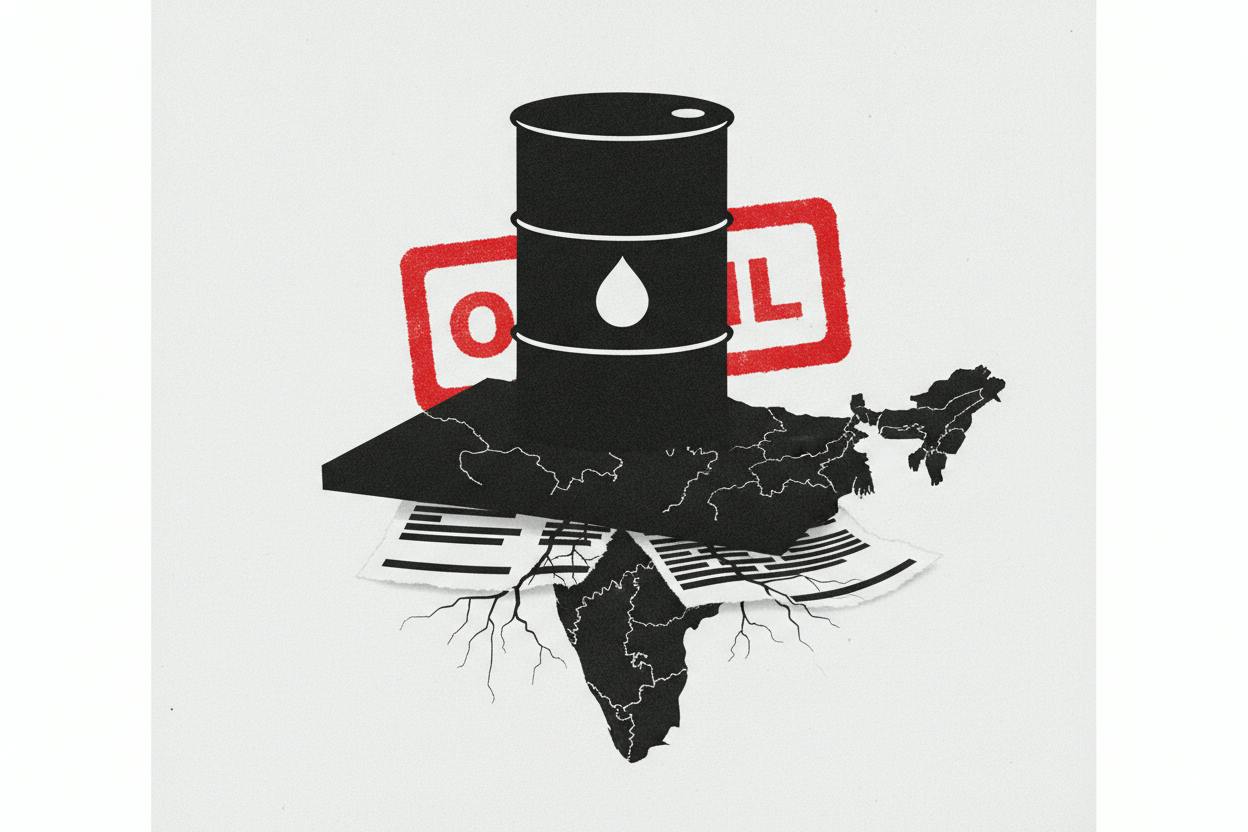
Indian stocks extended their slide on Monday, with the NIFTY 50 falling 1.6% to 22,780.25, as a jump in global oil prices added to concerns about inflation and foreign investor outflows. The S&P BSE SENSEX also dropped 1.52% to 72,771.72, pushing both benchmarks closer to six-month lows.
The trigger was a 3.7% surge in Brent crude to $108 a barrel, following news that US-Iran talks had hit a deadlock. The breakdown raised fresh worries about supply disruptions in an already tight global oil market.
Why oil hits India especially hard
India is the world's third-largest crude importer, meaning it buys the vast majority of its oil from abroad. When prices rise, the country's dollar-denominated import bill swells, which can widen the trade deficit and put downward pressure on the rupee. A weaker rupee makes imports even more expensive, creating a feedback loop.
Higher oil prices also feed directly into inflation. Fuel and transportation costs ripple through the economy, pushing up prices for everything from food to manufactured goods. For the Reserve Bank of India, which has been battling to bring inflation down, a sustained rise in oil prices complicates its job and could delay any future interest rate cuts.
For Indian companies, especially those in energy-intensive sectors like airlines, chemicals, and logistics, higher input costs squeeze profit margins. Firms that cannot pass on these costs to consumers may see their earnings take a hit, which is one reason equity investors tend to sell off when oil spikes.
A seven-week losing streak
Monday's decline extends what Reuters described as one of the longest weekly losing streaks on record for Indian equities. The market has been under pressure for weeks, weighed down by a combination of high valuations, slowing earnings growth, and persistent foreign institutional selling.
Foreign investors have been pulling money out of Indian stocks, partly due to the oil-driven inflation outlook and partly because of attractive yields elsewhere. When global oil prices rise, it often prompts foreign funds to reduce exposure to oil-importing nations like India.
According to Choice Broking's Sachin Gupta, quoted by Reuters, the market's technical position has weakened, with the NIFTY 50 breaking below key support levels. This could invite further selling in the near term, although some analysts note that oversold conditions might eventually attract bargain hunters.
What it means for investors
For everyday investors, the key takeaway is that oil prices are a major swing factor for Indian markets. When crude climbs, it tends to hurt not just oil companies' stocks but the broader market, because of the macro impact on inflation, interest rates, and corporate profits.
Investors should watch oil prices closely in the coming days. If US-Iran tensions ease and crude retreats, Indian stocks could find some relief. Conversely, if the deadlock persists and oil pushes higher, the market may face more downside.
It's also worth noting that not all sectors are affected equally. While energy importers suffer, oil and gas producers—both state-owned and private—can benefit from higher crude prices. However, the overall market impact is usually negative for India.
For those with a long-term horizon, sharp market drops can be unsettling, but they also create opportunities. Historically, markets tend to recover from oil-driven selloffs once the supply concerns fade. But timing the bottom is difficult, so a diversified portfolio and a focus on quality companies remain prudent strategies.
In the broader Asian context, the oil spike is also pressuring other currencies and markets. The Thai baht, for instance, slid 0.8% as oil and US yields weighed on Asian currencies, a reminder that India is not alone in feeling the pinch.
Looking ahead, investors will be watching for any progress in US-Iran negotiations, as well as upcoming economic data. India's factory output figures and corporate annual general meetings later this month could provide clues about the health of the economy and corporate earnings.
For now, the message is clear: oil is back as a dominant force in global markets, and India, as a major importer, is on the front line. How long this slide lasts may depend on whether diplomacy can defuse the tension in the Middle East.