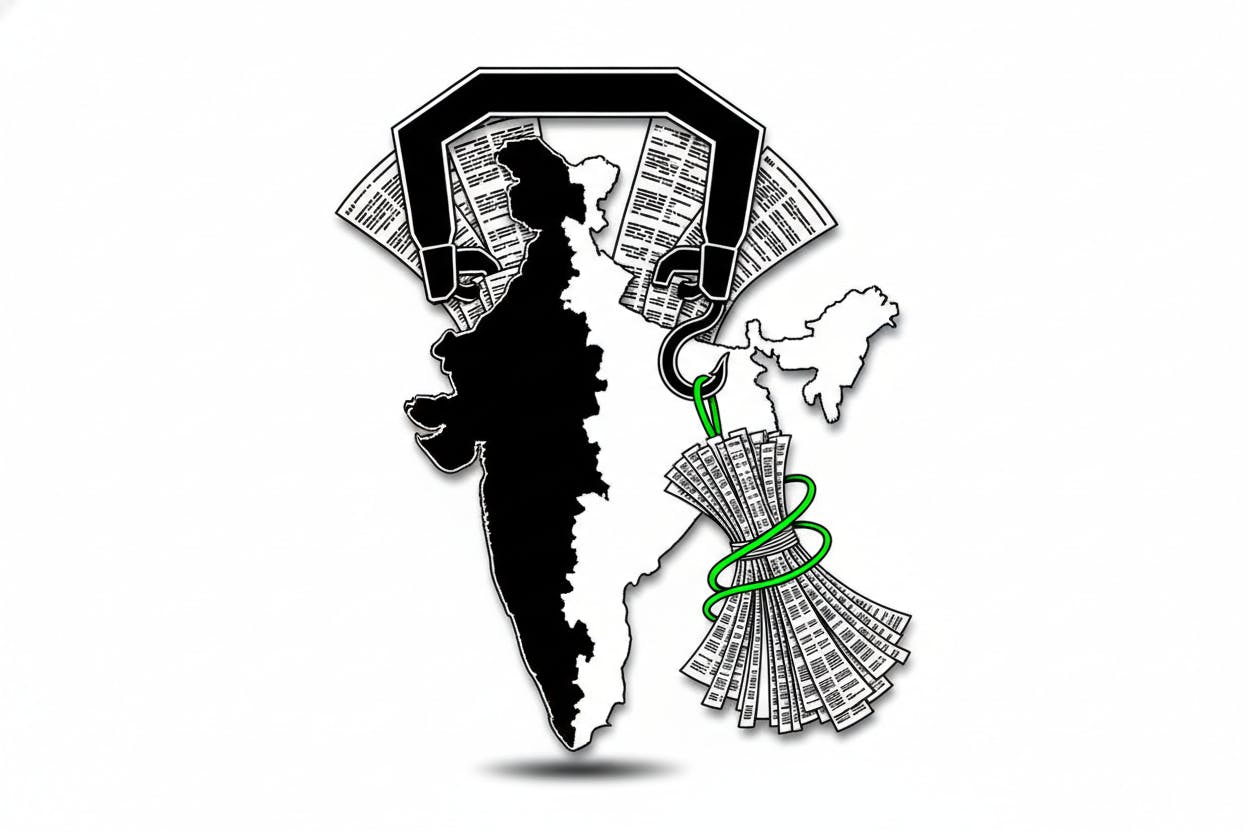
India's securities regulator is tightening the screws on equity options, and some retail traders are responding by borrowing from brokers to take leveraged stock positions. That shift has pushed margin trading facility (MTF) borrowing to about $15 billion, up 50% year-on-year, according to a Reuters analysis.
MTF is a broker loan that lets investors buy shares with borrowed money, using those same shares as collateral. With options rules getting tougher, the speculation isn't vanishing—it's moving into this margin product, which brokers describe as popular with more aggressive retail traders.
What's Driving the Shift?
The Securities and Exchange Board of India (SEBI) has been cracking down on equity derivatives, particularly options, to curb speculative excesses. New rules include higher contract sizes, increased margin requirements, and limits on weekly expiries. These measures aim to protect retail investors from the high-risk, high-leverage nature of options trading, which has surged in recent years.
But the clampdown hasn't dampened the appetite for leverage. Instead, traders are turning to MTF, which allows them to borrow up to 50% of a stock's value, depending on the broker and the stock's liquidity. The result: MTF outstanding has swelled to roughly $15 billion, a 50% jump from a year ago.
This trend comes as India's core infrastructure output hit 5% in June, the fastest in five months, signaling economic resilience. Yet, the broader market has been choppy, with Indian stocks flat recently as HDFC Bank dragged and oil stayed near $90, adding to investor uncertainty.
What It Means for Investors
For everyday investors, the rise in MTF borrowing is a double-edged sword. On one hand, it shows that retail traders remain active and confident in the market's direction. On the other, it raises the stakes: leveraged bets amplify both gains and losses. If the market turns, traders using MTF could face margin calls, forcing them to sell shares at a loss or add more collateral.
SEBI is now weighing how to deepen cash equities without letting risk pile up too fast. The regulator's challenge is to encourage more participation in the cash market—where investors buy and sell actual shares—while preventing the kind of leverage buildup that can lead to systemic stress.
This isn't just an India story. Globally, regulators have been wary of retail leverage after the 2021 GameStop saga and the Archegos collapse, which showed how concentrated, leveraged positions can ripple through the financial system. India's options market has grown explosively, with notional turnover often exceeding $1 trillion a month, much of it driven by retail traders. SEBI's moves are aimed at cooling that frenzy, but the shift to MTF suggests the speculative energy is finding new outlets.
Broader Market Context
The MTF surge also reflects broader trends in Indian markets. The country's stock market has been on a tear, with the Nifty 50 index hitting record highs in 2024, fueled by strong economic growth and foreign inflows. But headwinds are building: oil surges and dollar demand are pressuring India's rupee, raising hedging costs for importers and adding to inflation concerns. Meanwhile, Indian stocks are set for a lower open as oil holds near $90 on geopolitical risks, including Houthi threats in the Red Sea.
In this environment, leveraged trading becomes riskier. A sudden spike in oil prices or a sharp rupee depreciation could trigger a market selloff, hitting MTF users hard. Brokers, for their part, are tightening risk management, but the sheer scale of the borrowing—$15 billion and growing—is drawing regulator attention.
SEBI's next steps will be crucial. The regulator could impose stricter margin norms on MTF, similar to what it did with options, or require brokers to hold more capital against these loans. Either way, the message is clear: the days of easy leverage in Indian markets are numbered.
For now, retail traders are adapting, shifting from one leveraged product to another. But as SEBI continues its balancing act, the question is whether the next clampdown will push them further into the shadows—or into safer, long-term investing.



