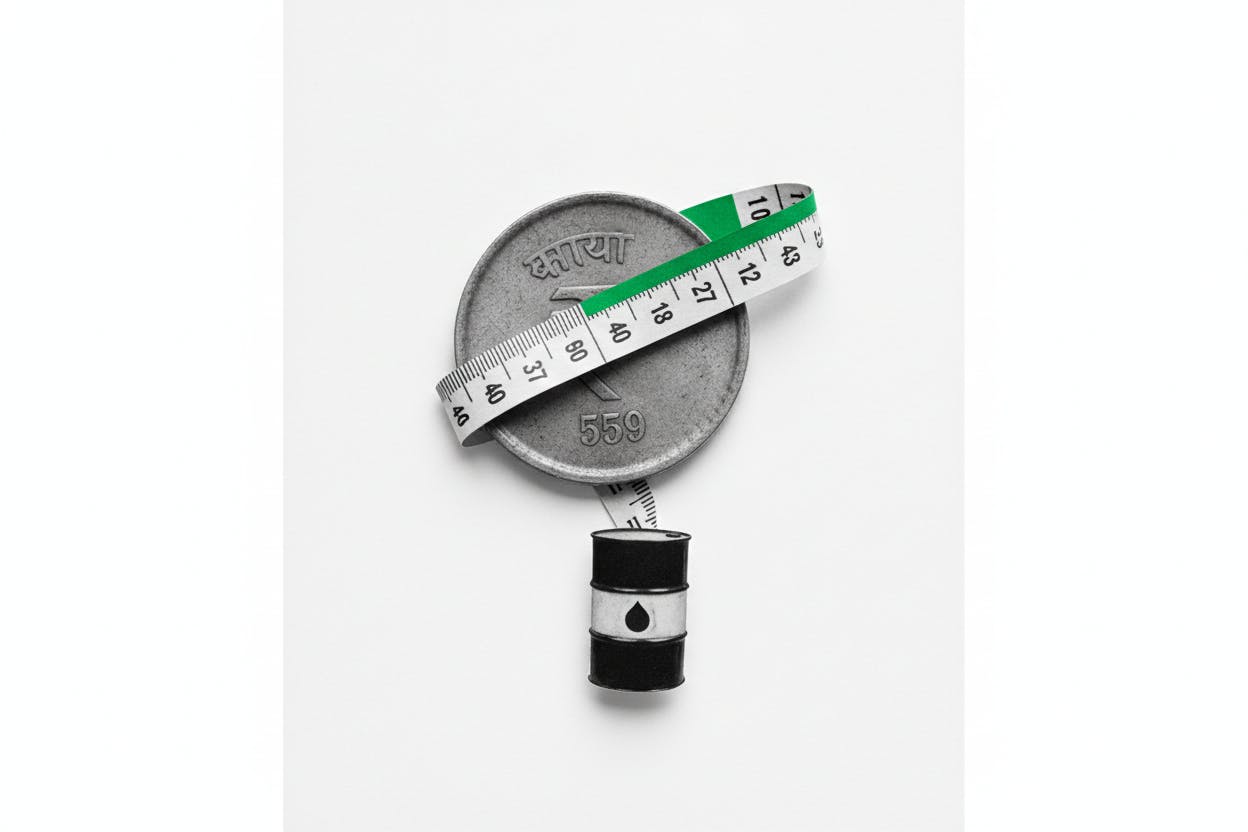
India's rupee is bracing for a volatile session on Tuesday, with traders expecting the currency to open near 96.50-96.55 against the U.S. dollar, a level it only recently breached for the first time in two months. The pressure comes from a combination of higher oil prices and a more defensive stance in currency markets, as hedging costs rise and forward spreads widen.
The rupee closed at 96.4450 on Monday, but the outlook has turned increasingly bearish. The gap between onshore and offshore rupee forwards has widened, and options markets are now pricing in a higher premium for protection against rupee weakness than for bets on a rebound. In plain terms, it's becoming more expensive for importers and leveraged traders to hedge against a falling rupee, which often leads them to buy dollars preemptively, adding to the downward pressure.
Why Oil Prices Matter for the Rupee
India is one of the world's largest importers of crude oil, so any spike in oil prices directly impacts the country's trade deficit and currency. When oil prices rise, importers need more dollars to pay for the same amount of crude, increasing demand for the greenback and weakening the rupee. Recent geopolitical tensions, including threats to shipping in the Middle East, have pushed oil prices higher, as covered in our earlier report on Oil Prices Jump as Houthi Threat to Saudi Shipping Revives Supply Fears.
The broader backdrop also includes a strong dollar, which has been buoyed by expectations of higher-for-longer U.S. interest rates and global uncertainty. The dollar index remains near weekly highs, as noted in our piece on Dollar Holds Near Weekly High as Oil Volatility and Rate Fears Drive Currency Markets. For emerging market currencies like the rupee, a stronger dollar and higher oil prices create a double whammy.
RBI's Inflow Forecast vs. Market Reality
The Reserve Bank of India (RBI) has pointed to over $20 billion in expected inflows, which could provide some support to the rupee. However, traders appear skeptical that these inflows will be enough to offset the current headwinds. The widening of forward spreads suggests that market participants are pricing in a weaker rupee over the coming months, regardless of the RBI's optimistic forecast.
Forward spreads reflect the difference between the spot exchange rate and the rate for future delivery. When the spread widens, it indicates that investors expect the currency to depreciate further. Options markets reinforce this view, with the cost of put options (which profit from a falling rupee) rising relative to call options (which profit from a rising rupee). This is a classic sign of bearish sentiment.
What It Means for Investors
For everyday investors in India, a weaker rupee has several implications. First, it makes imported goods more expensive, which can feed into inflation. Second, it affects companies that have significant foreign currency debt or that rely on imported raw materials. Sectors like oil marketing, aviation, and electronics could see their costs rise. On the flip side, exporters such as IT services and pharmaceuticals may benefit from a weaker rupee, as their earnings in dollars become more valuable when converted back to rupees.
For those with exposure to Indian equities, the rupee's weakness is a factor to watch. Foreign institutional investors (FIIs) often pull money out of a country when its currency is depreciating, as it erodes the returns they can repatriate. This can put additional pressure on stock prices. However, the RBI's expected inflows could help stabilize the currency if they materialize.
Investors should also keep an eye on oil prices. If crude continues to rise, the rupee could face further headwinds. The recent jump in oil prices due to the Houthi threat to Saudi shipping, as reported in Indian Stocks Set for Lower Open as Oil Holds Near $90 on Houthi Threat, is a key risk factor. Conversely, any easing of geopolitical tensions or a drop in oil demand could relieve pressure on the rupee.
The Bottom Line
The rupee is in a tight spot, caught between rising oil prices and a strong dollar. While the RBI's inflow forecast offers some hope, market signals from forwards and options suggest that traders are bracing for more weakness. The opening range near 96.50-96.55 will be a critical level to watch. If the rupee breaks below that, it could trigger further selling. For now, the tone is cautious, and investors should stay informed about the factors driving currency movements.