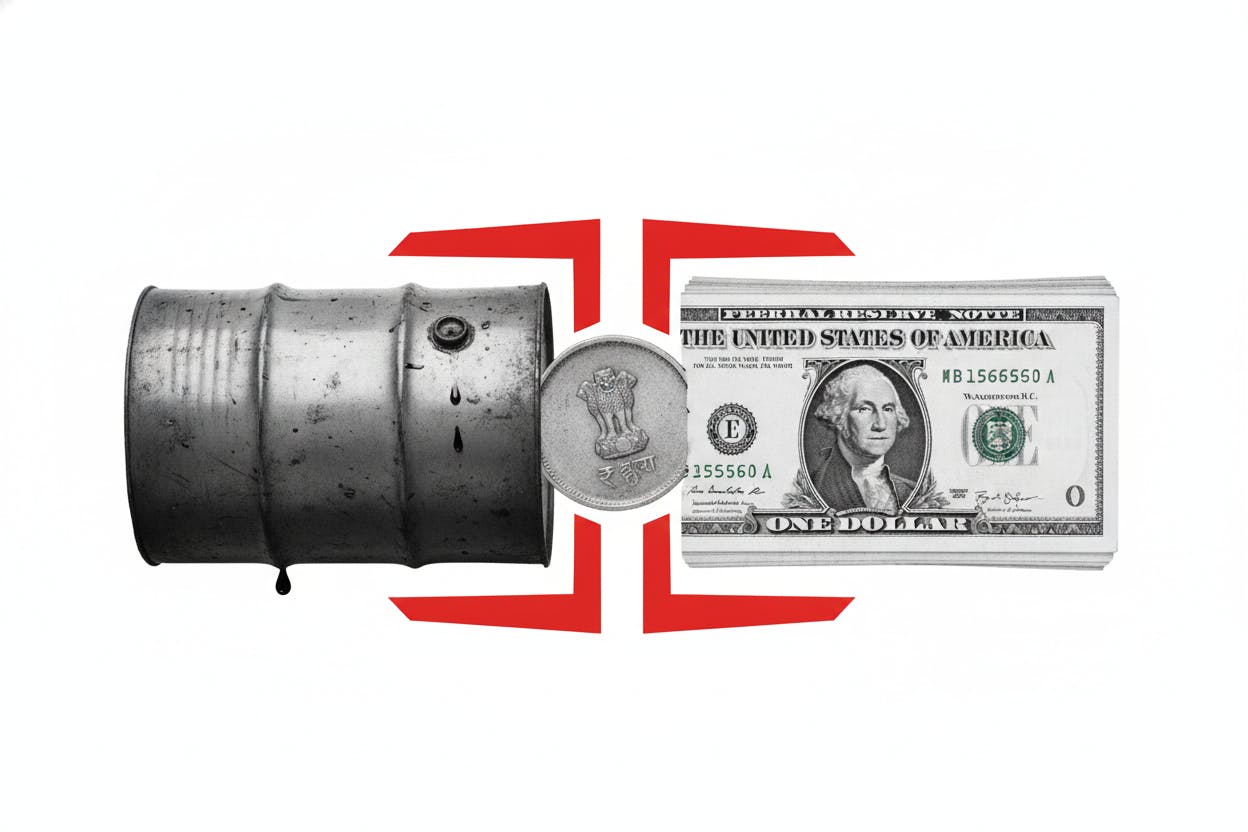
India's rupee is caught in a tug-of-war. On one side, Brent crude holding above $90 a barrel is pushing up the country's import bill, which increases demand for dollars. On the other, traders say the Reserve Bank of India (RBI) is quietly selling dollars near the 95.80 level, effectively capping how far the currency can fall.
This has left the rupee trading in an unusually narrow band over the past two weeks, with day-to-day moves shrinking as the central bank leans against sharp swings. According to Reuters, traders report that state-run banks have repeatedly offered dollars around 95.80 per dollar, acting as an unofficial 'line in the sand' that discourages speculators from testing higher levels.
Why oil matters for the rupee
India is one of the world's largest importers of crude oil, so when global prices rise, the country needs to buy more dollars to pay for those imports. That increased demand for dollars puts downward pressure on the rupee. With Brent above $90 a barrel, that pressure hasn't gone away—it's just being offset by the RBI's intervention.
The central bank's strategy appears to be one of smoothing volatility rather than defending a specific level. By selling dollars near 95.80, the RBI is signaling that it wants to prevent a rapid depreciation, which could spook foreign investors and fuel inflation. But it's not trying to push the rupee higher either, as that would hurt exporters.
This balancing act is familiar to followers of Indian markets. The RBI has a history of intervening in the currency market to manage sharp moves, often using state-run banks as its agents. The central bank has also been building up its foreign exchange reserves, which gives it ample firepower to smooth out volatility.
What this means for investors
For everyday investors, a stable rupee is generally a good thing. It reduces uncertainty for companies that borrow in dollars or rely on imported raw materials. It also helps keep inflation in check, since a weaker rupee makes imported goods more expensive.
However, the current stability comes at a cost. If the RBI is selling dollars to support the rupee, it's drawing down its reserves, though those remain near record levels. And if oil prices keep climbing, the pressure on the rupee could intensify, forcing the central bank to either intervene more aggressively or let the currency adjust.
For those with exposure to Indian stocks or mutual funds, the rupee's path is worth watching. A sharp depreciation could hurt returns for foreign investors, while a stable currency supports market confidence. The recent caution in Indian equities reflects these crosscurrents, with traders keeping an eye on both oil and geopolitical risks.
The bigger picture
The rupee's narrow trading range is also a sign of broader global trends. The US dollar has been relatively strong, and other Asian currencies have faced similar pressures. The RBI's intervention is not unique—many central banks in emerging markets step in to smooth currency swings.
But India's situation is particularly delicate because of its reliance on oil imports. Every $10 rise in Brent roughly adds billions to India's annual import bill, which can widen the current account deficit and put further pressure on the rupee. That's why traders are watching oil prices closely, along with any signals from the RBI about its tolerance for currency movement.
There's also the futures market to consider. Earlier this year, the RBI stepped into rupee futures as open interest surged, a sign that the central bank is willing to act across different venues to maintain stability. This suggests that the 'line in the sand' near 95.80 is not just a spot-market phenomenon but a broader policy stance.
What to watch next
Investors should keep an eye on a few things. First, oil prices: if Brent breaks higher, the rupee could come under renewed pressure. Second, any comments from RBI officials about currency policy, which could signal a shift in approach. Third, the pace of dollar selling by state-run banks—if it intensifies, it may indicate the central bank is defending a specific level more firmly.
For now, the rupee appears to be in a holding pattern. The RBI's presence is providing a floor, but the ceiling is set by oil. As long as those two forces remain balanced, the rupee is likely to stay range-bound. But any shock—whether a spike in crude or a sudden shift in global risk sentiment—could break the stalemate.
For the average investor, the key takeaway is that currency stability is a double-edged sword. It's comforting in the short term, but it can mask underlying pressures. Staying informed about oil prices and central bank actions can help you understand the forces shaping your investments.



