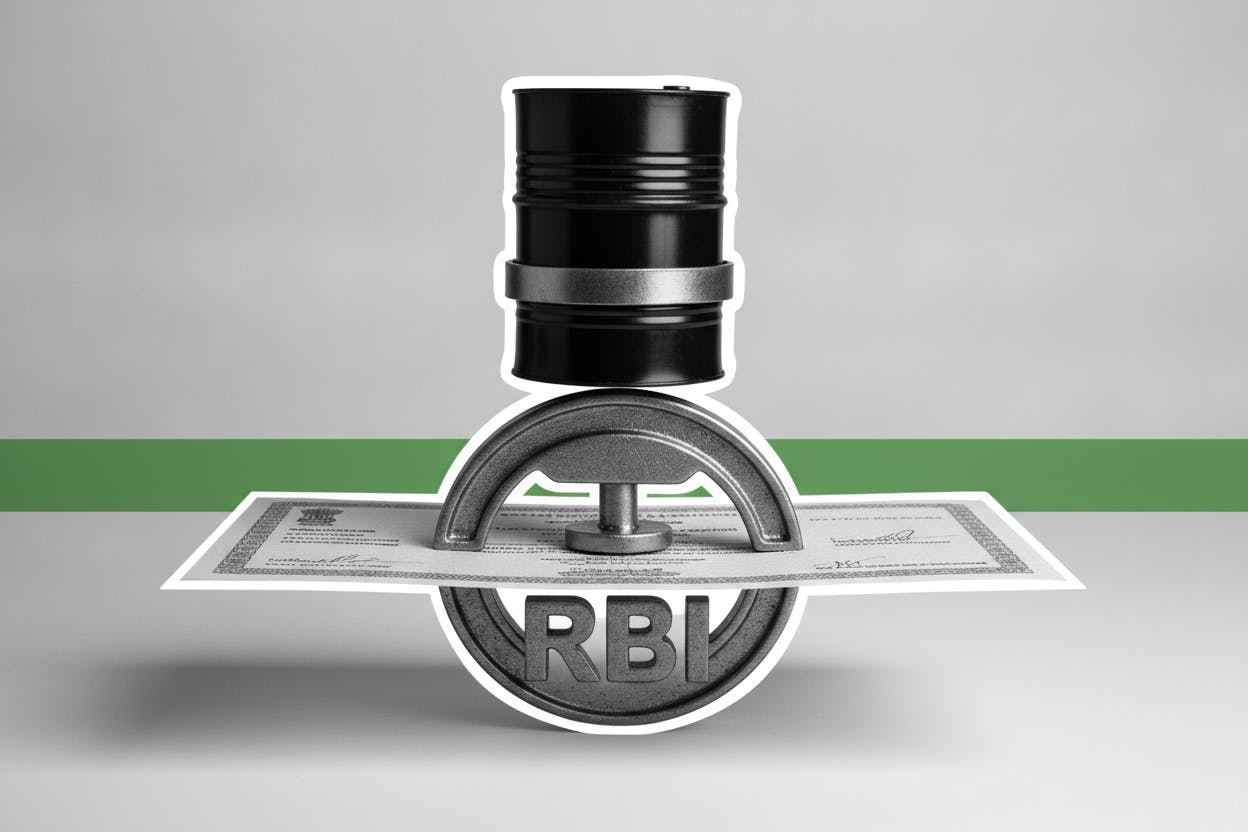
India's benchmark government bond yield was expected to hover around 6.85% on Tuesday, as traders looked past the latest US sanctions on Iran and focused on oil prices that remained stuck near $92 a barrel. The 6.94% 2036 bond had sold off in the previous session, but the lack of a sharp jump in crude after the sanctions announcement gave some traders reason to expect a modest rebound.
Why oil didn't spike on Iran sanctions
The United States tightened sanctions linked to Iran, but analysts said the measures were more about applying economic pressure than an immediate threat to Middle East supply. That interpretation helped keep Brent crude range-bound, preventing a fresh surge that would have added to India's import bill.
For India, the world's third-largest oil importer, the price of crude is a key economic variable. When oil climbs, it feeds directly into the cost of fuel and other goods, pushing up inflation. It also widens the current account deficit, because the country spends more on imported energy. Both effects make the Reserve Bank of India (RBI) more cautious about easing monetary policy.
RBI's inflation vigilance
The RBI has been clear that it remains alert to inflation risks. With oil hovering near $92, the central bank is unlikely to signal any early move toward rate cuts. That keeps bond yields supported, as investors price in a longer period of relatively tight monetary policy.
Bond yields and prices move in opposite directions. When yields rise, bond prices fall, and vice versa. The fact that the benchmark yield is steady near 6.85% suggests that traders see a balance between the drag from high oil and the RBI's commitment to keeping inflation in check.
What it means for investors
For everyday investors, the stability in bond yields is a sign that the market is not expecting any dramatic shift in interest rates soon. If you hold bond funds or fixed-income investments, a steady yield environment means your returns are likely to remain predictable in the near term.
However, the situation is fluid. If oil prices were to spike sharply, that could push yields higher and hurt bond prices. Conversely, if oil were to fall significantly, it could ease inflation concerns and give the RBI room to consider rate cuts, which would boost bond prices.
Investors should also keep an eye on global factors. The US sanctions on Iran are part of a broader geopolitical picture that can affect oil supply and prices. Any escalation could change the calculus quickly. For now, the market is treating the sanctions as a slow-burn issue rather than an immediate supply shock.
Broader market context
The steadiness in Indian bonds comes as global markets remain cautious. In Asia, stocks have been slipping as traders await key events like Nvidia's earnings and comments from Federal Reserve officials. The US Treasury market has also been volatile, with talk of buybacks pulling yields lower at times. These global cues can influence Indian bond yields through capital flows and risk sentiment.
Indian equities were also eyeing a higher open, but traders remained wary of the combination of Iran sanctions and high oil prices. The link between oil and Indian markets is strong, so any sustained move in crude is likely to ripple through both bonds and stocks.
The road ahead
For now, the benchmark yield is likely to stay range-bound unless oil breaks out of its current band or the RBI signals a change in policy stance. Traders will be watching for any fresh developments on the sanctions front, as well as monthly inflation data that could influence the central bank's next move.
For investors, the key takeaway is that high oil prices are a persistent headwind for India's economy and its bond market. While the immediate reaction has been muted, the risk of a spike remains. Staying diversified and keeping an eye on oil and RBI communications can help you navigate this environment.



