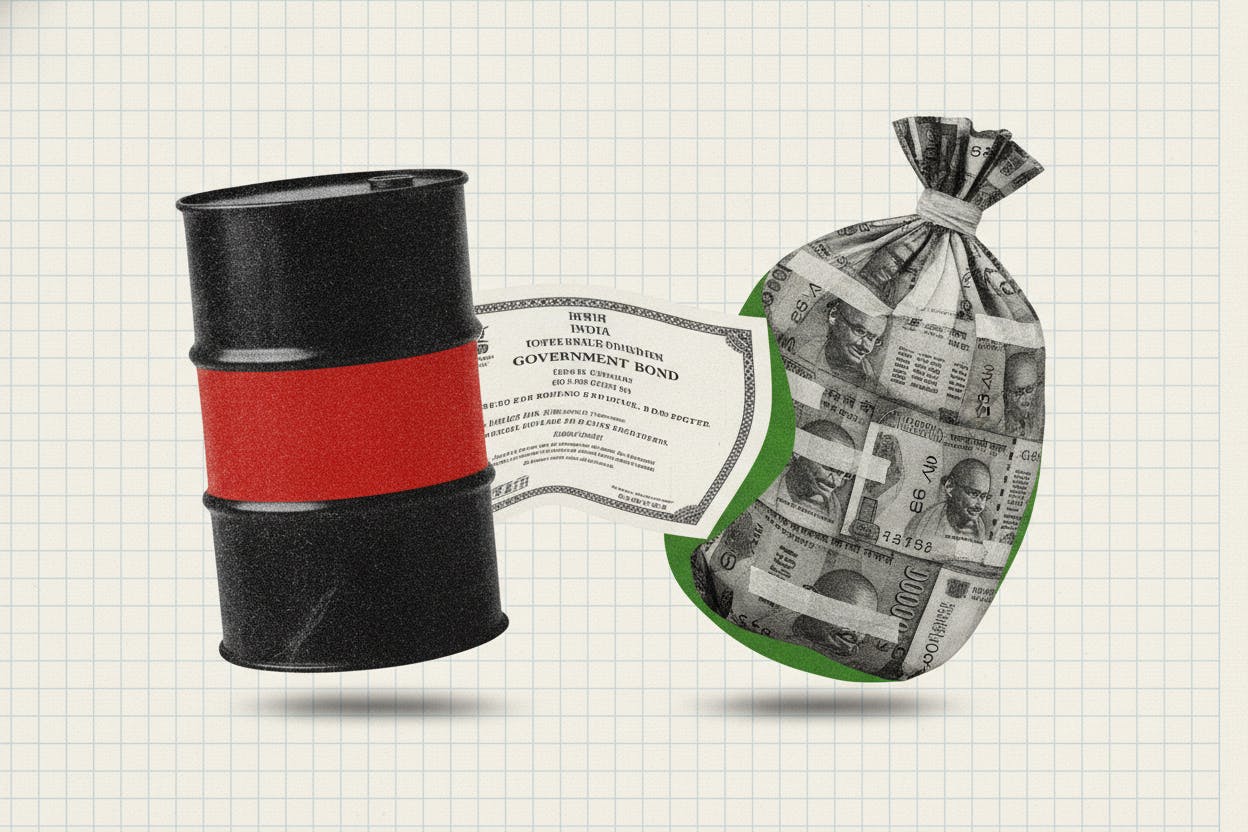
Indian government bonds took a hit on Wednesday as Brent crude oil prices crept closer to the $100-a-barrel mark, but a record pile of cash in the banking system helped keep the damage in check, according to Reuters.
The 10-year benchmark bond yield rose, and interest-rate swaps—contracts that let traders bet on future policy rates—also moved, reflecting growing worries that higher oil prices could push inflation up and keep interest rates elevated for longer.
Why oil matters so much for India
India is one of the world's largest crude importers, so it feels the pinch of rising oil prices more acutely than many other economies. When crude goes up, it raises the cost of everything from fuel to transportation, feeding directly into consumer inflation. That's a problem for the central bank, which has been trying to bring inflation down to its target.
If inflation stays sticky, the Reserve Bank of India (RBI) may be forced to keep interest rates higher for longer—or even hike them again. Higher rates are generally bad for bond prices, because existing bonds with lower yields become less attractive compared to new ones. That's why bond yields tend to rise (and prices fall) when oil climbs.
The recent surge in crude has been driven by geopolitical tensions, including attacks on Saudi energy sites and broader Middle East instability. Oil's move toward $100 has also rattled other emerging markets, as investors worry about the impact on global inflation and central bank policies.
The cushion: record banking liquidity
But India's bond market has a powerful buffer right now: a record 11.16 trillion rupees (about $117.3 billion) of cash sitting in the banking system. This liquidity acts like a safety net, giving banks and financial institutions plenty of money to buy bonds when prices dip, which helps limit the selloff.
This is a classic tug-of-war. On one side, rising oil pushes yields up. On the other, abundant liquidity pushes them down. On Wednesday, the liquidity side seemed to win, at least partially, as the yield rise was modest compared to what might have been expected.
For everyday investors, this means that while bond prices may be under pressure, the fall is being cushioned by the central bank's accommodative stance. The RBI has been injecting cash into the system to support economic growth, and that cash is now acting as a stabilizer for the bond market.
What it means for investors
For investors holding Indian government bonds, the key takeaway is that oil prices remain a major risk. If crude continues to climb, it could eventually overwhelm the liquidity cushion and push yields significantly higher, leading to capital losses on bond holdings.
On the other hand, if oil prices stabilize or fall, the record liquidity could help bond prices recover. The RBI's next moves will be crucial—if it signals that rates will stay low for a while, bonds could find support.
For those investing in bond funds or fixed-income instruments, it's worth watching both oil prices and the RBI's liquidity operations. The current situation is a reminder that bond markets are not just about interest rates—they're also influenced by global commodity prices and domestic cash flows.
Emerging-market debt, including Indian bonds, has been a focus for investors looking for yield, but some asset managers remain cautious about the pace of recovery. The oil-liquidity dynamic in India is a perfect example of the delicate balance these markets face.
Meanwhile, the broader Indian market is also feeling the heat from oil. Rising crude has pressured Indian stocks and the rupee, adding to the challenges for the economy. If oil stays near $100, it could weigh on corporate margins and consumer spending, which would be a headwind for equities as well.
For now, the bond market is stuck between two forces: the upward pressure from oil and the downward pressure from liquidity. How that balance tips in the coming weeks will depend on global oil supply dynamics and the RBI's policy stance. Investors should keep an eye on both.