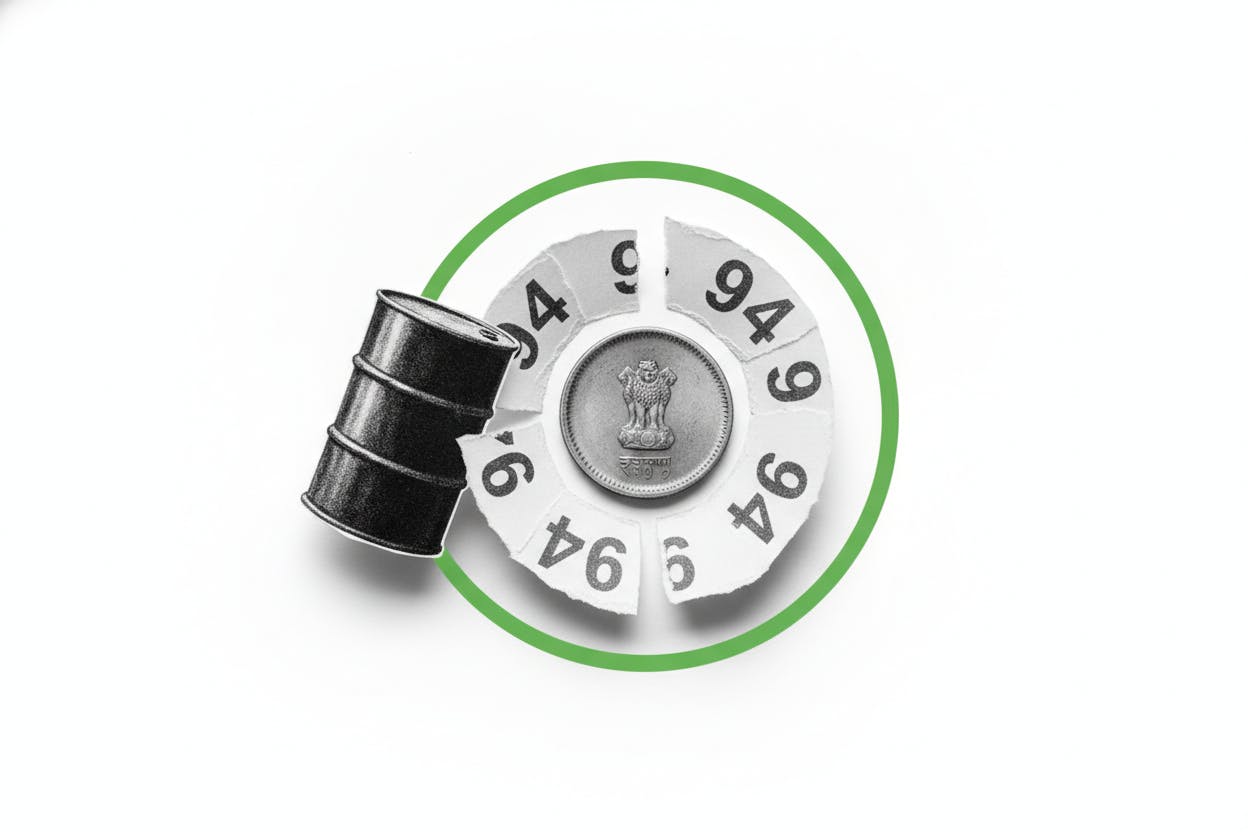
The Indian rupee is expected to open near 94.40-94.44 against the US dollar on Monday, holding close to last Thursday's close of 94.3950. The currency remains locked in a narrow band that traders say now looks like its near-term "settled band" of 94 to 95.
The immediate driver is crude oil. India imports the vast majority of its oil needs, so any rise in Brent crude quickly increases the country's dollar-denominated import bill and can weigh on the rupee. Brent crude rose 0.6% to $72.44 a barrel after renewed US-Iran tensions raised concerns about shipping through the Strait of Hormuz, a critical chokepoint for global oil supplies. Axios reported signs of a potential pause in attacks ahead of talks, but the market remains cautious.
What's Behind the Rupee's Range
The rupee has been trading in a broad 94.15-94.92 range in recent sessions. One bank trader told Reuters that 94-95 now looks like the currency's near-term "settled band," suggesting that unless there is a major shock, the rupee is likely to stay within that zone for now.
Beyond oil, the backdrop is mixed but not dramatic. The dollar index was little changed, and Asian currencies were split, with some gaining and others losing ground against the greenback. The next big test for global rates and the dollar is the upcoming US June jobs report, especially after the Federal Reserve's latest meeting kept a cautious, inflation-wary tone. A strong jobs number could reinforce expectations that the Fed will hold rates higher for longer, which would support the dollar and put pressure on emerging market currencies like the rupee. Conversely, a weak report could ease those fears and give the rupee some breathing room.
What It Means for Your Wallet
For everyday investors and consumers, the combination of a 94-95 rupee band and Brent crude around $72 matters because of the "double math" of oil pricing. Crude is priced in US dollars, so what matters for India isn't just where Brent trades, but where it trades in rupees. That means the local "landing cost" of oil can rise in two ways: oil can climb, and the rupee can weaken toward the top of the 94-95 range, making each dollar of imports cost more rupees.
When both happen together, even modest moves can filter into everyday, oil-linked prices such as petrol and diesel, and into costs that depend heavily on jet fuel, like airfares. For investors, a weaker rupee also affects companies that have significant dollar-denominated debt or that import raw materials, as their costs rise. On the flip side, exporters—such as IT services firms and pharmaceutical companies—tend to benefit from a weaker rupee because their dollar revenues are worth more in local currency.
The Reserve Bank of India (RBI) has historically stepped in to smooth sharp moves in the rupee, and traders will be watching for any signs of intervention if the currency approaches the top of the 94-95 band. For more on how oil and the rupee interact, see our earlier coverage: Indian Stocks and Rupee Rally as Oil Retreats to Pre-Iran Tensions Level and Oil's Plunge Eases Pressure on Indian Rupee as RBI Steps In.
What to Watch Next
The US June jobs report, due later this week, is the next major catalyst for global markets. A strong reading could push the dollar higher and test the top of the rupee's 94-95 band. Meanwhile, any escalation or de-escalation in US-Iran tensions will keep oil prices volatile, and that will directly feed into the rupee's direction.
For now, the rupee appears to have found a comfortable groove, but as any currency trader knows, grooves can turn into ruts when the next shock arrives. Investors should keep an eye on both oil and the dollar, as well as any comments from the RBI, for clues on whether the 94-95 band will hold or break. For broader context on how the dollar is moving, see US Dollar Edges Higher as Traders Brace for Data Deluge and Fed Remarks and Indian Stocks Steady as US-Iran Talks and Middle East Tensions Keep Oil in Focus.