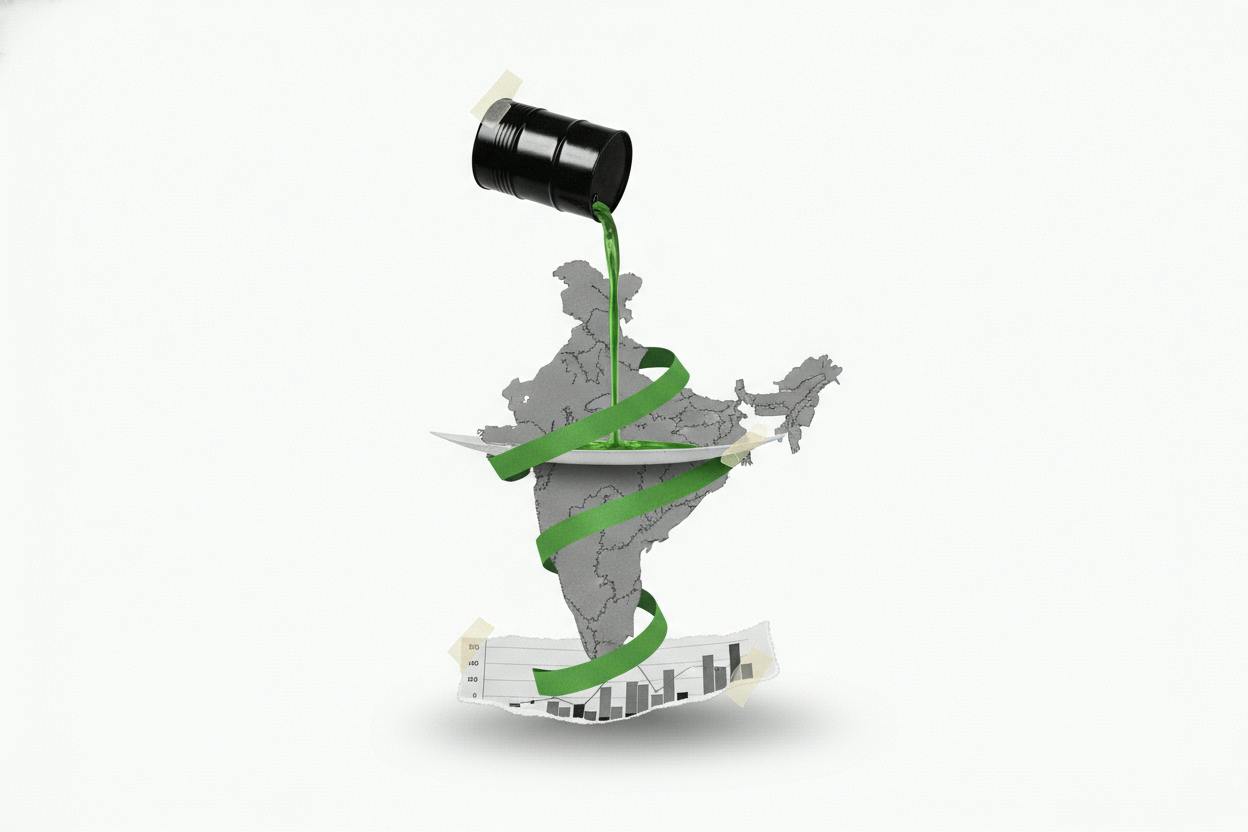
Indian stocks bucked a weak regional trend on [day], with the Nifty 50 and Sensex both climbing about 1% even as a broad Asia-Pacific index (excluding Japan) fell 1.7%. The divergence was driven by two forces: a fresh wave of foreign money and a sharp drop in global oil prices.
Banks and automakers led the advance, while information technology (IT) stocks lagged. The split reflects how different parts of India's economy respond to the same set of macro signals.
Why foreign money is pouring in
Analysts at Elara Capital point to a rotation among global investors back toward India. Earlier this year, an AI-driven rally in emerging markets favored other countries, but that trade has started to unwind. India, with its large domestic market and relatively insulated economy, is now drawing attention again.
November has seen record net foreign inflows of $11.28 billion, according to Reuters. That is a striking number for a single month and underscores how quickly sentiment can shift. When foreign investors buy Indian equities, they typically push up prices across the board, but the effect is strongest in sectors that benefit most from a stable macro backdrop.
One reason India looks attractive is its reliance on imported oil. Crude prices are down 21.6% this month, a steep decline that directly improves India's terms of trade. Because India imports most of the oil it consumes, cheaper crude shrinks the import bill, reduces pressure on inflation, and narrows the current account deficit—the gap between what the country earns from the rest of the world and what it spends.
Lower inflation and a healthier external position can also make Indian assets less risky for foreign investors. That, in turn, can lift valuations across local shares, as investors require less of a premium to hold rupee-denominated assets.
Banks and autos benefit, IT feels the pinch
The day's sector moves illustrate this dynamic. Banks are highly sensitive to interest rates and borrowing costs. When inflation cools, the central bank has more room to keep policy accommodative, which supports lending growth and margins. Automakers, meanwhile, face input costs that are heavily influenced by commodity prices, including oil. Cheaper crude lowers production and logistics costs, which can boost profitability.
IT services companies, by contrast, earn most of their revenue from clients in the US and other developed markets. Their fortunes are tied more to corporate tech spending than to domestic conditions. That is why they slipped on the day: minutes from the Federal Reserve's latest meeting were more hawkish than expected, reviving concerns that US interest rates could stay higher for longer. Higher rates can cool business investment, including spending on technology projects, which is a key demand driver for Indian IT firms.
The contrast between autos and IT is a reminder that a single market move can hide very different stories underneath. For everyday investors, the takeaway is that sector exposure matters as much as the overall index direction.
What it means for your money
For those with money in Indian equities, the record foreign inflow is a positive sign, but it also carries risks. Foreign money can leave as quickly as it arrives, especially if global conditions change. The same Fed that is worrying IT investors could also trigger a broader pullback from emerging markets if US rates stay high.
Cheaper oil is a more durable tailwind for India's economy, but oil prices are volatile and can reverse quickly. A geopolitical shock or a supply disruption could erase this month's decline just as fast.
For investors, the key is to understand which parts of the market are benefiting from the current backdrop and which are not. Banks and automakers are riding the wave of lower costs and steady domestic demand. IT stocks, while cheaper on some measures, face headwinds from US monetary policy and global tech spending.
As always, diversification remains a sensible approach. India's market is not a single bet—it is a collection of sectors with very different drivers. Watching how foreign inflows and oil prices evolve in the coming weeks will give clues about whether this divergence continues.