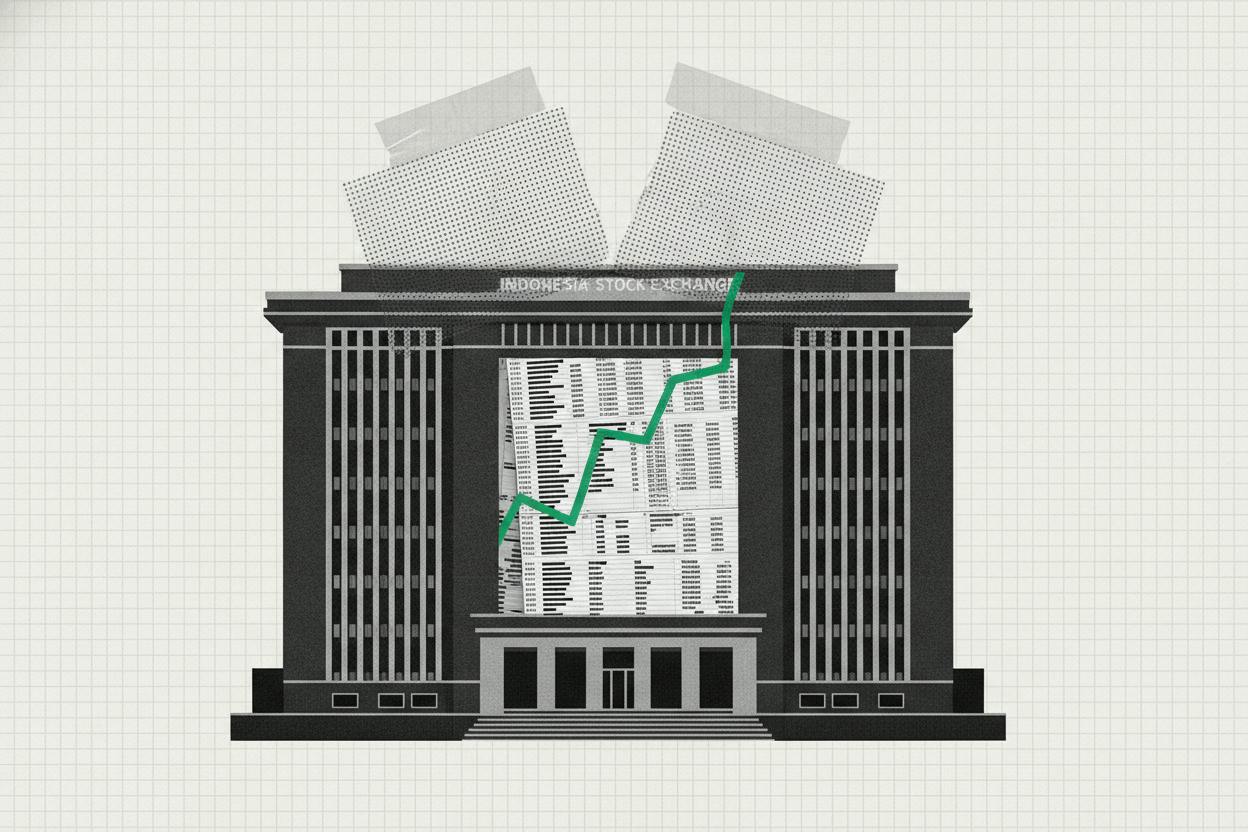
Indonesia's main stock exchange has overhauled the rules for its "watchlist" board, a move that could reshape how risky companies are flagged to investors. The Indonesia Stock Exchange (IDX) said on Monday it will drop minimum share-price and free-float screens, instead leaning more heavily on company fundamentals. The timing is notable: index provider MSCI is currently reviewing whether Indonesia's market reforms are improving liquidity and pricing, with a decision expected in November.
What is the watchlist board?
The watchlist board is a special section of the IDX where companies that meet certain risk criteria are grouped. Historically, it has been used to flag stocks that trade at very low prices or have a small free float — the proportion of shares available for public trading. Being placed on the watchlist can deter investors, as it signals potential problems and can lead to stricter trading rules.
Under the new rules, the IDX will keep fundamentals-based red flags, such as whether a company can generate revenue or is heading toward bankruptcy or debt restructuring. But it will no longer automatically add a stock to the watchlist just because its share price has fallen below a certain level or because its free float is thin.
Why the change matters
The shift is part of a broader effort by Indonesian regulators to modernize the market and attract more investment. By focusing on fundamentals rather than price and float mechanics, the exchange aims to reduce the stigma attached to low-priced stocks and encourage trading in smaller companies that may still be financially sound.
For everyday investors, the change means the watchlist will become a more meaningful signal. A stock on the list will now be there because of genuine financial concerns — like weak revenue or solvency issues — rather than just because its share price is low. That could help investors avoid companies that are truly in trouble, while not unfairly penalizing those that are simply trading at a low price.
MSCI review adds pressure
The IDX's rule change comes as MSCI, a major global index provider, evaluates Indonesia's market for potential inclusion or adjustment in its indices. MSCI has been pushing for reforms that improve market liquidity and pricing efficiency. The outcome of the November review could affect how international funds allocate money to Indonesian stocks.
If MSCI sees the reforms as positive, it could lead to increased foreign investment in Indonesian equities. That would be a boost for the market, which has been working to attract more global capital. On the other hand, if the review is unfavorable, it might keep some investors on the sidelines.
What it means for investors
For those holding Indonesian stocks, the watchlist overhaul is a reminder that market rules can change quickly. It's important to understand what the watchlist signals now mean. A stock that was previously flagged for a low price may no longer be on the list, but that doesn't mean the company is healthy — it just means the exchange is no longer using that particular screen.
Investors should pay attention to the fundamentals that the IDX will now emphasize: revenue generation, solvency, and the risk of bankruptcy or debt restructuring. These are the factors that will determine whether a stock lands on the watchlist going forward.
The MSCI review is also worth watching. If Indonesia's reforms are seen as successful, it could lead to more foreign money flowing into the market, which might support prices. But as with any market change, there are no guarantees.
Broader market context
Indonesia's move is part of a wider trend in emerging markets, where exchanges are updating listing and trading rules to become more competitive. Similar efforts have been seen in other Southeast Asian markets, as they vie for a share of global investment flows.
For investors, the key takeaway is that market structure matters. Changes like this can affect how stocks are valued and traded, and they can influence the overall attractiveness of a market. Keeping an eye on regulatory developments is part of staying informed as an investor.
As the November MSCI review approaches, expect more attention on Indonesia's market reforms. Whether the changes are enough to satisfy global index providers remains to be seen, but the IDX is clearly signaling that it wants to be seen as a more investor-friendly exchange.