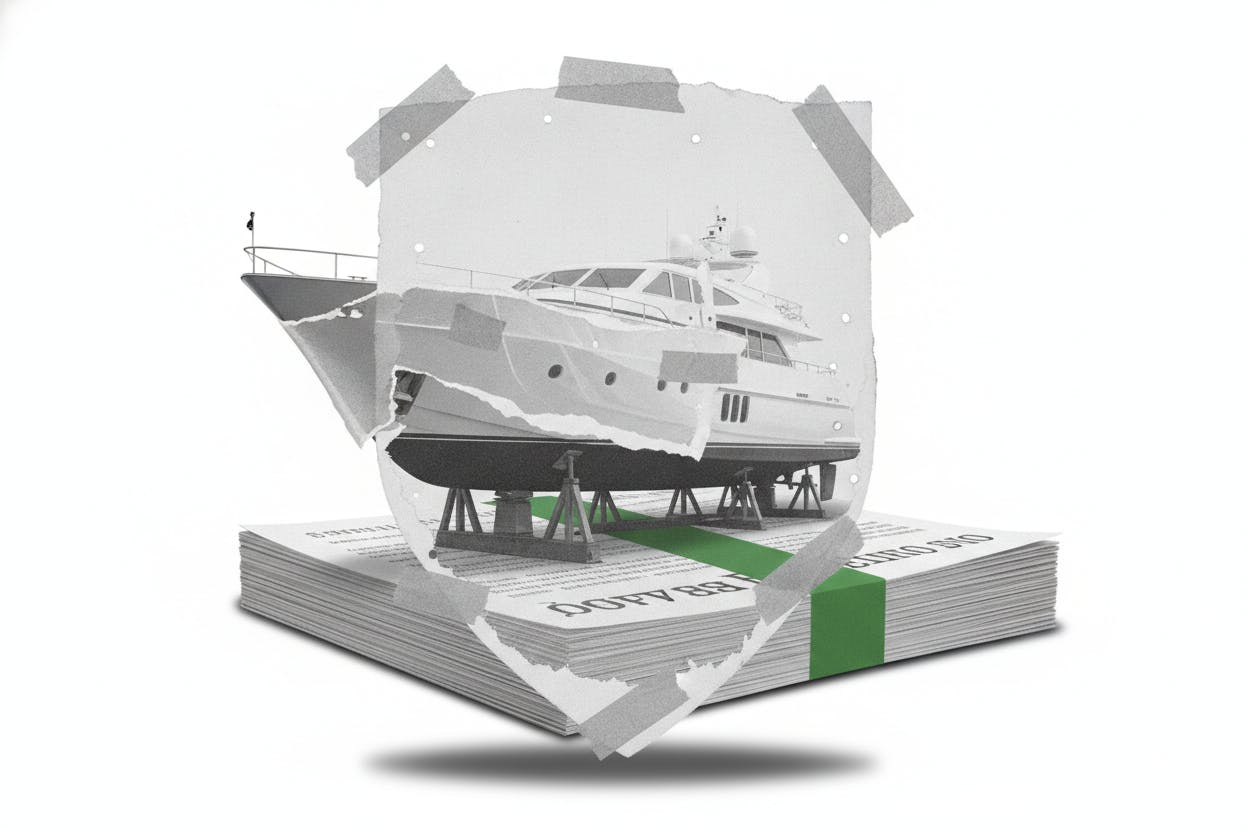
Italian luxury yacht-maker The Italian Sea Group has secured a critical lifeline. A Florence court has extended protective measures from July 1, giving the company four months of breathing room as it works to restructure its finances. At the same time, the company announced it may raise up to €100 million in fresh capital starting in the fourth quarter.
Background: A Company Under Pressure
The Italian Sea Group, known for building high-end yachts under brands like Admiral and Tecnomar, has been facing serious financial headwinds for months. In March, the company entered a negotiated crisis-settlement process—a formal procedure under Italian law that allows struggling firms to negotiate with creditors outside of bankruptcy court. That process was triggered by a combination of governance issues and mounting debt.
By May, the situation had worsened. The company disclosed that debt-related losses had pushed its share capital below Italy's legal minimum, forcing management to devise a turnaround plan. That plan included selling assets and renegotiating contracts with clients and suppliers. But progress stalled when talks with clients hit a wall, prompting the company to seek court protection on July 1.
What Court Protection Means
Court protection, similar to Chapter 11 bankruptcy protection in the United States, allows a company to pause debt payments and legal actions while it reorganizes. For The Italian Sea Group, the four-month window from July 1 provides time to finalize a restructuring plan without the immediate threat of creditor lawsuits or asset seizures. The Florence court's extension signals that the company's efforts are being taken seriously, but it also underscores the depth of its troubles.
The protective measures are part of Italy's crisis-settlement framework, which aims to keep viable businesses afloat while they address financial problems. For investors, this is a double-edged sword: it offers a chance for recovery, but it also means existing shareholders could face significant dilution if the capital raise goes ahead.
The €100 Million Capital Raise
The company said it may raise €100 million from the fourth quarter, likely through a rights offering or a placement to institutional investors. Such a capital injection would be used to shore up the balance sheet, pay down debt, and fund ongoing operations. However, raising that amount would almost certainly dilute existing shareholders, as new shares would be issued at a discount to attract buyers.
For everyday investors, this is a classic distressed-company scenario. The capital raise is a positive sign that the company can still access funding, but it also means that current stock holders could see their ownership stake shrink. The success of the raise will depend on investor confidence in the turnaround plan and the broader appetite for risk in the luxury goods sector.
Broader Context: Luxury Yachts and Economic Headwinds
The Italian Sea Group's struggles come against a backdrop of rising interest rates and cooling demand for luxury goods. While the super-rich continue to spend on high-end toys, the broader economic environment has made financing more expensive and clients more cautious. The company's reliance on custom-built yachts, which often involve long lead times and large deposits, makes it particularly vulnerable to contract cancellations or delays.
In Italy, the services sector has shown signs of recovery, as noted in a recent report on Italy's services sector returning to growth as cost pressures ease. But that recovery has been uneven, and manufacturing-intensive industries like yacht-building have faced higher input costs and supply chain disruptions.
What It Means for Investors
For investors holding shares in The Italian Sea Group, the next few months will be critical. The court protection provides a temporary shield, but the company must execute its turnaround plan and secure the capital raise to avoid a more severe outcome, such as bankruptcy or forced liquidation. The €100 million figure is substantial relative to the company's market cap, suggesting that existing equity could be heavily diluted.
Investors should also watch for updates on asset sales and contract renegotiations. If the company can sell non-core assets or win back client confidence, it may emerge from this process in a stronger position. But the risk of failure remains high, and the stock is likely to remain volatile.
For those not already invested, this is a high-risk situation best left to professionals. The Italian Sea Group's story is a reminder that even prestigious brands can face existential threats when debt and governance issues collide. As always, diversification and caution are key.
In related news, other companies are also navigating debt challenges. For example, Brazilian firms are turning to out-of-court debt restructurings as interest rates bite, highlighting a global trend of corporate distress in a higher-rate environment.