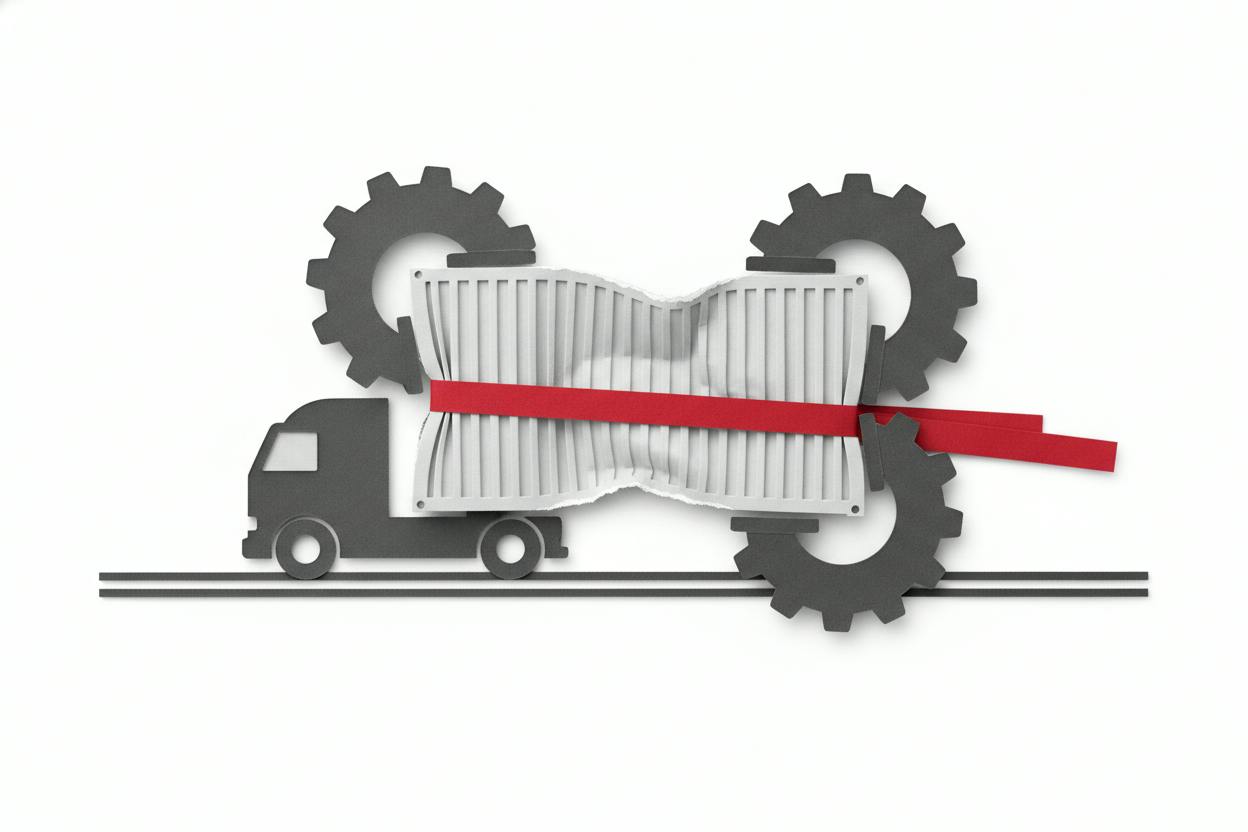
Trucking and logistics giant J.B. Hunt reported a strong top-line performance for the third quarter, with revenue jumping 20% to $3.68 billion and beating Wall Street's expectations. However, the company's bottom line told a different story, as a surge in operating costs—from purchased transportation to fuel and insurance claims—squeezed its profit margin and sent shares lower in early trading Friday.
Revenue beat, but margins shrink
The revenue figure came in ahead of the $3.59 billion that analysts had forecast, according to FactSet. Operating income rose 2% to $247.1 million, and earnings per share edged up to $1.82. But the company's operating margin—the percentage of each sales dollar that ends up as operating profit—fell to 6.7%, down from 7.9% in the same period last year.
That decline reflects a familiar challenge for transportation companies: even when demand is strong, costs can eat into profitability. J.B. Hunt cited higher purchased transportation costs, which occur when the company hires third-party carriers to handle overflow freight, as well as increased fuel-related expenses and a rise in insurance claims. These are the kinds of costs that can fluctuate sharply from quarter to quarter, and they often move in tandem with broader economic conditions.
For everyday investors, the operating margin is a key metric to watch because it shows how efficiently a company converts revenue into profit. A shrinking margin, even on higher sales, can signal that a business is losing pricing power or facing cost pressures that may not be temporary.
What's behind the cost pressure?
Purchased transportation is a common lever for trucking firms when they have more freight than their own fleet can handle. But paying outside carriers typically comes at a premium, and those costs have been elevated as the industry deals with tight capacity and fluctuating demand. Fuel costs, meanwhile, are largely passed through to customers via surcharges, but the timing of those adjustments can create short-term mismatches that hurt margins.
Insurance claims are another wildcard. The trucking industry has seen rising premiums and larger claim payouts in recent years, driven by factors like higher repair costs and legal settlements. For J.B. Hunt, a spike in claims can directly dent profitability, and it's a cost that's harder to control than fuel or capacity.
These pressures aren't unique to J.B. Hunt. Many logistics and transportation companies have been navigating a similar environment, balancing strong demand with rising input costs. The broader economy has also been a factor, with interest rates and inflation influencing both consumer spending and the cost of doing business. For context, currency markets have been reacting to global trade dynamics, as seen in the yuan's recent strength, which can affect the competitiveness of U.S. exports and, indirectly, freight volumes.
What it means for investors
For investors, the takeaway is nuanced. On one hand, J.B. Hunt's ability to grow revenue by 20% shows that demand for its services remains robust. On the other, the margin compression suggests that the company isn't fully able to offset cost increases, which could limit earnings growth in the near term.
Investors often look at a company's operating margin trend over several quarters to gauge whether cost pressures are easing or worsening. If fuel prices stabilize and insurance claims return to normal levels, margins could recover. But if these costs persist, the company may need to raise prices, which could in turn affect demand.
It's also worth noting that J.B. Hunt's results come at a time when the logistics sector is closely watched as a bellwether for the broader economy. Strong freight volumes can signal healthy consumer and business spending, while weak volumes often point to slowdowns. The company's revenue beat is a positive sign, but the margin squeeze is a reminder that growth doesn't always translate directly into profit.
For those looking at the stock, the immediate reaction—a dip in early trading—reflects investor disappointment over the margin miss, even as the revenue beat was solid. Long-term investors might focus on whether the company can manage its cost structure while maintaining growth. As always, it's important to consider a company's results in the context of its industry and the broader market, rather than making decisions based on a single quarter.
In the coming months, analysts will be watching J.B. Hunt's commentary on cost trends, particularly around purchased transportation and insurance. The company's ability to navigate these headwinds will likely determine whether the stock can recover from Friday's dip.