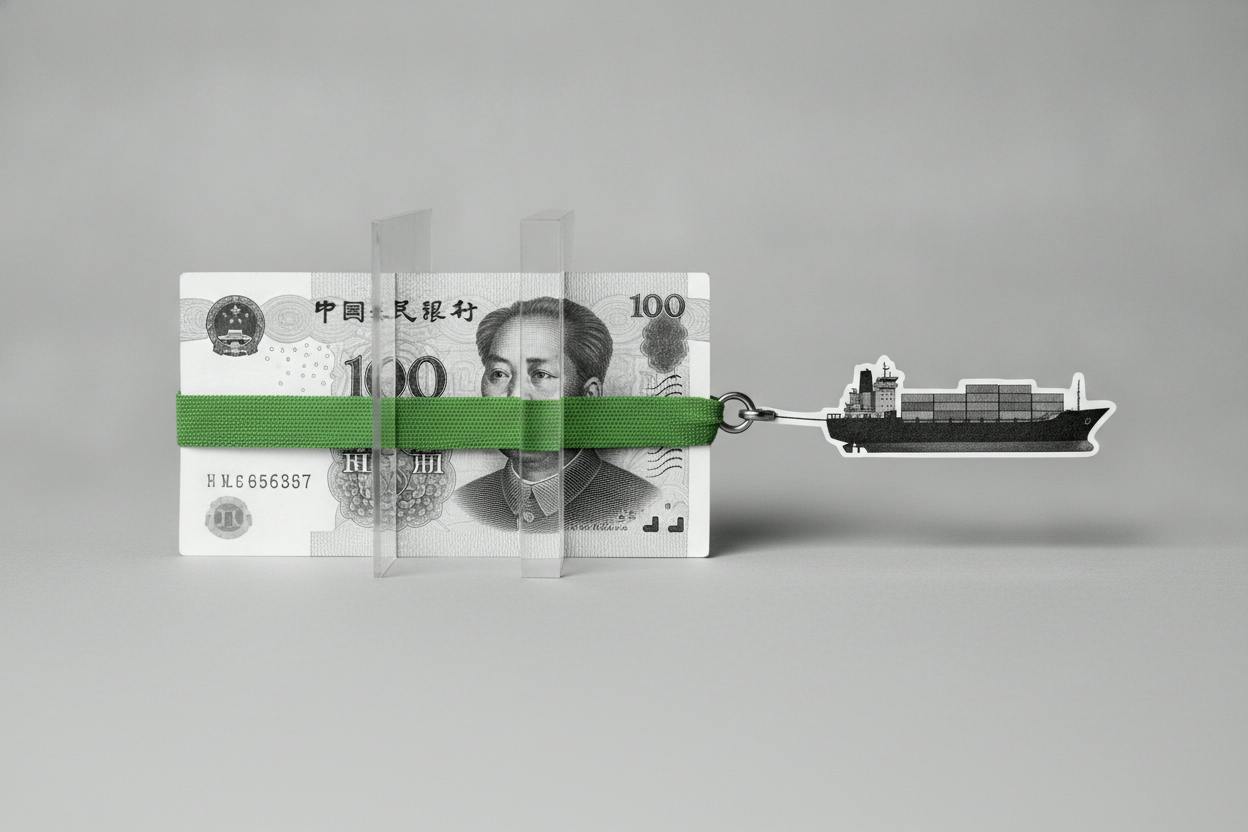
China's yuan is on track for a third consecutive weekly gain, holding near its strongest level since early 2023, as resilient exports continue to provide a solid foundation for the currency even as the domestic economy shows signs of softness.
The onshore yuan briefly traded at 6.6897 per US dollar, while the People's Bank of China (PBOC) set its daily reference rate at 6.7220—both the strongest fixings in well over a year. This strength comes despite Beijing's clear signal that it does not want a rapid, one-way appreciation.
Exports doing the heavy lifting
Analysts at Nanhua Futures and Pantheon Macroeconomics attribute the yuan's resilience to strong export performance. When overseas sales hold up, exporters bring more dollars home and convert them into yuan, which naturally pushes the currency stronger. This dynamic has helped offset a softer domestic backdrop, where consumer spending and property investment have been sluggish.
The export-driven support is a familiar pattern for China's currency. In periods when global demand for Chinese goods is robust, the trade surplus generates a steady flow of foreign currency that needs to be converted, creating upward pressure on the yuan. This is particularly evident when the US dollar is also weakening, as it has been recently—the dollar is on track for its first weekly drop in five weeks amid an AI trade wobble that has rattled markets.
Beijing's speed limit
While trade flows are pushing the yuan higher, the PBOC is clearly signaling that it wants to manage the pace of appreciation. The central bank governor has said that global imbalances cannot be fixed just by shifting exchange rates, a hint that Beijing is wary of a sharp move that could hurt exporters' competitiveness.
The daily fixing and trading band are the tools the PBOC uses to guide the currency's trajectory. By setting the reference rate at a level that is slightly weaker than where the spot market would naturally trade, the central bank can slow the pace of gains. This "grind with occasional pushbacks" approach means the yuan is more likely to drift lower in a managed way than break sharply in one direction.
This matters for companies with China revenue or costs. A slower, more predictable appreciation path changes how expensive it is to hedge currency swings, and firms may need to reset their hedges more frequently as the PBOC smooths moves. It also has implications for the broader Asian currency complex, as regional currencies often take their cue from the yuan's direction, especially when trade is the main driver.
What it means for investors
For everyday investors, the yuan's strength is a double-edged sword. On one hand, a firmer yuan can boost the returns of US investors holding Chinese assets, as currency gains add to any investment gains. On the other hand, it can make Chinese exports more expensive, potentially weighing on the earnings of Chinese companies that rely heavily on overseas sales.
The managed appreciation also has implications for global markets. A stronger yuan often supports commodity prices, as it signals robust Chinese demand. For instance, iron ore has steadied after hitting a two-year low, partly due to improving mill margins in China. Similarly, copper prices are closely tied to AI-driven demand, and a stable yuan can help sustain that demand.
Investors should also watch how the PBOC's actions affect other Asian currencies. If the yuan continues to appreciate in a controlled manner, it could provide a template for other central banks in the region, potentially leading to a broader trend of currency strength against the dollar.
For now, the yuan's path appears set: exports are providing the fuel, but the PBOC is firmly in the driver's seat, ensuring the ride is smooth and gradual. As always, investors should keep an eye on trade data and central bank communications for clues about the next move.