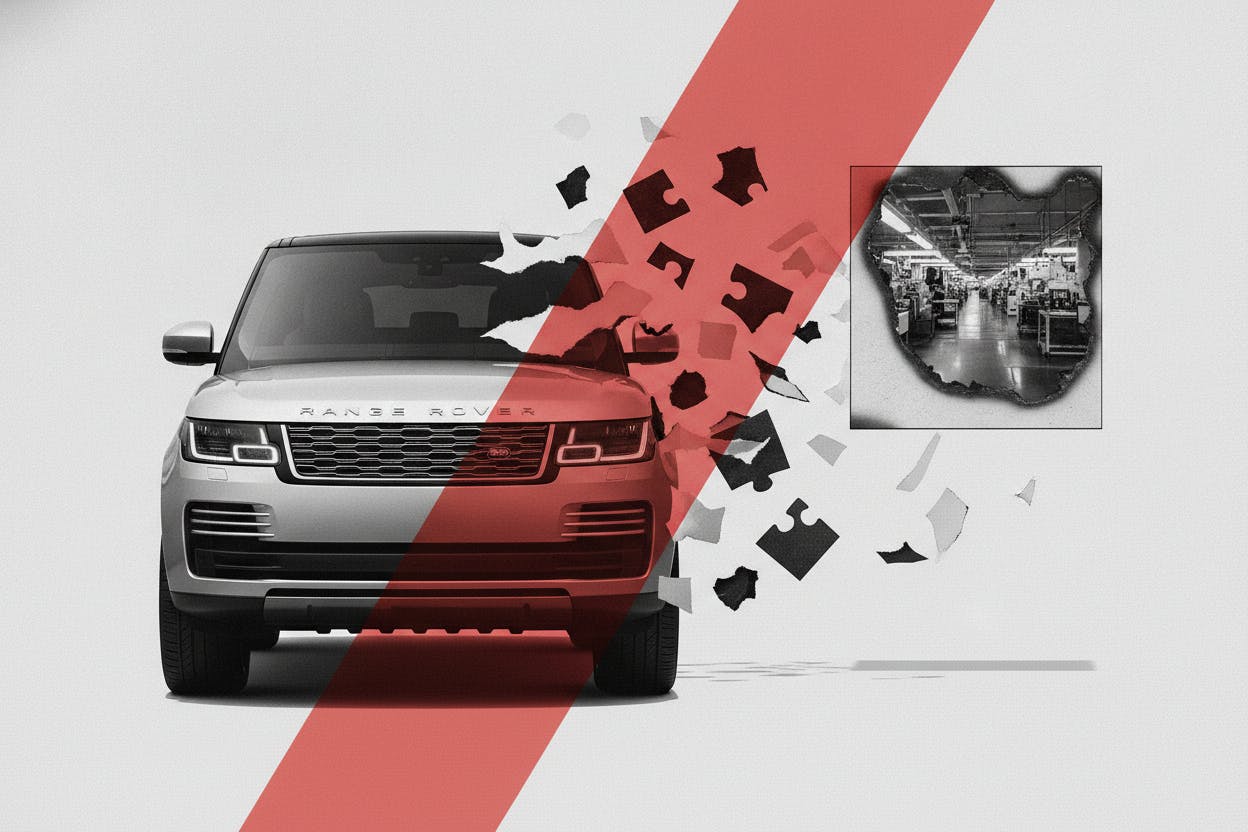
Jaguar Land Rover (JLR) kicked off its fiscal year with a sharp sales decline, as a fire at a key supplier and cooling demand weighed on results. The British automaker, owned by India's Tata Motors, reported retail sales of 80,000 vehicles in the first quarter of fiscal 2027, down 15.3% from the same period last year.
Supply Disruption and Model Wind-Down
The sales drop was compounded by a fire at a critical parts supplier, which temporarily tightened the availability of components. JLR also cited disruption linked to the Middle East conflict, which has affected shipping routes and logistics. Additionally, the company is winding down production of older Jaguar models ahead of the launch of its new all-electric Type 01, expected later this year.
Wholesale volumes—vehicles shipped to dealers—fell 9.2% to 79,300 units in the quarter, reflecting the supply constraints. The company's reliance on high-margin SUVs remained pronounced: the Range Rover, Range Rover Sport, and Defender accounted for 80.8% of wholesale volumes, underscoring JLR's strategy of focusing on its most profitable models.
The broader auto industry has faced similar headwinds. In the US, auto sales edged up just 0.8% in Q2 2026, with General Motors and Ford losing ground to Honda and Nissan. JLR's luxury niche, however, makes it particularly sensitive to supply chain hiccups that can delay deliveries to affluent buyers.
Cost-Cutting Drive Amid Transition
To offset the sales pressure, JLR is targeting $2.3 billion in cost reductions. The savings are expected to come from streamlining operations, reducing complexity in its model lineup, and improving manufacturing efficiency. The company is also investing heavily in electrification, with plans to launch several battery-electric vehicles by 2030.
The cost-cutting target is ambitious, especially as JLR navigates a period of softer demand in key markets like China and Europe. Luxury car sales have been under pressure from economic uncertainty and shifting consumer preferences toward hybrids and EVs. In the US, hybrids surged in Q2, even as overall sales remained flat, indicating a broader shift in buyer behavior.
What It Means for Investors
For everyday investors, JLR's sales slump is a reminder of how vulnerable automakers are to supply chain disruptions, even as they pivot to new technologies. The fire at a supplier—a single event—can ripple through an entire quarter's results. The company's focus on high-margin SUVs helps protect profitability, but the planned phase-out of older Jaguar models creates a temporary gap in sales volume.
The $2.3 billion cost-cutting plan is a positive signal that management is taking action, but investors should watch whether JLR can execute those savings without hurting product quality or delaying EV launches. The success of the upcoming Type 01 electric Jaguar will be critical to the brand's future growth.
JLR's performance also reflects broader trends in the auto industry. GM's Q2 US sales dipped 4.2% as EV demand softened, while truck sales held steady. Similarly, JLR's reliance on its SUV lineup mirrors the industry's push toward higher-margin vehicles. However, the company's exposure to geopolitical risks—such as the Middle East conflict—adds an extra layer of uncertainty that investors should factor into their outlook.
Looking ahead, JLR's next quarterly report will be closely watched for signs of recovery in supply chains and demand. The company's ability to hit its cost-cutting target while launching new EVs will determine whether this sales slump is a temporary blip or a longer-term trend.