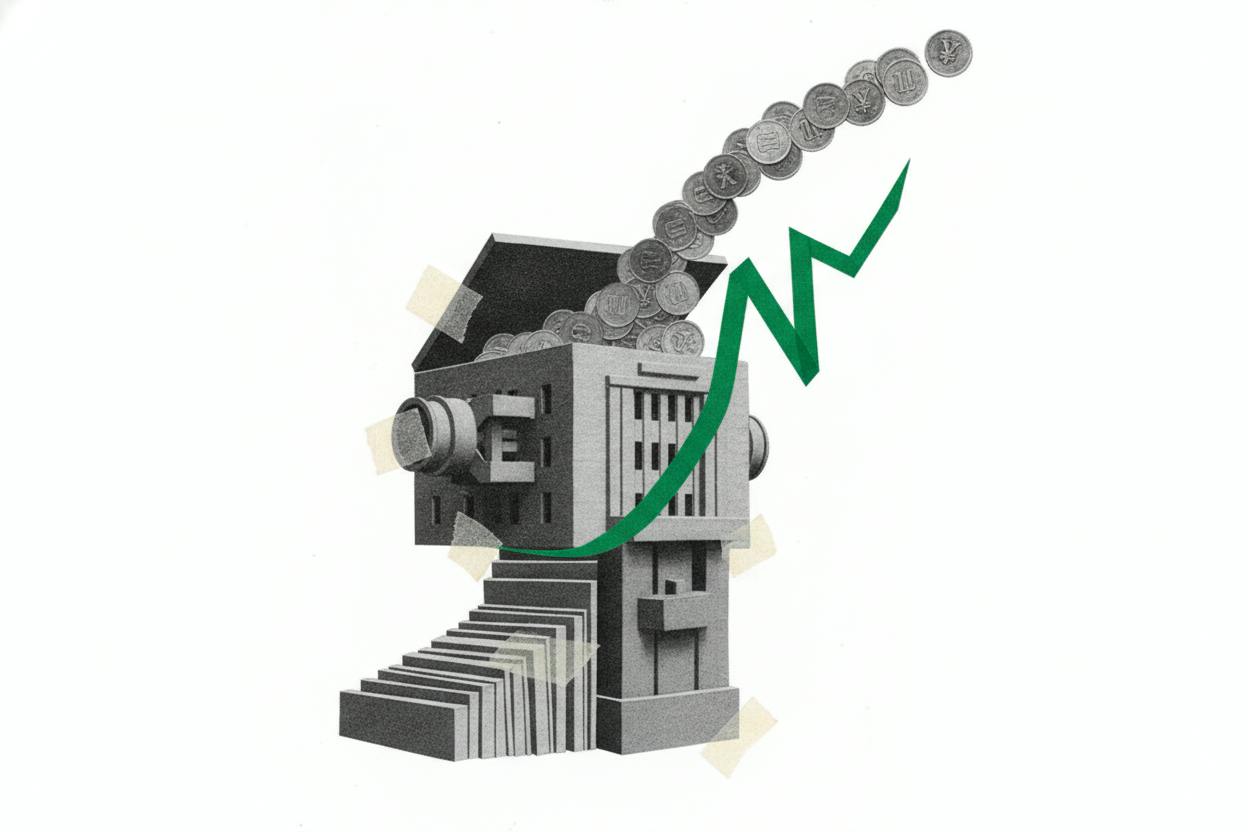
Japan Exchange Group (JPX), the company behind the Tokyo Stock Exchange, reported a sharp jump in first-half profit on Tuesday, underscoring how exchange operators can benefit when market activity picks up. Net income attributable to shareholders rose to 57.2 billion yen for the six months ended Sept. 30, up from 34.6 billion yen in the same period last year. Operating revenue climbed to 131.0 billion yen from 89.3 billion yen.
The results reflect a period of heightened trading, clearing, and market-data activity in Japanese equities. For an exchange operator, this is a particularly powerful dynamic: once the core infrastructure—trading platforms, clearing systems, and data feeds—is in place, the cost of handling additional transactions is relatively low. That means a rise in activity can translate into a disproportionately large increase in profit.
Why exchange profits can move quickly
JPX is often described as a high fixed-cost business. It must run reliable, secure systems every trading day, whether volumes are heavy or light. This creates a business model where revenue is closely tied to market activity, but costs are not. When trading volumes rise, as they did in the first half, revenue can grow faster than expenses, boosting margins and profits.
The flip side is that the same leverage works in reverse. If market activity cools in the second half, revenue could fall faster than costs, putting pressure on profits and, by extension, on shareholder payouts. This is why investors in exchange operators tend to watch trading volumes and market sentiment closely.
JPX's management used the results to reaffirm its commitment to returning cash to shareholders. The company declared an interim dividend of 41 yen per share, payable from Dec. 1, and said it still expects a year-end dividend of 41 yen for the current fiscal year. Combined, that would represent a total payout of 82 yen per share for the year, assuming the year-end dividend is confirmed.
Longer-term targets provide a benchmark
Beyond the immediate results, JPX also pointed to its goals for the fiscal year ending March 31, 2027. The company is targeting 105 billion yen in attributable net income and 252.5 billion yen in operating revenue. These figures give investors a clearer sense of how management expects activity and earnings to trend over the medium term.
These targets are not guarantees, but they offer a useful reference point. If market activity remains elevated, JPX could be on track to meet or exceed them. If activity fades, the targets may prove ambitious. For everyday investors, the key takeaway is that JPX's earnings are highly sensitive to the health of Japanese equity markets.
What it means for investors
For those holding JPX shares, the dividend is a tangible benefit. The 41-yen interim payment, due Dec. 1, is a concrete return of cash, and the planned year-end dividend adds to that. However, the sustainability of these payouts depends on continued market activity.
For investors who do not own JPX directly, the results are a useful indicator of broader market conditions. A strong performance from an exchange operator often signals healthy trading volumes and investor engagement, which can be a positive sign for the wider market. Conversely, a slowdown in exchange earnings can be an early warning of declining market enthusiasm.
It is also worth noting that JPX's results come amid a broader backdrop of global market activity. While the company's fortunes are tied to Japanese equities, the dynamics of exchange economics are similar across the world. Investors who follow other exchange operators may see parallels in how these businesses perform during periods of high or low volatility.
As always, past performance is not a guarantee of future results. JPX's first-half numbers are strong, but the second half could bring different conditions. Investors should keep an eye on trading volumes and any signs of a slowdown in market activity, as these will be the primary drivers of JPX's performance in the months ahead.