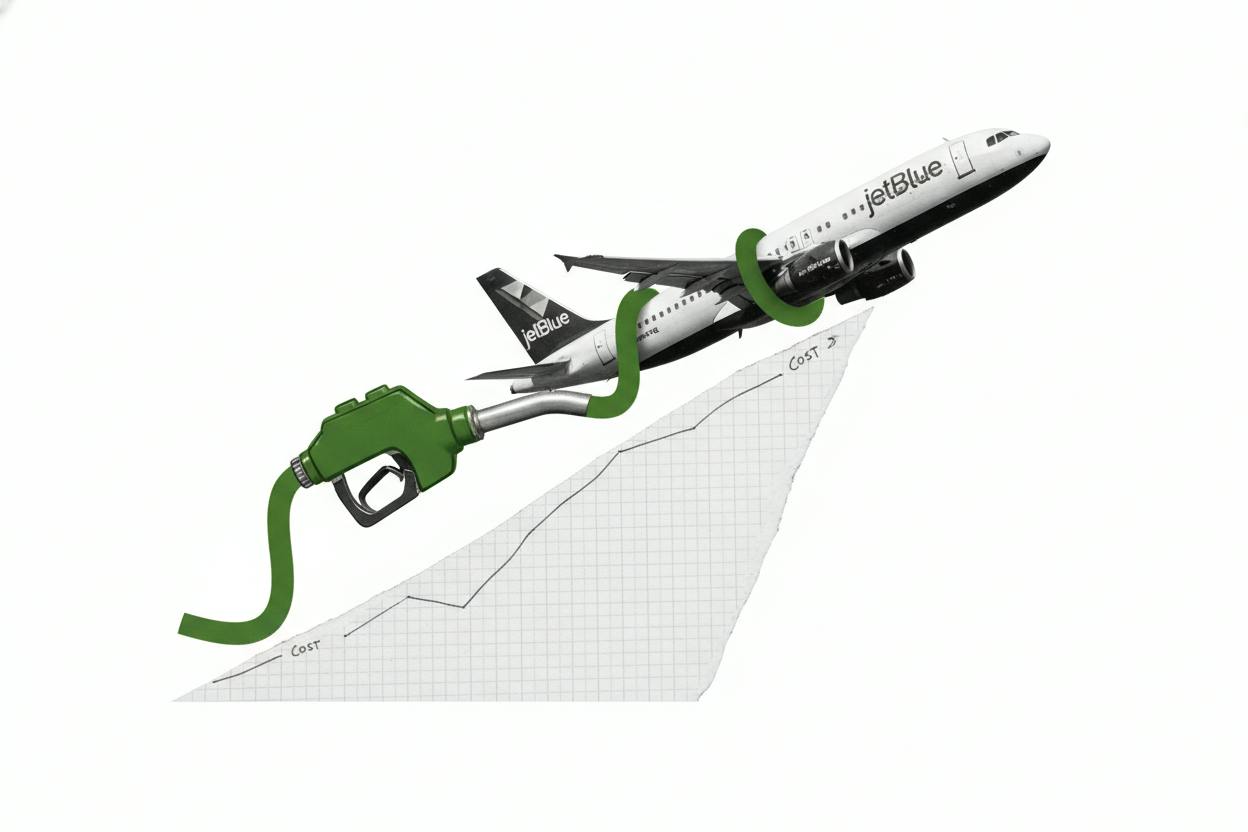
JetBlue Airways reported a wider-than-expected loss for the third quarter, as a sharp jump in fuel costs more than offset the boost from higher fares and extra fees. The New York-based carrier also raised its full-year revenue outlook, a sign that demand remains strong even as expenses bite.
Fuel costs surge
JetBlue said it paid an average of $3.91 per gallon for jet fuel in the July–September period, up 57% from a year earlier and only slightly below the $3.96 it had forecast. That helped push the company to an adjusted loss of 60 cents per share for the three months ended September 30, worse than both the 40-cent loss a year ago and what analysts had expected.
The fuel spike is part of a broader trend affecting airlines globally, as crude oil prices have climbed on supply concerns and geopolitical tensions. For JetBlue, which operates a dense network of short-haul flights in the Northeast and Florida, fuel is one of its largest costs, so even a modest increase can have an outsized impact on profitability.
Pricing power remains strong
Despite the loss, JetBlue raised its full-year unit revenue growth outlook to 13.5%–14.5%, after unit revenue—a key metric that measures revenue per seat mile—rose 18.4% in the quarter. Unit revenue is a rough proxy for pricing power, and the strong growth suggests the airline has been able to push through higher fares and fees even as customers face broader inflation.
The company has been adding premium seats, charging for bags and seat selection, and expanding its network to higher-demand routes. These moves have helped offset some of the fuel pain, but not enough to avoid a loss.
Investors have been watching JetBlue closely, with shares sliding 13% earlier this year as investors demanded a clearer cash plan. The company has also been dealing with the fallout from a blocked merger with Spirit Airlines, which was terminated earlier this year after a federal judge ruled against it.
What it means for investors
For everyday investors, JetBlue's results highlight the delicate balance airlines must strike between raising prices and controlling costs. When fuel prices spike, even strong demand may not be enough to protect the bottom line.
The raised unit revenue outlook is a positive signal, suggesting that JetBlue still has pricing power and that demand for air travel remains robust. However, the wider-than-expected loss shows that fuel costs are a persistent headwind that could continue to pressure earnings in the near term.
Investors will likely watch fuel prices closely in the coming months, as well as any signs that consumers are pulling back on discretionary travel. The airline industry is notoriously cyclical, and companies in this position often see their shares move sharply on any news about fuel costs or demand.
JetBlue's experience is not unique. Other carriers have also cited higher fuel costs in their earnings reports, and the broader market has been grappling with rising fuel surcharges across shipping and logistics. For investors, the key takeaway is that airlines are exposed to commodity price swings, and even strong operational performance can be overshadowed by external factors.
JetBlue's management has said it remains focused on cost control and network optimization, but the fuel bill is largely outside its control. As the company heads into the winter months, when travel demand typically softens, the pressure on margins could persist.
For now, the raised revenue outlook offers some reassurance that the airline's core business is healthy. But the wider loss serves as a reminder that in the airline industry, the gap between revenue and costs can be razor-thin.