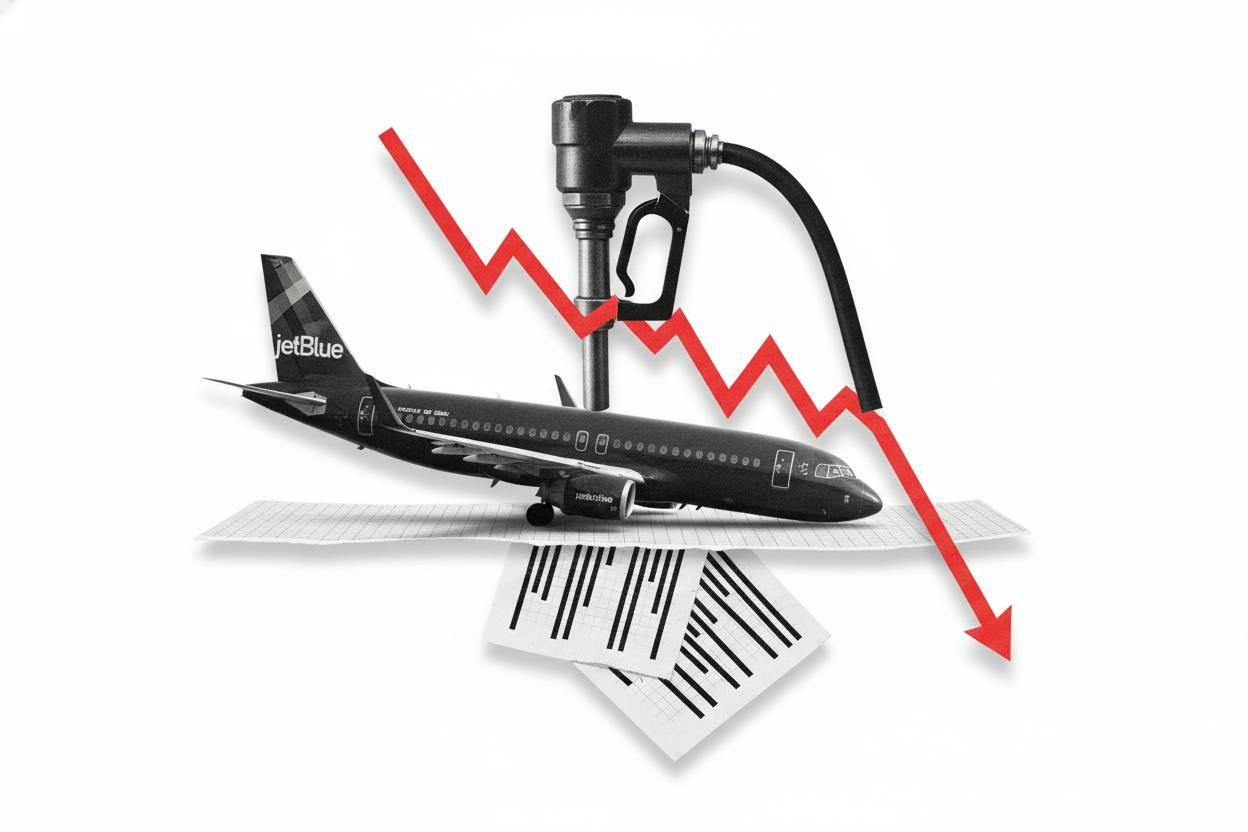
JetBlue Airways saw its shares tumble about 13% on Tuesday after Bloomberg reported that investors are pushing the carrier for a more detailed plan to shore up its finances if jet fuel prices remain elevated. The sharp selloff underscores a broader shift in how the market is evaluating airlines: less about how many seats they're filling, and more about how they'll pay the bills if costs stay high.
Why fuel prices are the key worry
For airlines, jet fuel is one of the largest and most unpredictable expenses. When fuel prices climb, it directly eats into profit margins, even if planes are flying full. A prolonged stretch of high fuel costs can turn what looked like a healthy operation into one that's burning through cash.
That's why the conversation around JetBlue has moved from “How’s demand?” to “How long can it fund itself?” Bloomberg Intelligence analyst George Ferguson told Bloomberg that the carrier may need to transition from burning cash to generating it consistently. That distinction is crucial because cash generation determines a company’s flexibility: it affects its ability to pay bills, invest in the business, and manage debt without having to raise fresh money from investors.
If investors believe fuel will keep pressuring operating cash flow, they tend to focus more on a company’s liquidity buffer—the cash and short-term assets it has on hand—and whether any future funding would come at a higher cost.
What the market is really pricing in
JetBlue’s 13% drop put financing risk front and center. Persistently high fuel costs can weaken operating cash flow, which speeds up cash burn and makes the “how do you pay for this?” question harder to ignore. When that happens, markets often reprice a company through its cost of capital: lenders can demand higher interest rates, and shareholders can require a bigger “risk premium” to provide new money.
In other words, JetBlue’s valuation can become more sensitive to fuel staying elevated than to day-to-day swings in travel demand. Investors are judging the airline on whether it can reach sustained free cash flow—and what it might have to give up if it can’t.
This dynamic isn’t unique to JetBlue. Airlines across the industry are watching fuel costs closely, and any sign that prices will stay high can ripple through the sector. The broader market is also keeping an eye on energy prices, as seen in recent moves where energy stocks slipped as oil and gas prices pulled back. But for JetBlue, the concern is more acute because of its thinner margins and higher debt load compared with some rivals.
What it means for investors
For everyday investors, the key takeaway is that JetBlue’s slide is a reminder of how sensitive airline stocks can be to fuel costs and financing conditions. When a company’s cash position is in question, its stock price can react sharply to news about its plans—or lack thereof.
Investors should watch for any updates from JetBlue management about cost-cutting, fleet plans, or potential capital raises. If the airline announces a clear path to generating positive free cash flow, that could reassure the market. On the other hand, if it signals that it may need to borrow or issue new shares, that could dilute existing shareholders and put further pressure on the stock.
It’s also worth noting that the broader market environment matters. With Treasury yields easing as investors await Big Tech earnings and the Fed decision, borrowing costs are in focus across the economy. Higher interest rates make it more expensive for companies like JetBlue to raise debt, which can amplify the impact of any cash shortfall.
For now, the market is sending a clear signal: JetBlue needs to show it can manage its finances through a period of high fuel prices. Until it does, the stock is likely to remain sensitive to every piece of news about its cash position and funding plans.
This article is for informational purposes only and does not constitute investment advice. Always do your own research before making investment decisions.