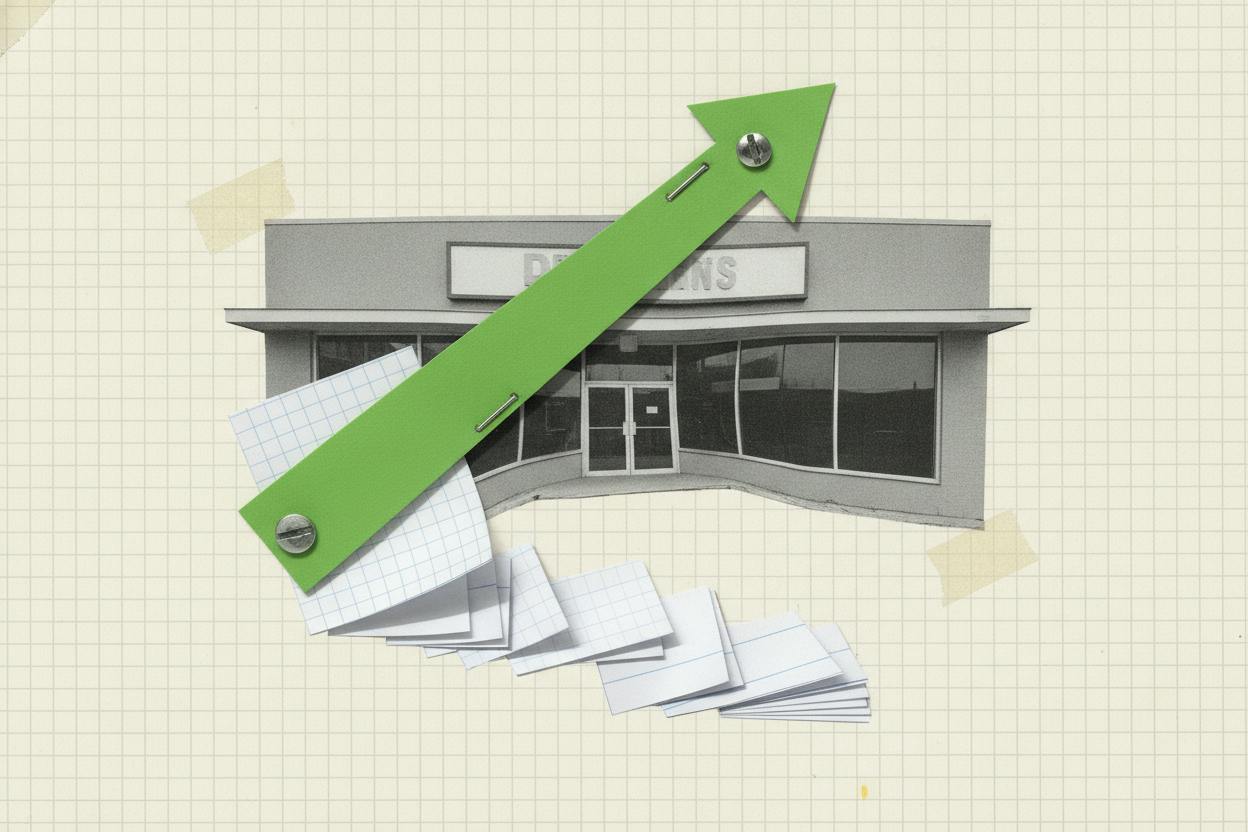
Ross Stores has long been the quieter cousin to TJX in the off-price retail world, but UBS thinks a new CEO could change that. The bank raised its price target on Ross to $315 from $239, arguing that incoming chief executive Jim Conroy can narrow the productivity gap with TJX by spending more on marketing and tightening up how stores run.
The move is a bet on a simple idea: Ross has been under-advertising relative to its biggest rival, and there's room to fix that without losing the bargain-hunting customers who make up its core audience.
What's the marketing gap?
UBS estimates Ross spent about 0.4% of its sales on marketing in calendar 2025. TJX, the parent of T.J. Maxx, Marshalls, and HomeGoods, spent roughly 1.1% of sales. That's a meaningful difference for two companies competing for the same shoppers.
Off-price retailers like Ross and TJX buy excess inventory from brands and sell it at deep discounts. Their business model depends on getting shoppers in the door and turning over merchandise quickly. Marketing plays a big role in driving that traffic, but it also costs money.
The trade-off is that advertising spending shows up immediately in selling, general, and administrative (SG&A) costs. That means margins can take a hit before any benefit from higher sales arrives. UBS acknowledges this risk but believes Conroy can manage it.
Why the new CEO matters
Jim Conroy, who took over as CEO of Ross Stores, has a background in retail leadership. UBS is betting he can pair a bigger marketing push with better merchandising and tighter in-store execution. That combination could keep the company's cost structure efficient even as expenses rise.
The key is whether the extra advertising actually drives more store traffic and higher conversion rates. If it does, Ross can generate what analysts call "fixed-cost leverage" — spreading the same store base and overhead across more revenue. That would allow the company to offset the added marketing dollars with higher sales per store.
If the marketing push doesn't work, the same step-up in spending could show up as thinner margins and put pressure on UBS's newly raised earnings forecasts.
What it means for investors
For everyday investors, this is a story about a company trying to grow by investing in itself. Ross Stores has been a steady performer in the retail sector, but its productivity — measured by sales per square foot or other metrics — has lagged TJX. UBS thinks closing that gap is worth a lot.
The bank also raised its earnings-per-share forecasts for fiscal 2026 through 2028, suggesting it sees Ross sustaining growth beyond this year. But the bigger question is whether those higher profit forecasts hold up once marketing and other operating costs start stepping higher.
Investors should watch comparable sales — the metric that tracks growth at existing stores — as the marketing line climbs. If comps stay firm, Ross can offset the added ad dollars through higher sales per store and better efficiency. If they don't, the same step-up can show up as thinner margins.
UBS's upside case depends less on the new price target and more on the math of marketing. A move from 0.4% toward TJX's 1.1% means roughly 0.7% of revenue redirected into advertising. That's a significant shift for a company that has historically been lean on spending.
For context, other retailers have faced similar decisions. Tata Consumer's newer brands have driven growth even as legacy categories lag, showing how marketing can reshape a company's trajectory. And Pick n Pay's turnaround shows how operational changes can start to pay off, though it's still early.
The broader retail environment remains competitive, with consumers watching their spending closely. Off-price retailers have generally fared well in that climate because they offer value. But that also means they need to keep prices low, which can limit how much they can spend on marketing without hurting margins.
UBS's call is a bet that Conroy can thread that needle. If he does, Ross could see a meaningful boost in sales and profits. If not, the company could find itself with higher costs and no payoff.
For now, the market seems to be taking the optimistic view. The price target hike reflects confidence in the new CEO's ability to execute. But as with any turnaround story, the proof will be in the numbers — and investors will be watching the next few quarters closely.