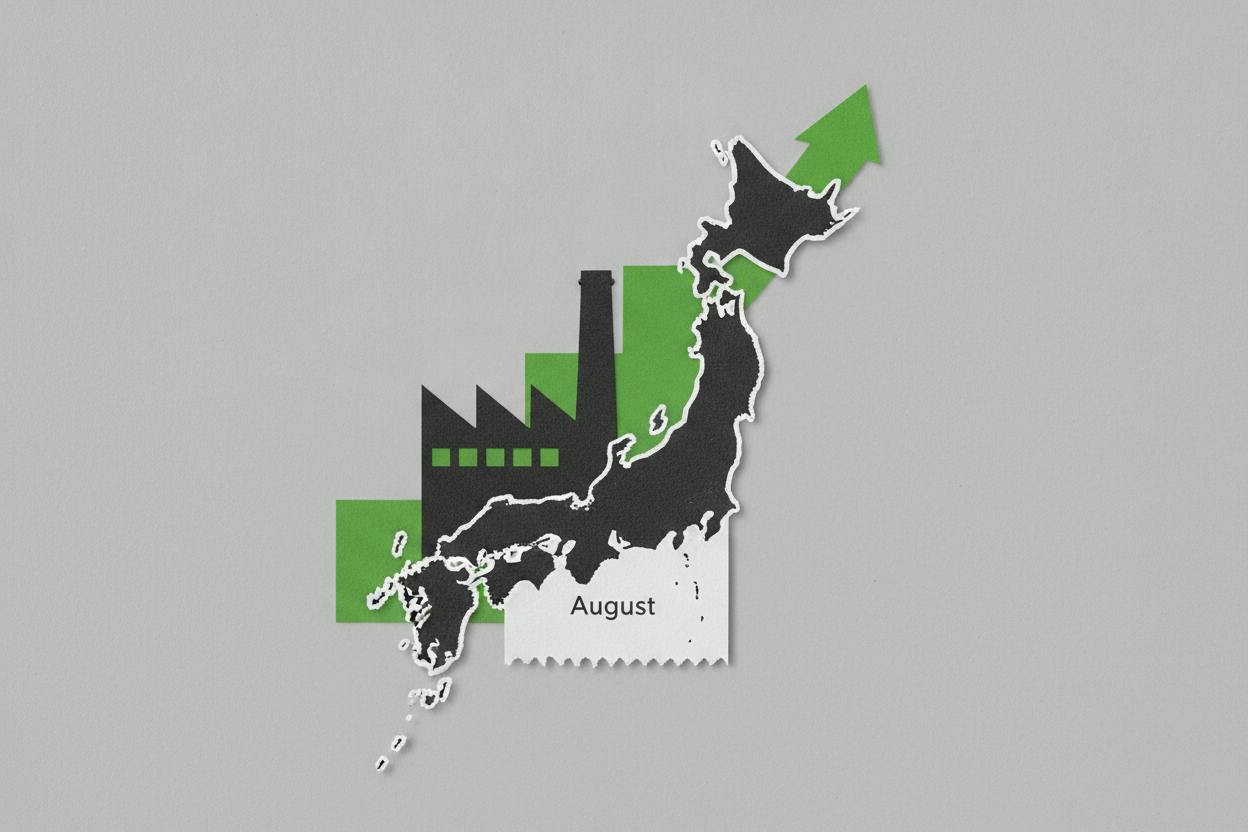
Japan's consumer spending lost some momentum in August, according to fresh data from the Ministry of Economy, Trade and Industry (METI). Retail sales rose 2.7% from a year earlier, but that was a slowdown from July's 3.7% pace and came in below the 3.3% that economists had expected. On a month-over-month basis, sales fell 1.2%, a sharp reversal from July's gain.
The figures suggest that Japanese households are becoming more cautious with their wallets, even as wages and inflation continue to shape the broader economic picture. For everyday investors, retail sales are a key window into domestic demand, which drives a large share of Japan's economy.
What the numbers show
METI reported that retail sales totaled 13.052 trillion yen in August. The year-over-year increase of 2.7% is still positive, but the deceleration from July and the miss versus forecasts point to a cooling trend. The month-over-month decline of 1.2% is particularly notable because it reverses the previous month's rise, indicating that the bounce in spending may have been short-lived.
The breakdown by category was uneven. Autos held up relatively well, while clothing and personal goods softened. That mix suggests that consumers are still willing to spend on big-ticket items but are trimming discretionary purchases like apparel and accessories. Such a pattern often emerges when households feel the pinch of higher prices or when confidence in the economic outlook wavers.
Factory output dips, but a rebound is expected
Separately, Japan's factory output also dipped in August. However, manufacturers have penciled in a rebound for September, according to METI's survey. This forward-looking signal is important because it hints that the dip may be temporary rather than the start of a prolonged downturn.
Industrial production is a volatile indicator, and monthly swings are common. The fact that manufacturers expect a recovery suggests that underlying demand, both domestic and overseas, remains intact. Still, the softness in August adds to the picture of an economy that is growing but not at a breakneck pace.
What it means for investors
For investors, the key takeaway is that Japan's consumer sector is showing signs of fatigue. Retail sales growth is still positive, but the slowdown could weigh on companies that rely heavily on domestic spending, such as retailers, restaurants, and consumer goods makers. On the other hand, the resilience in autos is a positive sign for that industry, which is a major part of Japan's export machine.
The data also feeds into the broader debate about the Bank of Japan's monetary policy. With inflation running above the central bank's 2% target, policymakers have been gradually moving away from ultra-loose policy. If consumer spending weakens further, it could give the BOJ reason to be cautious about raising interest rates too quickly. That would have implications for the yen and for Japanese government bonds, which are closely watched by global investors.
It's worth noting that Japan's economic situation is not isolated. In China, recent data has shown factory activity returning to growth in September, which could support Japanese exports. Meanwhile, in the United States, consumers look set to spend more in August, a contrast to Japan's more cautious tone.
Looking ahead
Investors will be watching the September retail sales data to see if the slowdown deepens or stabilizes. The factory output rebound, if it materializes, would be a reassuring sign. Also on the radar are movements in Japanese bond yields, which have been sensitive to policy expectations. As traders brace for potential shifts, Japan's 2-year yield has slipped, reflecting some uncertainty about the path of monetary policy.
For now, the message from August's data is one of moderation. Japan's economy is still growing, but the pace is uneven. For investors, that means staying alert to how consumer behavior evolves in the coming months, as it will be a key driver of corporate earnings and market sentiment.