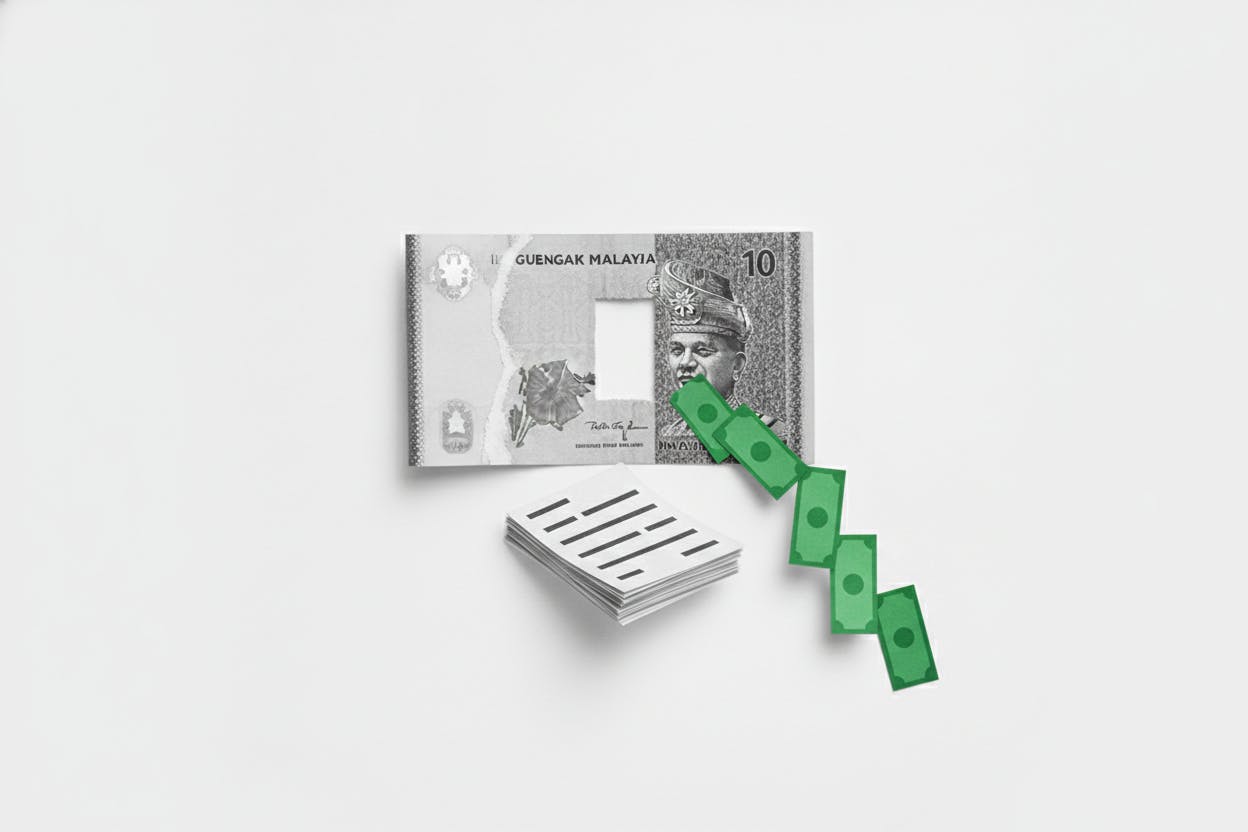
Malaysian technology group K-One Technology Berhad is preparing to return cash to shareholders through a special dividend, funded by a capital reduction that follows the planned sale of its subsidiary Global Access Points.
In a filing with Bursa Malaysia, the country's stock exchange, K-One said it intends to cancel 46 million ringgit of its share capital. That move is designed to offset past losses and free up equity that can legally be distributed to investors. Once the sale of Global Access Points for 94 million ringgit is completed, the company expects to pay out up to 75 million ringgit, or 0.09 ringgit per share, as a special dividend.
How a capital reduction works
A capital reduction is a corporate mechanism that allows a company to reduce the nominal value of its shares or cancel a portion of its share capital. In many jurisdictions, including Malaysia, this requires shareholder approval and often court sanction. The goal is typically to eliminate accumulated losses or to return excess capital to shareholders when the company does not need it for operations or growth.
For K-One, the reduction of 46 million ringgit will shrink its stated share capital, making it possible to distribute the proceeds from the asset sale without breaching legal restrictions on dividend payments. Companies often use this route when they have past losses that would otherwise limit their ability to pay dividends from retained earnings.
The special dividend is conditional on the completion of the Global Access Points sale. If the deal falls through, the payout is unlikely to proceed. Investors should watch for updates on the sale's closing conditions and any shareholder votes required for the capital reduction.
What this means for investors
For everyday investors, a special dividend is a one-off payment, distinct from regular dividends. It often signals that a company has generated cash from a sale or other non-recurring event and wants to reward shareholders. However, it does not necessarily indicate ongoing profitability or a sustainable income stream.
K-One's move is similar to other companies that have used asset sales to fund shareholder returns. For instance, Hikari Tsushin's dividend increase was tied to stronger profits, while Hindustan Aeronautics proposed a dividend after revenue growth. In contrast, K-One's payout is directly linked to a divestment, so it is less about ongoing earnings and more about returning capital from a specific transaction.
Investors should also consider the broader context. The sale of Global Access Points appears to be part of a strategic refocusing. By shedding a subsidiary, K-One may be simplifying its business or raising funds for other priorities. The capital reduction and special dividend are likely to be well-received by shareholders looking for immediate returns, but they also reduce the company's equity base, which could affect its ability to borrow or invest in future growth.
It is also worth noting that special dividends are often paid in cash, which can be a positive signal about the company's liquidity. However, they are not guaranteed to be repeated. Investors should not assume that a special dividend indicates a higher regular dividend in the future.
Next steps to watch
Shareholders will need to approve the capital reduction at a general meeting. The company will also need to satisfy any regulatory requirements under Malaysian company law. Once the sale of Global Access Points is completed, the board will likely announce the exact dividend amount and payment date.
For those holding K-One shares, the key dates to monitor are the record date (to determine who qualifies for the dividend) and the payment date. The company's ability to execute the sale smoothly will be the main factor determining whether the special dividend materialises.
In the meantime, investors should keep an eye on the company's announcements for any changes to the sale terms or delays. As with any corporate action, there is always a degree of uncertainty until the transaction is finalised.
Overall, K-One's plan to cut capital and pay a special dividend is a straightforward way to return value to shareholders after a successful asset sale. It reflects a common practice in Malaysia and other markets, and it gives investors a clear, tangible benefit from the divestment. However, it is a one-time event, and the long-term investment case will depend on how the company performs after the sale.