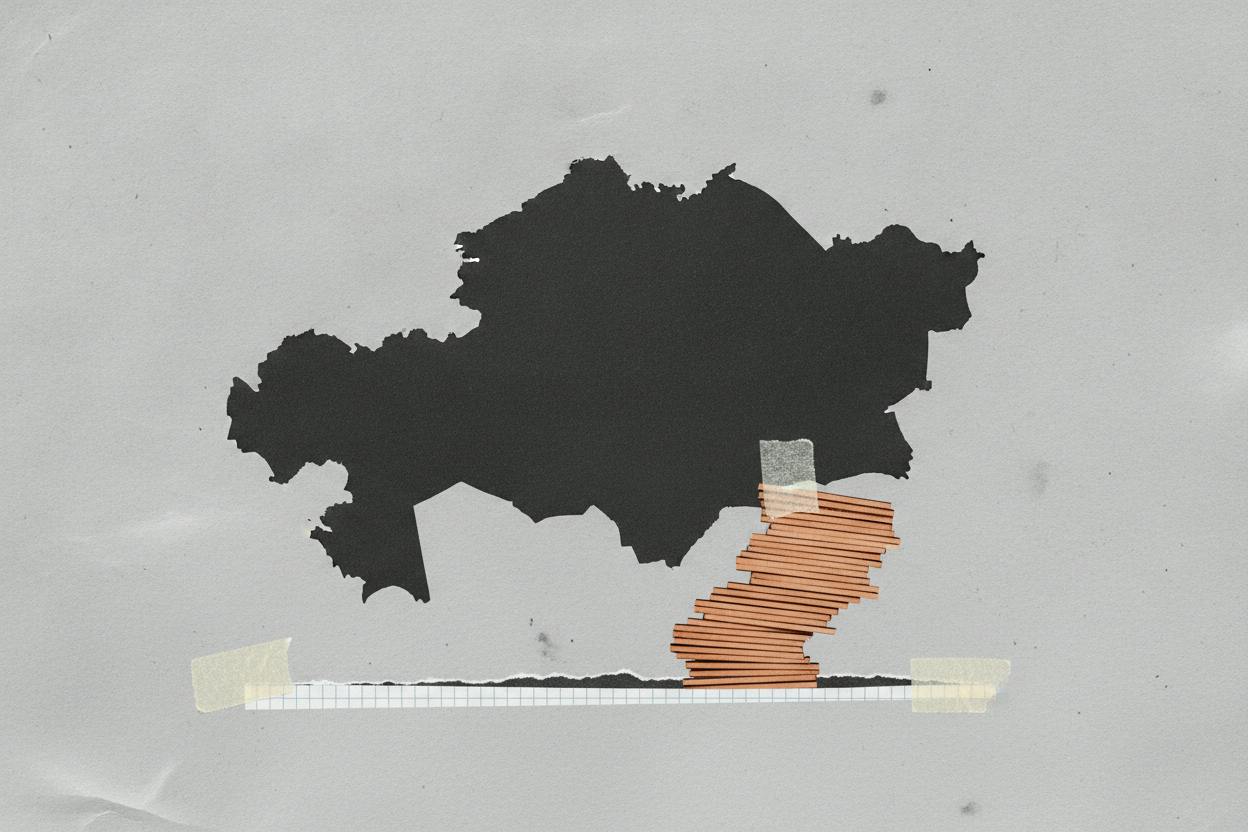
Kazakhstan's refined copper production has been essentially stagnant for most of 2025, but the latest data from the national statistics bureau shows a notable pickup in October. Output for January through October rose a mere 0.1% compared with the same period last year, while October alone jumped 13.2% from September.
The figures offer a mixed picture for the Central Asian country, which is a significant global producer of the metal used widely in construction, electronics, and renewable energy infrastructure. While the year-to-date trend has been flat, the monthly surge suggests that recent momentum may be building.
What's behind the numbers?
Refined copper is the end product after mining and smelting, and it's what gets traded on global metals exchanges. Kazakhstan's output is closely watched because the country is among the world's top copper producers, and any shift in supply can influence global prices.
The 0.1% year-on-year increase for the first ten months is minimal, indicating that production has been roughly steady throughout 2025. However, the 13.2% month-on-month jump in October is a clear acceleration. Month-on-month changes can be volatile, but a double-digit rise often points to operational improvements, new capacity coming online, or a recovery from earlier disruptions.
It's worth noting that the statistics bureau's data is preliminary and can be revised. Still, the October figure stands out as the strongest monthly performance in recent months.
Why copper matters
Copper is often called "Dr. Copper" because its price is seen as a barometer for global economic health. It's used in everything from wiring and plumbing to electric vehicles and solar panels. When economies are growing, demand for copper tends to rise, and when they slow, demand weakens.
For investors, copper prices are influenced by supply and demand dynamics. A pickup in production in a major producer like Kazakhstan could add to global supply, potentially putting downward pressure on prices if demand doesn't keep pace. Conversely, if demand is strong—especially from China, the world's largest copper consumer—then increased output may be absorbed without much price impact.
Recent reports have highlighted challenges for Chinese copper smelters, including the prospect of negative term pricing, which could affect their appetite for imported concentrate. That's a factor to watch, as China's processing sector is a key buyer of copper from countries like Kazakhstan.
What it means for investors
For everyday investors, the flat-to-picking-up output in Kazakhstan is a modest data point, but it fits into the broader copper supply picture. If global production continues to rise while demand remains uncertain, copper prices could face headwinds. That would affect not just commodity traders but also companies in the mining and materials sectors, as well as funds that track commodities.
On the other hand, if the October pickup signals a sustained trend, it could be a sign that Kazakhstan's copper industry is overcoming earlier constraints. That might be positive for the country's economy and for any companies with exposure to its mining sector.
Investors should also keep an eye on other metals data. For instance, China's October steel output slipped to its lowest since December 2025, which could indicate softer industrial activity in the region. Similarly, October producer prices cooled slightly, but core inflation remained firm, suggesting mixed signals for industrial demand.
Copper is also sensitive to broader economic trends. Energy rallies have helped lift major indices, but tech stocks have been volatile. For copper, the key drivers remain global manufacturing, construction, and the transition to cleaner energy, which requires significant amounts of the metal.
The bigger picture
Kazakhstan's copper output is just one piece of the global supply puzzle. Other major producers include Chile, Peru, and the Democratic Republic of Congo. Any changes in their output can have a larger impact on prices.
For now, the flat year-to-date performance suggests that Kazakhstan is not adding significant new supply, but the October jump could be a sign of things to come. If the country can sustain higher production levels, it might help meet growing demand from the green energy sector, which is expected to be a major driver of copper consumption in the coming years.
Investors should watch for upcoming monthly data to see if the October surge is a one-off or the start of a trend. Also, keep an eye on global copper inventories and price movements, as they will reflect how the market is digesting supply changes.
In summary, Kazakhstan's copper output is a small but notable indicator for commodity markets. The flat trend for most of the year, followed by a strong October, offers a nuanced picture. For investors, it's a reminder that commodity markets are influenced by a complex mix of supply, demand, and macroeconomic factors, and that even small shifts in production can have ripple effects.